“Nature on Fire”: How Ukrainian Women Artists Are Telling Europe About Ecocide
This winter, five Ukrainian embassies across Europe featured unusual holiday installations. Instead of traditional Christmas trees, they displayed art works that tell the story of ecocide in Ukraine. Each installation speaks about how war destroys not only human lives but also nature — damage that may take decades to restore, if it can be restored at all.
#StopEcocideUkraine is an international campaign by UAnimals that draws global attention to the large-scale destruction of Ukraine’s natural environment. Russian aggression kills animals, burns forests, pollutes soil and water, and wipes out entire ecosystems.
Ecocide in Ukraine is not only a Ukrainian problem — it is a European one. Destroyed forests, poisoned rivers, and extinct species are losses the entire continent will feel. Nature knows no borders, and what is happening in Ukraine today will affect Europe’s environmental security tomorrow.
Art helps address complex issues through emotion. It needs no translation and can reach those who do not read reports on environmental crimes. That is why we chose to bring the topic of ecocide into public space — where thousands of people could see it.
The project launched in October 2025 with an open call for Ukrainian artists. We were looking for works that explore ecocide through personal stories, emotions, and symbols. Within two weeks, we received 14 applications. Five artists were selected based on the strength of their ideas, their connection to the topic, and their ability to create works that speak for themselves.
In November, the artists began working on their installations. It was a difficult time — massive shelling, power outages, and cold weather. Despite everything, all the works were completed on time. In December, the installations were sent to five Ukrainian embassies in Europe: Chișinău, Lisbon, Prague, Bratislava, and Berlin.
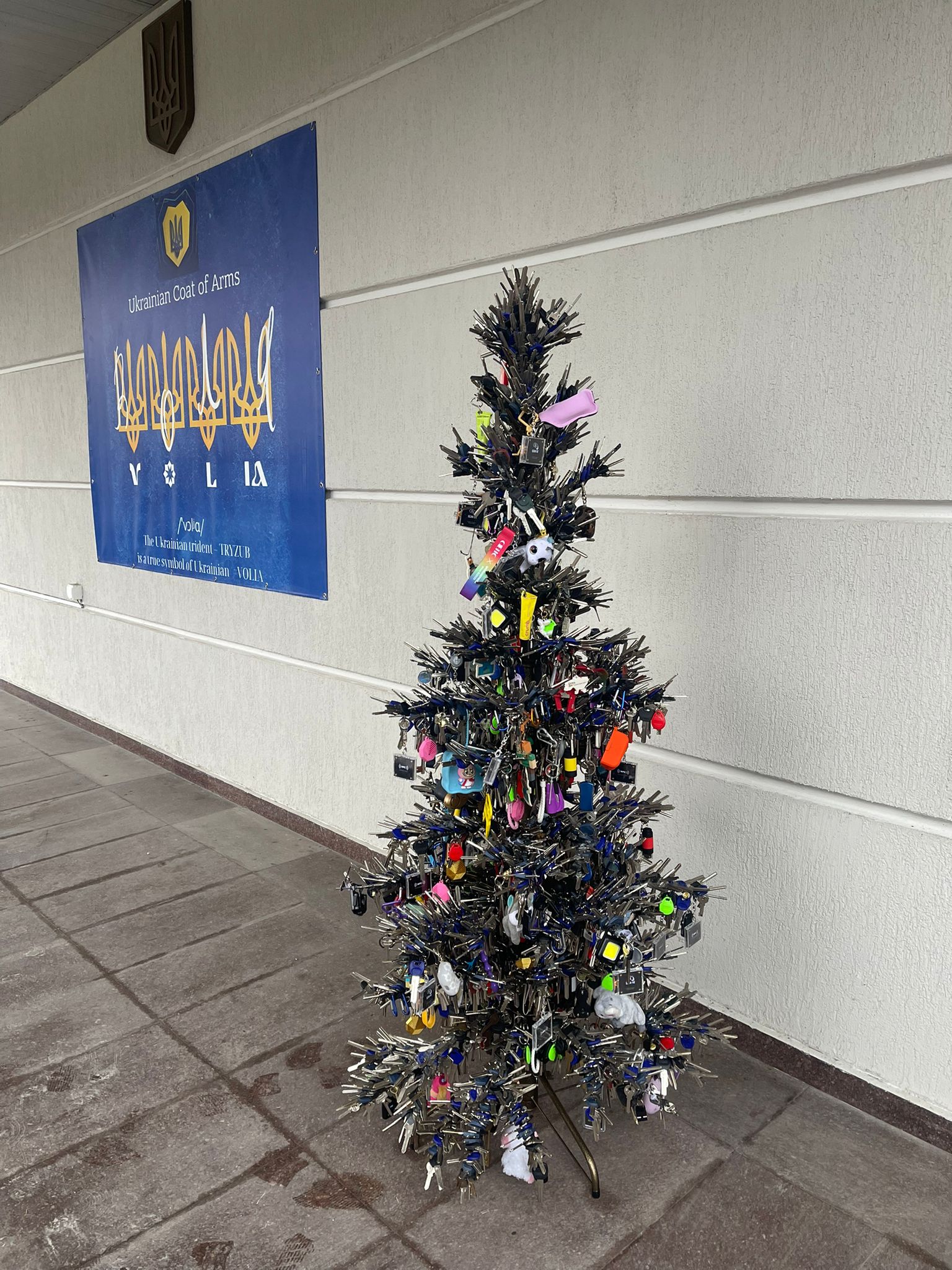
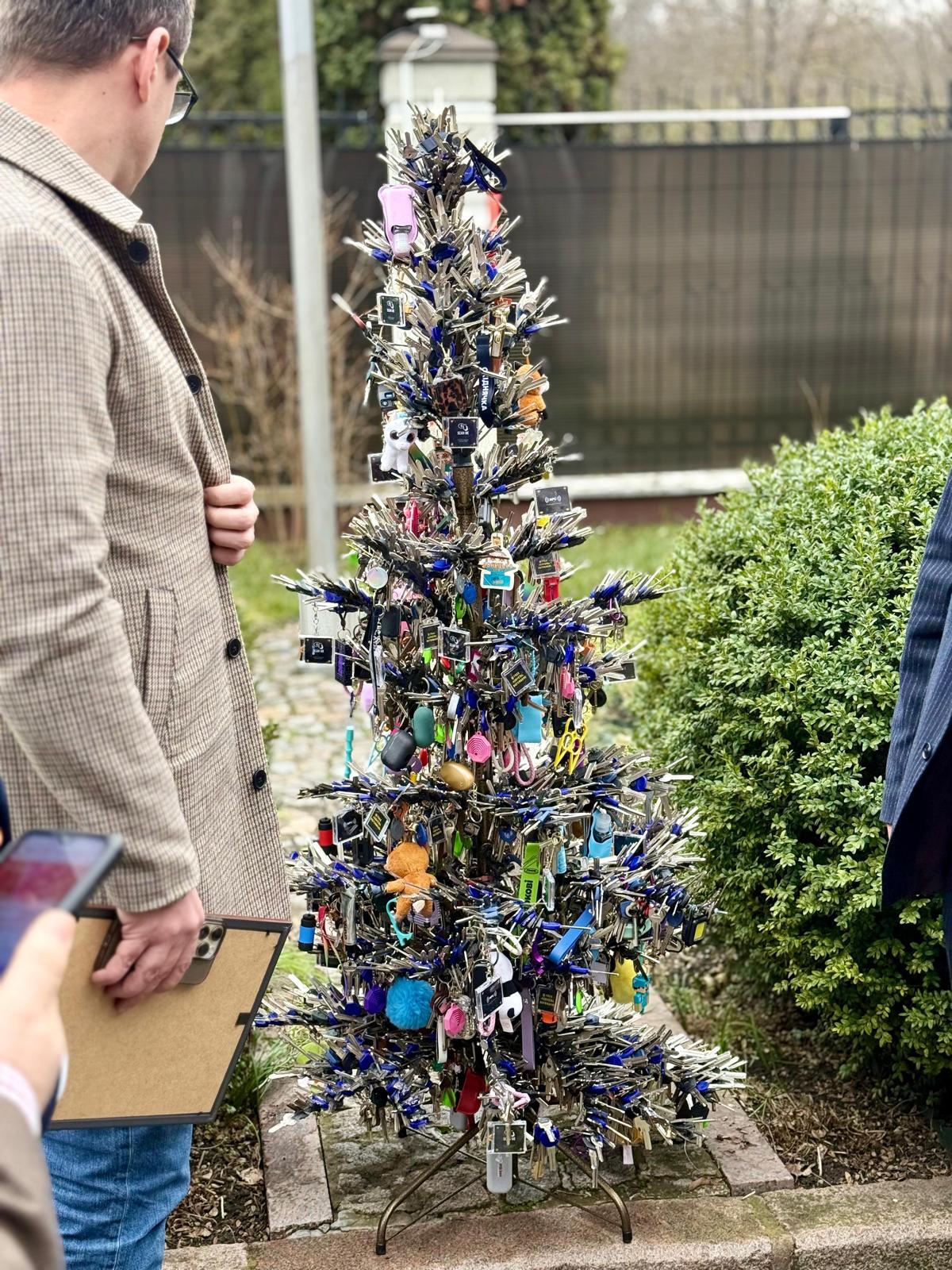
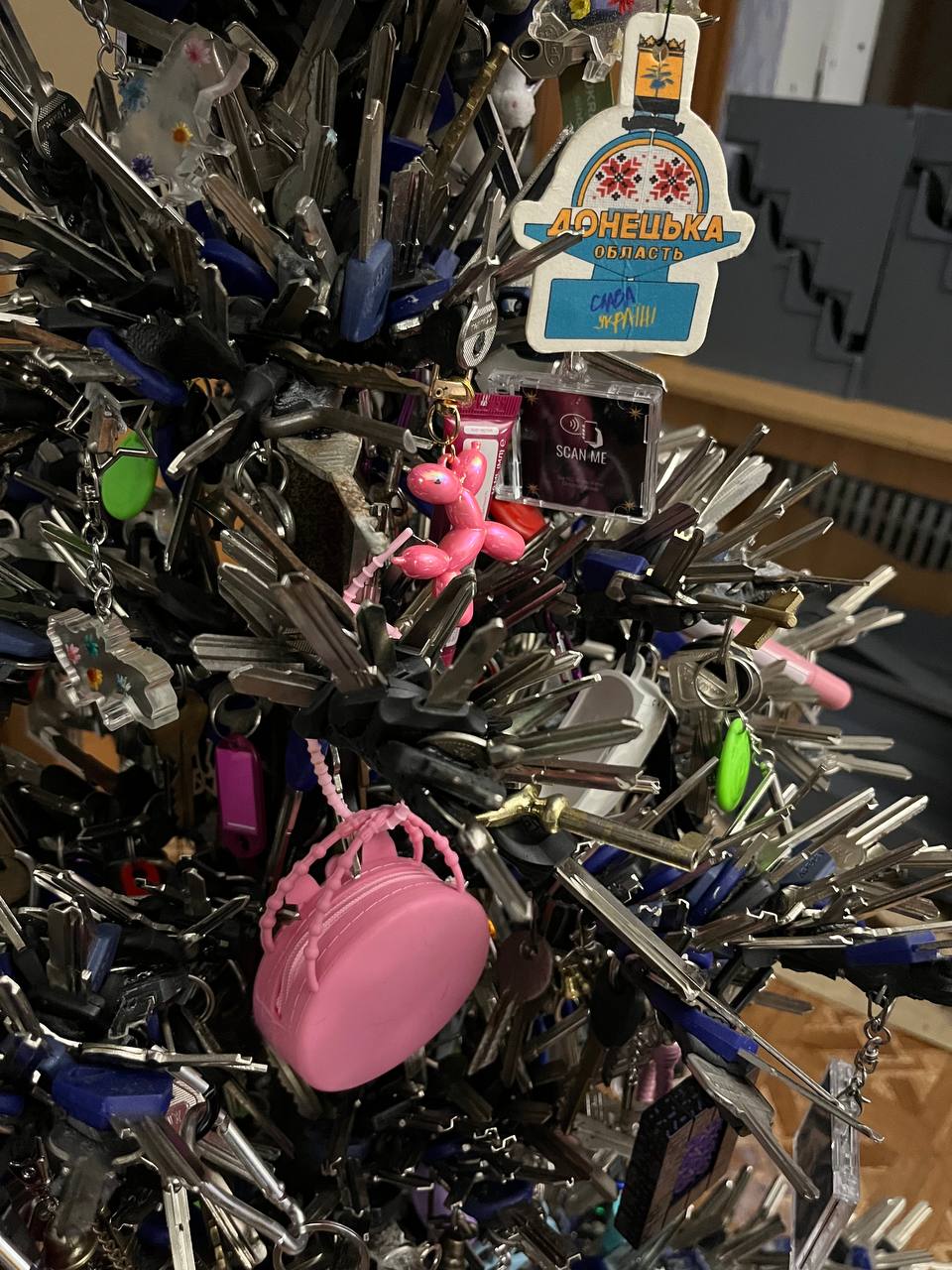
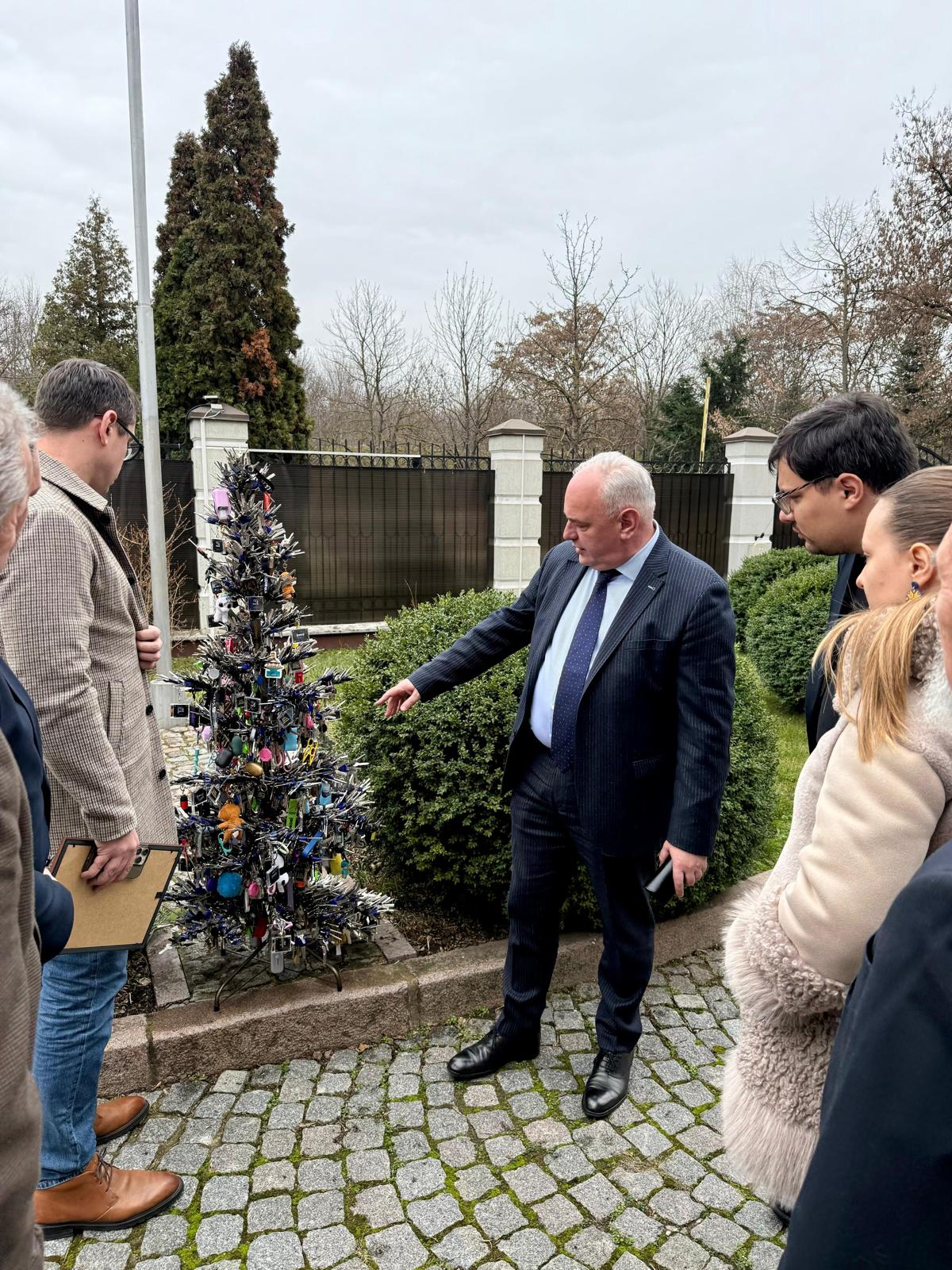

Artist: Liliia Stetsiuk
Around 4,000 keys assembled into the shape of a Christmas tree. Each key represents a lost home, forced displacement, a life left behind because of the war. Animals, like people, lose their homes due to shelling. They cannot return to the places where they were born or where generations before them once lived.
Liliia created this work during constant attacks on her city. During the production period, there were about 47 air raid alerts, and 60–90 drones exploded in the city. Electricity was cut off for 20–25 hours at a time. The artist spent more than 120 hours working on the installation, bonding the keys with cold welding — using 142 packages of adhesive.
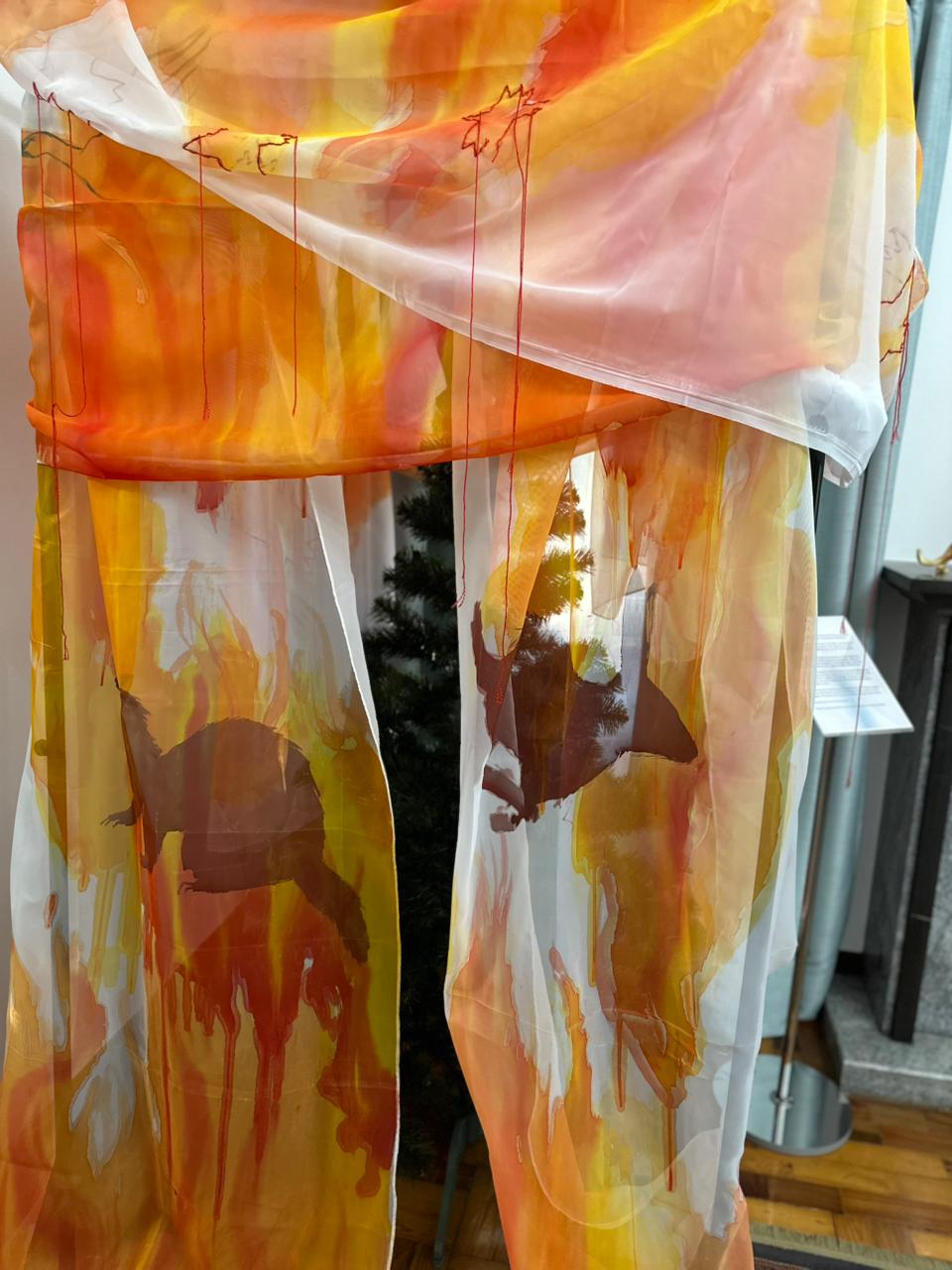
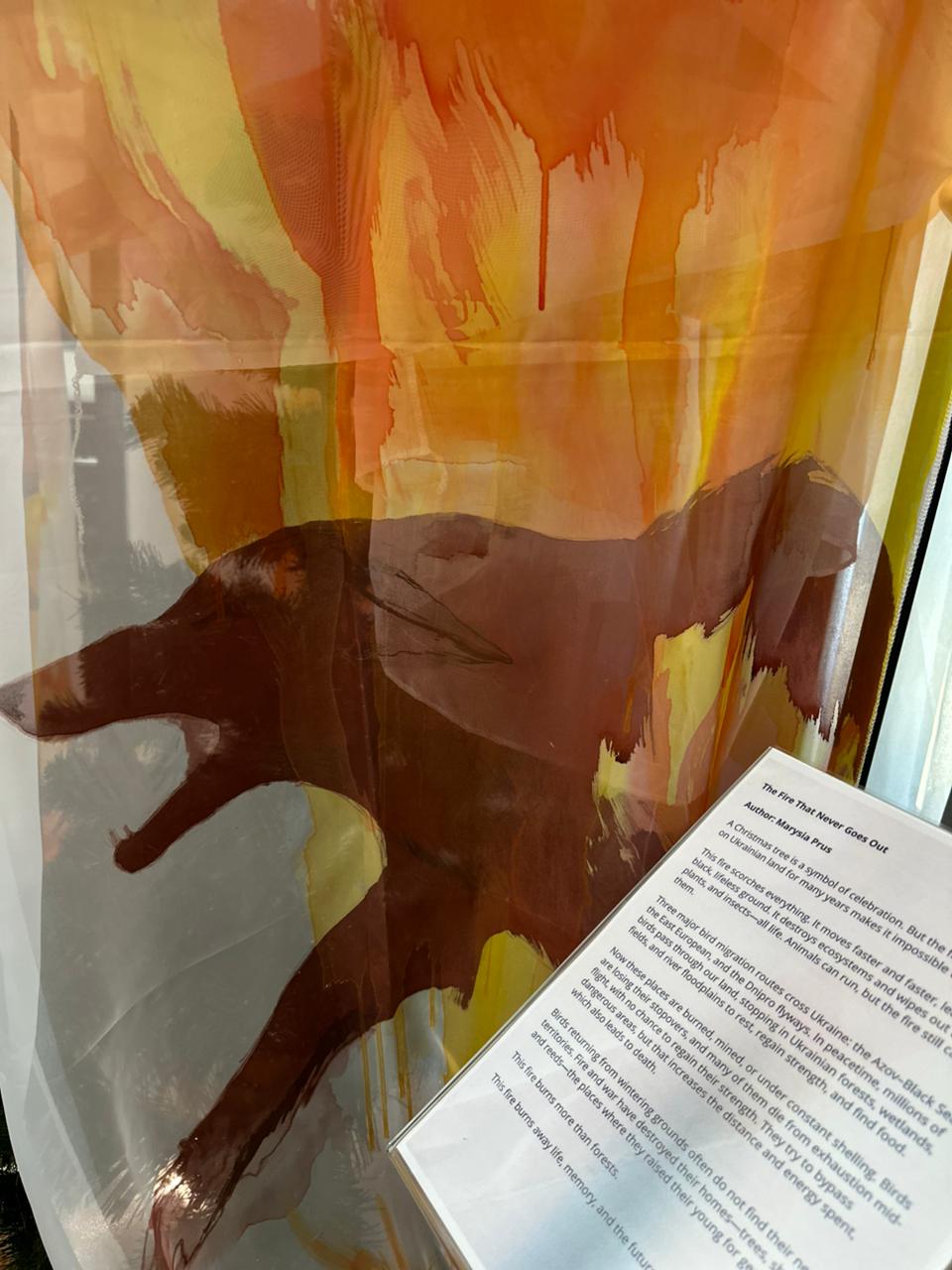
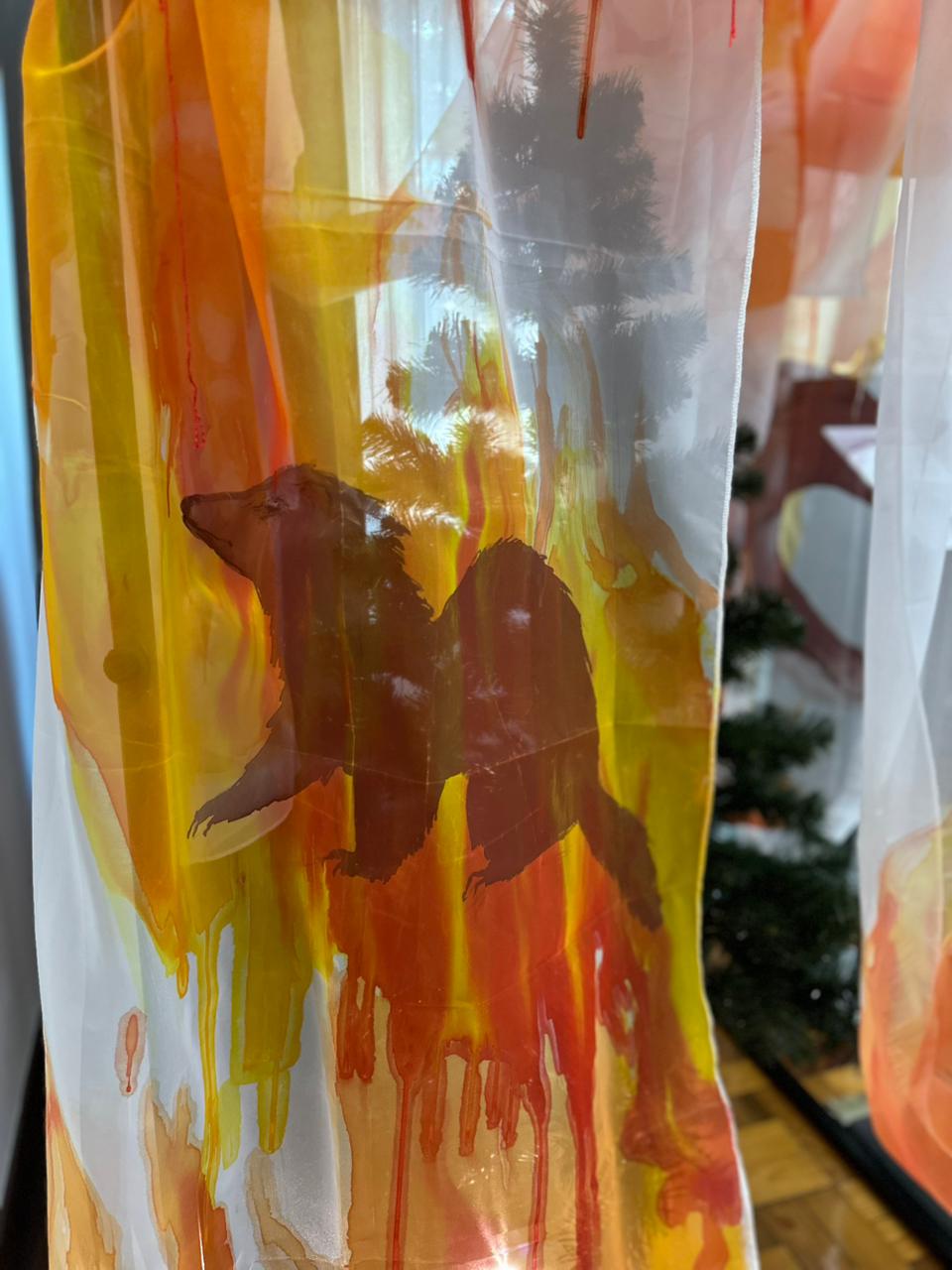
Artist: Marysia Prus
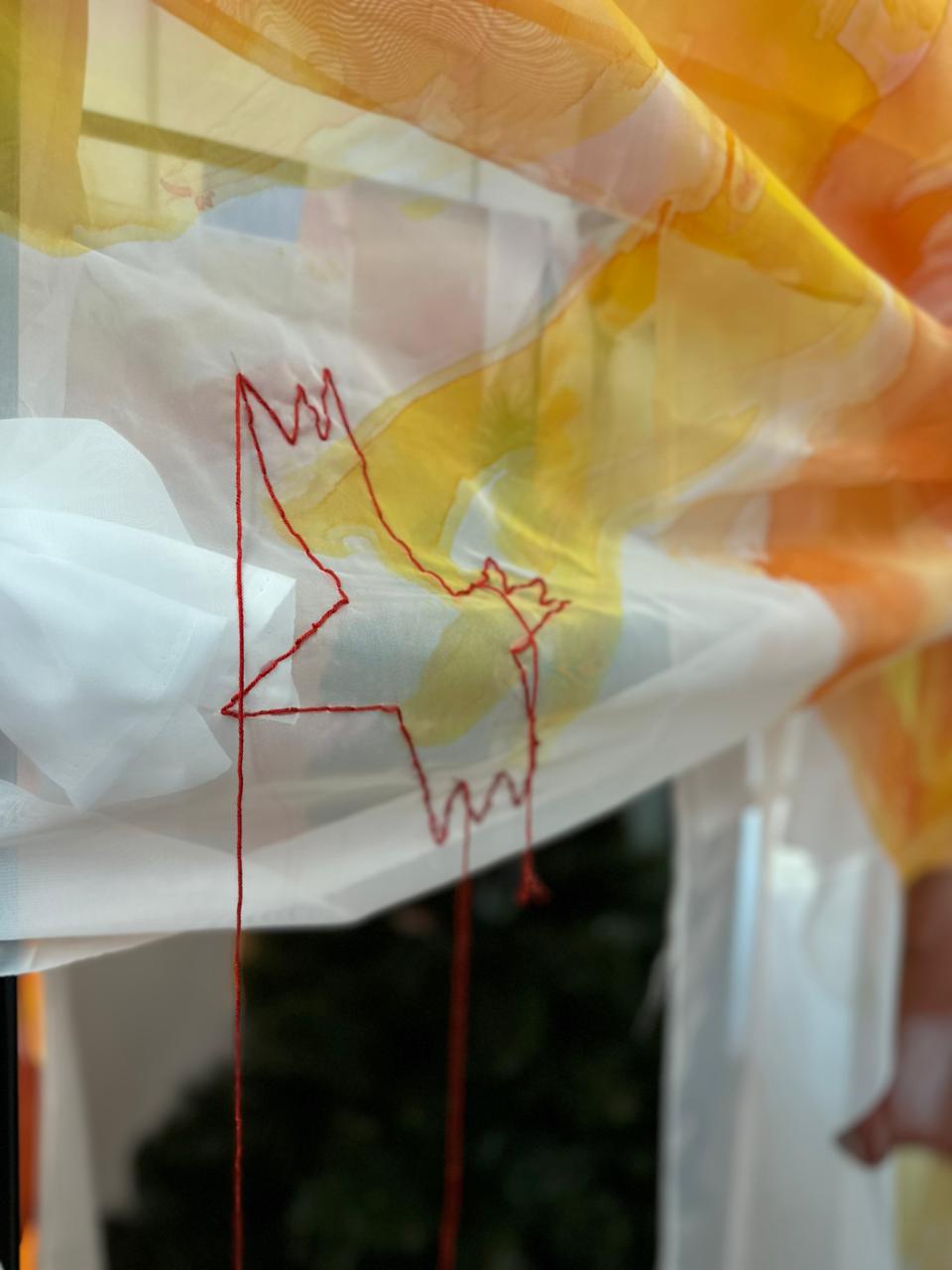
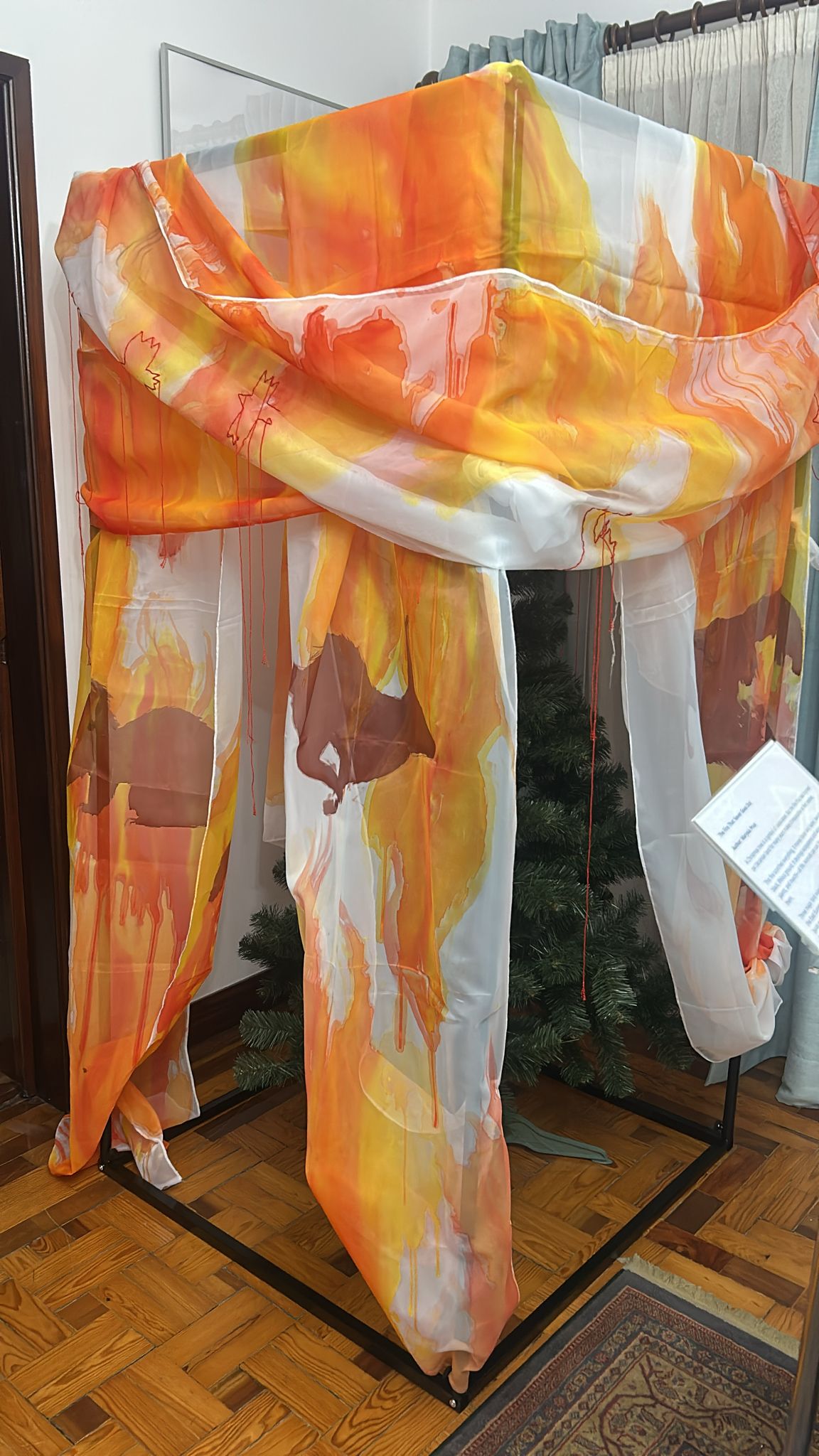
This installation tells the story of animals and birds living in steppes and forests — those who suffer the most from fire. War burns their habitats, and they either die in the flames or lose their homes forever.
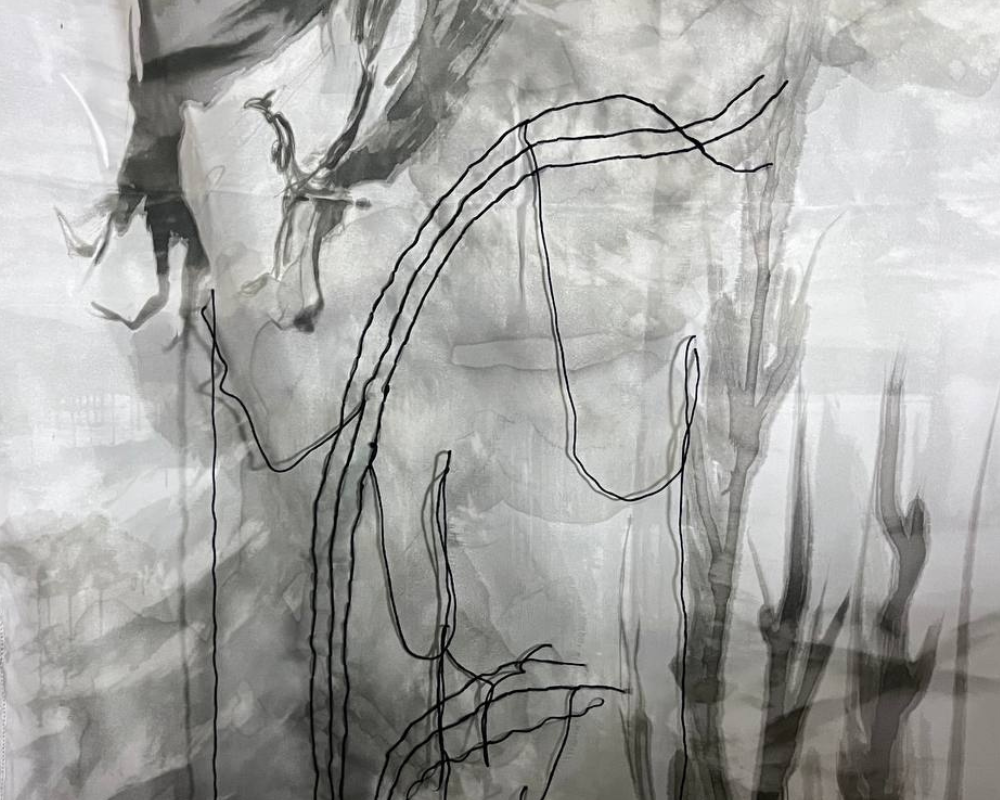
To create the piece, Marysia used 22 meters of fabric. She had only three days to paint the entire canvas with fire. Initially, embroidery was not part of the plan, but the idea came a day before the deadline — and the artist embroidered continuously for nearly 12 hours.
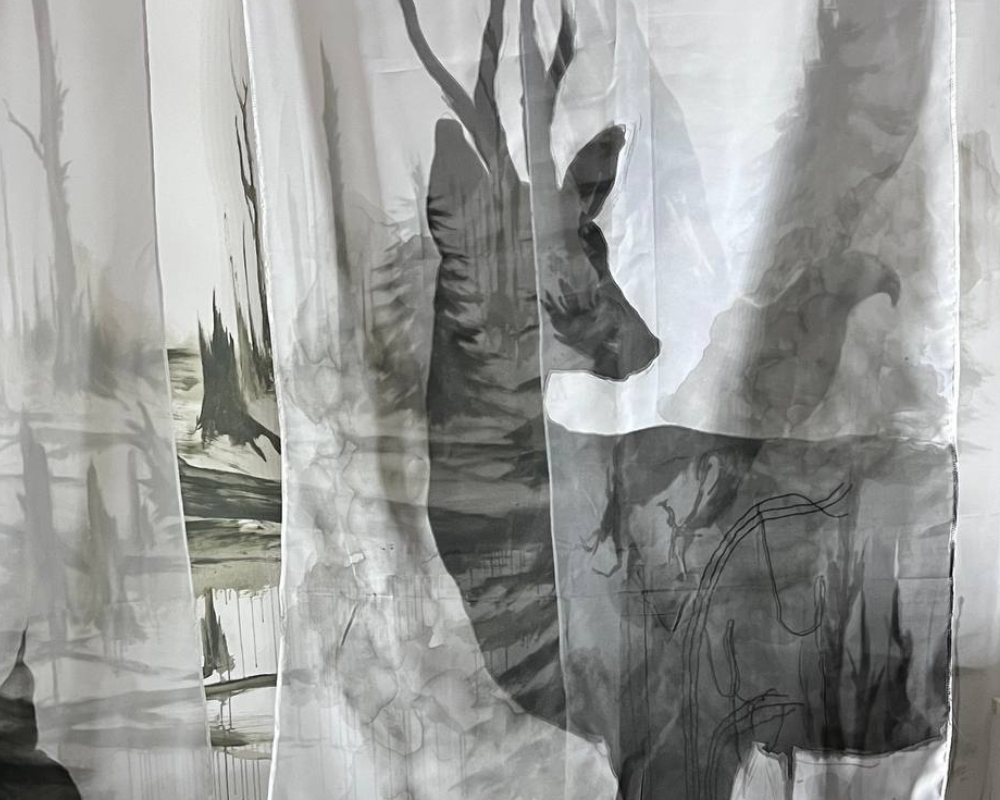
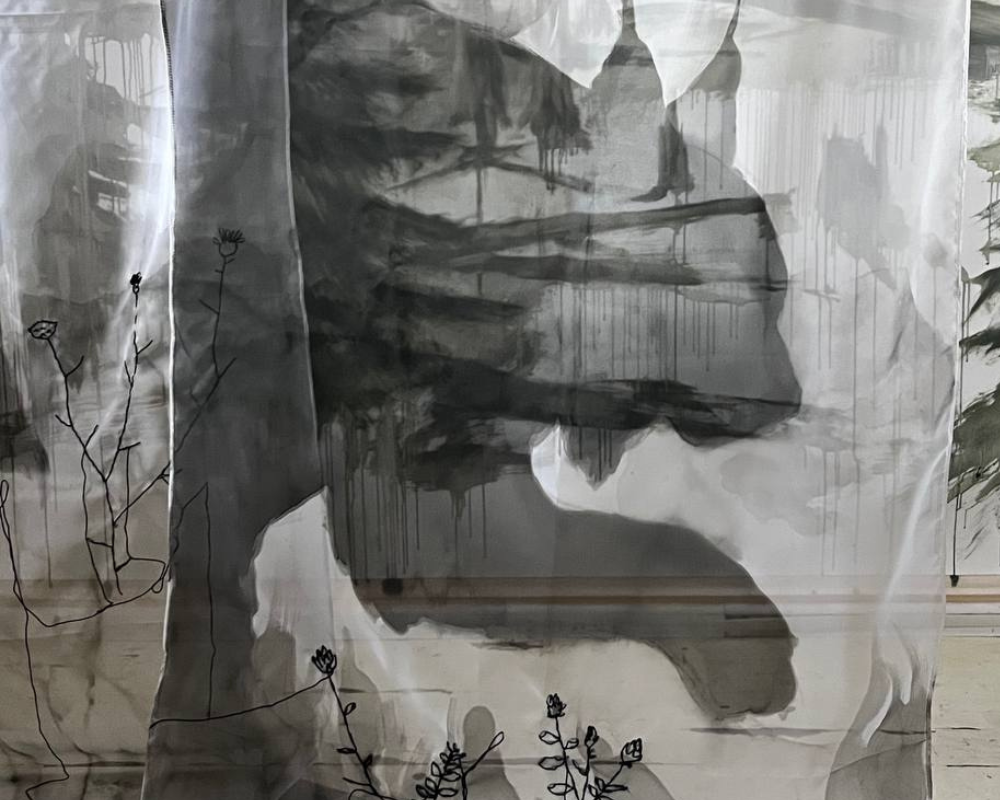
Artist: Marysia Prus
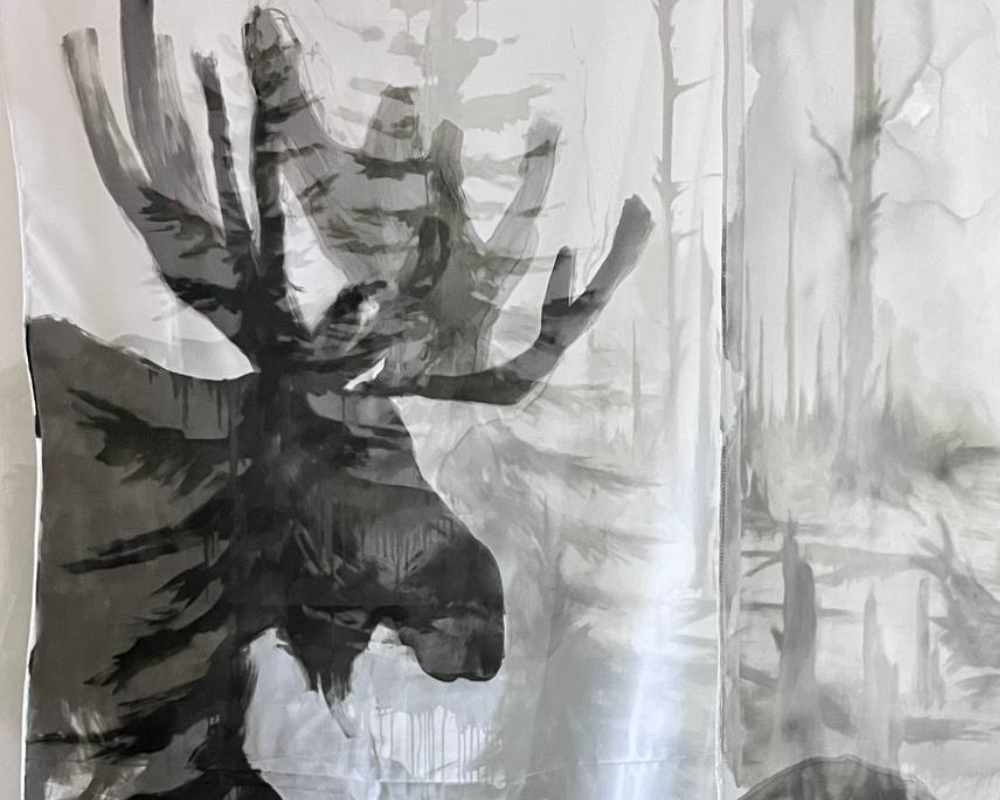
A forest painted on a 3 × 2 meter canvas — the largest canvas Marysia has ever worked on. The fabric features embroidered plant species listed in Ukraine’s Red Data Book that grow in eastern Ukraine. Due to active hostilities, it is currently unknown whether these species still exist in the wild.
To create this forest, the artist used photographs of the Serebrianskyi Forest, a botanical reserve in Luhansk region that has been almost completely destroyed by fighting since autumn 2022.
Marysia worked on this installation in her apartment, as there was no space left in her studio — the fabric filled the entire room from floor to ceiling. During the day, she painted the forest; at night, she embroidered endangered plants by the light of her phone flashlight, as electricity was unavailable most of the day due to attacks on energy infrastructure.
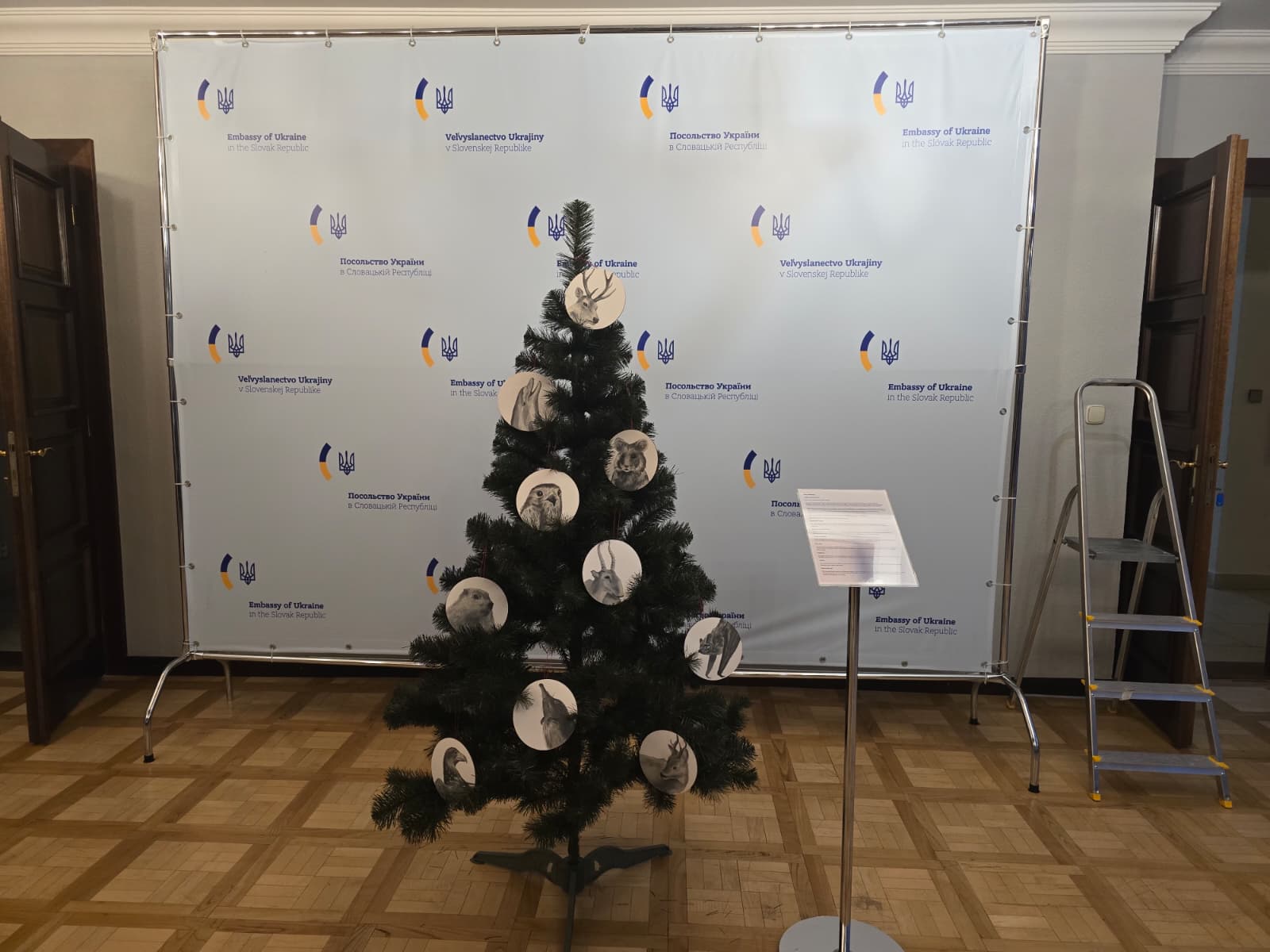
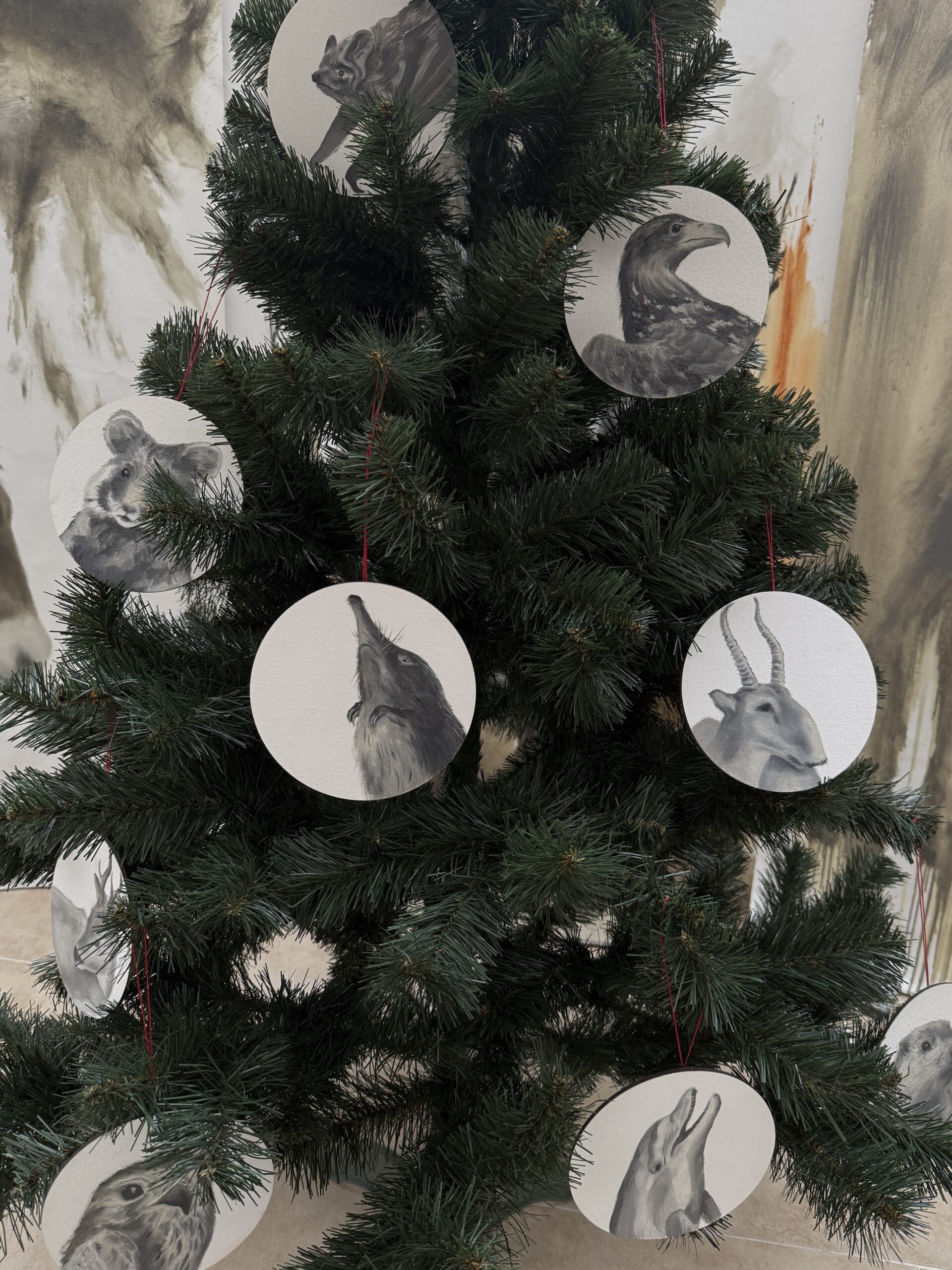
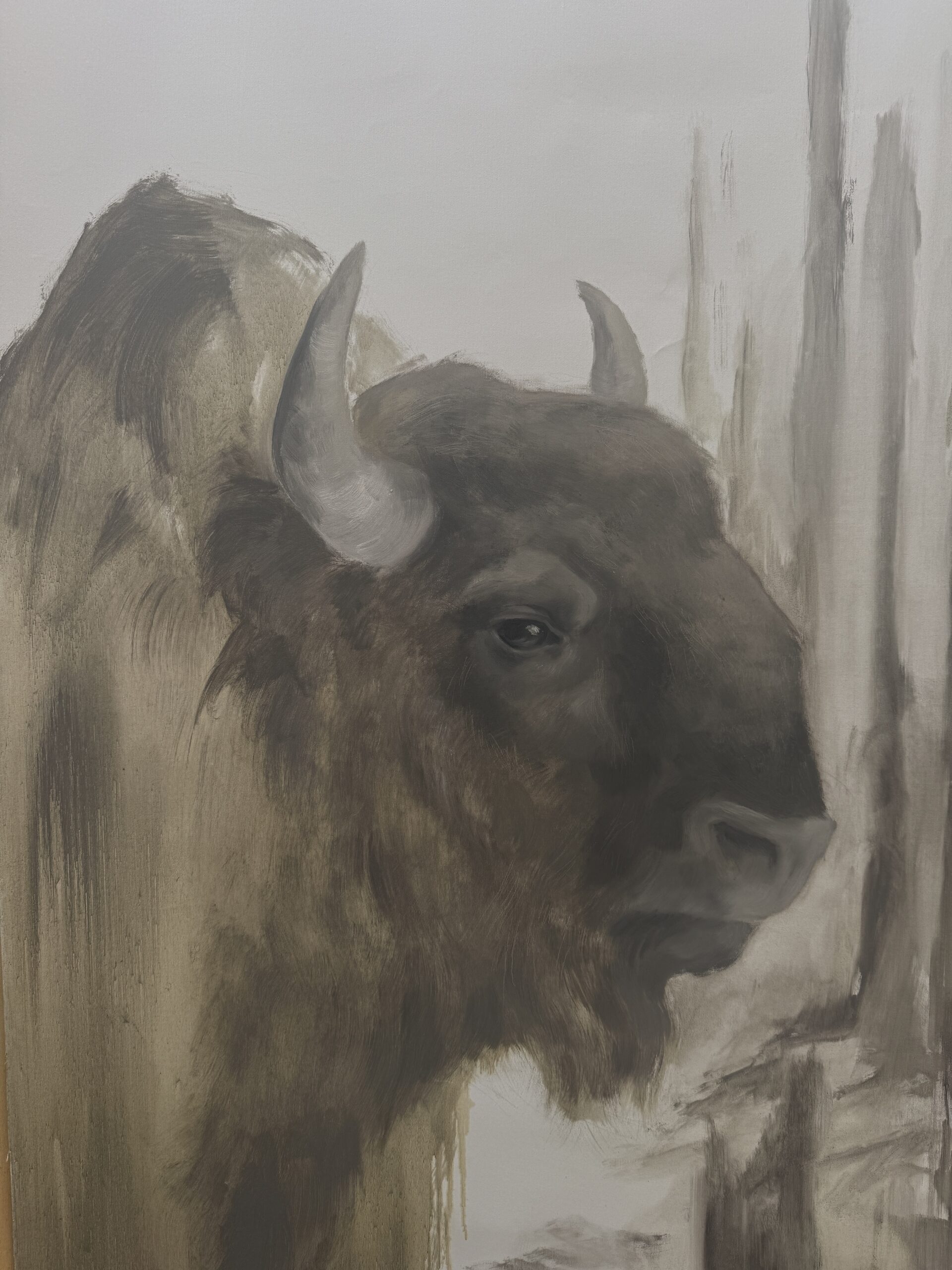
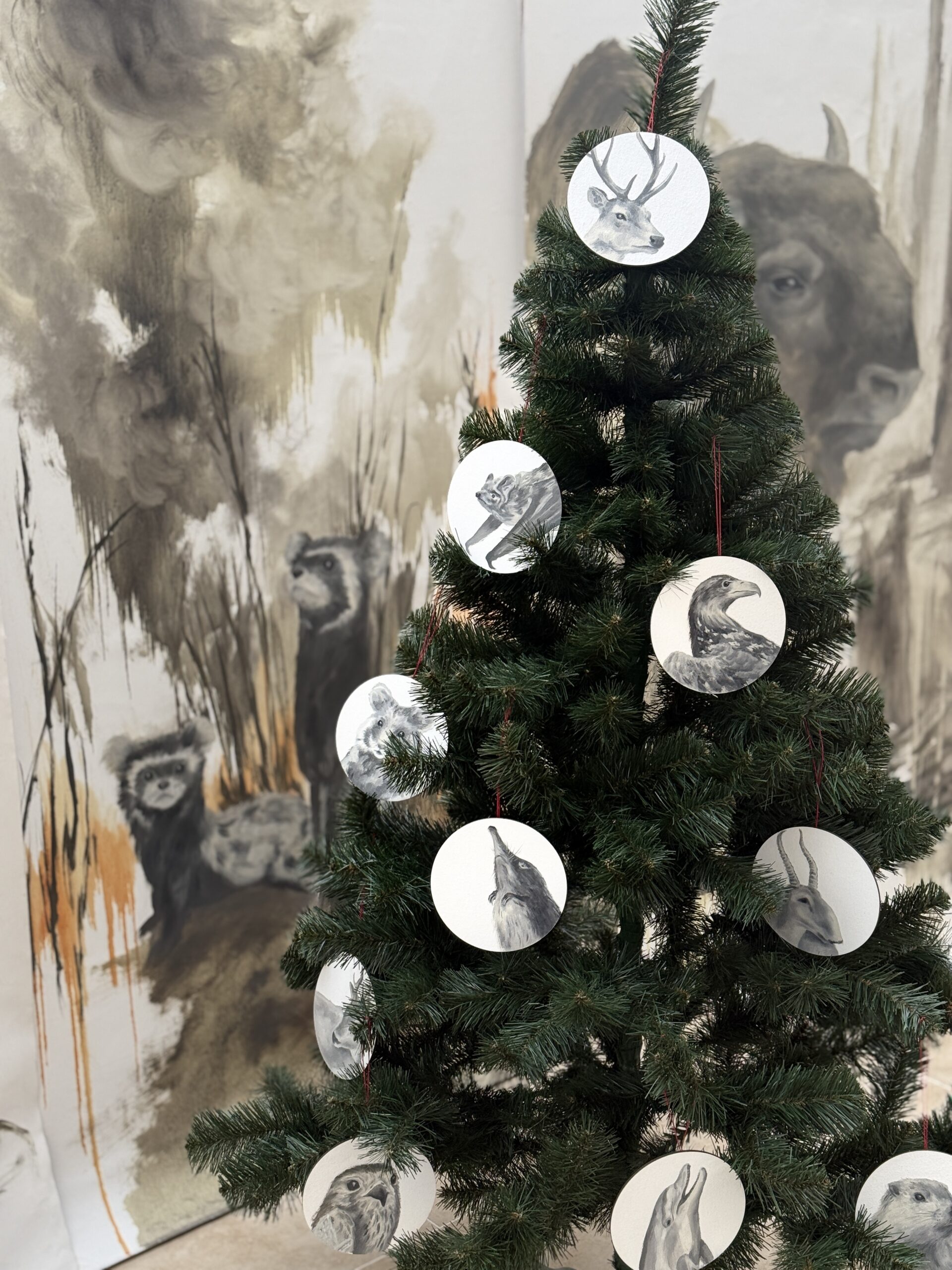
Artist: Marysia Prus
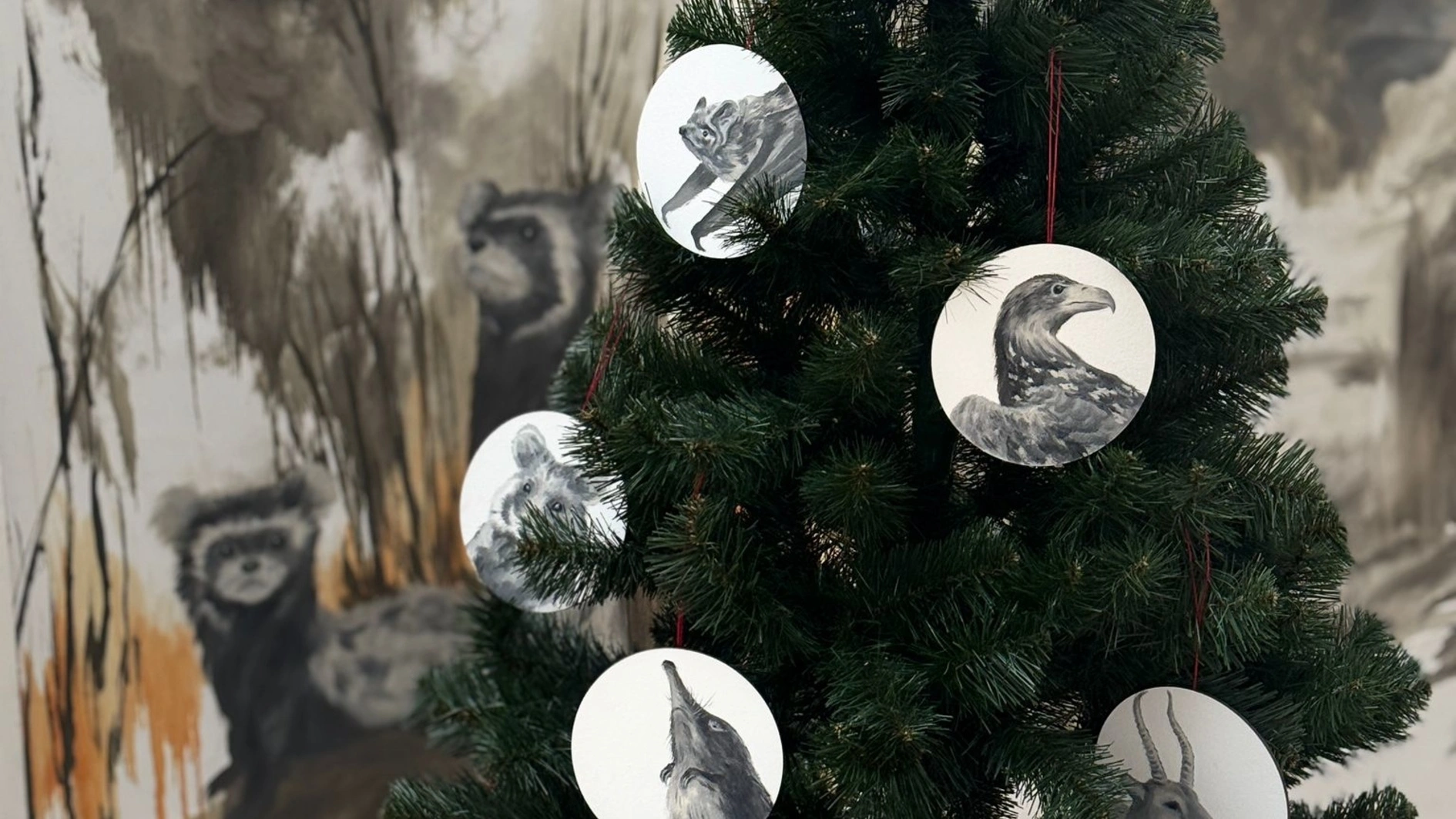
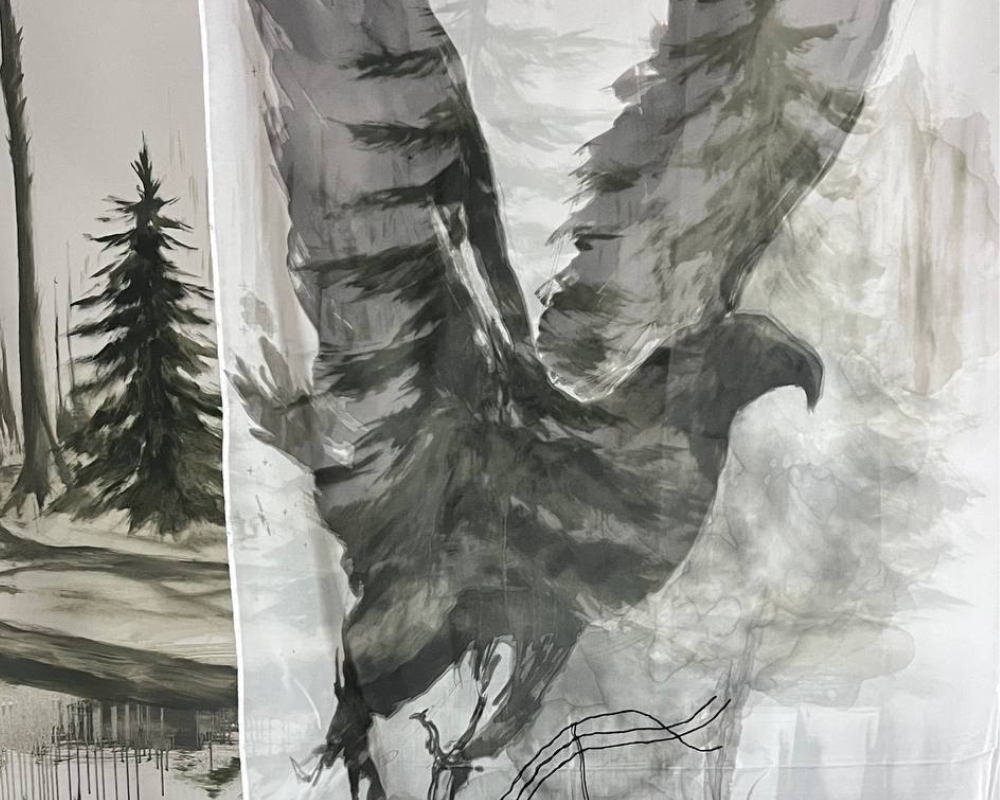
Portraits of animals killed by the war. Marysia collected information about animals who have died throughout the full-scale invasion. While working on the installation, she had to keep adding new cases — the war continues, and animals continue to die.
During the creation of this installation, a massive attack killed one of the roe deer at Natalia Popova’s Wild Animal Rescue Center. The portrait of this deer is also depicted on the tree.
This was the first of three installations the artist began working on. A day before she started, russia launched missile strikes on energyinfrastructure, causing large-scale blackouts. Marysia had to wake up very early to work during daylight hours. The piece “Przewalski’s Horse” was painted entirely under a single small flashlight. She was able to fully see the result only the next morning. For this installation, Marysia used 4 meters of canvas, 2 meters high.
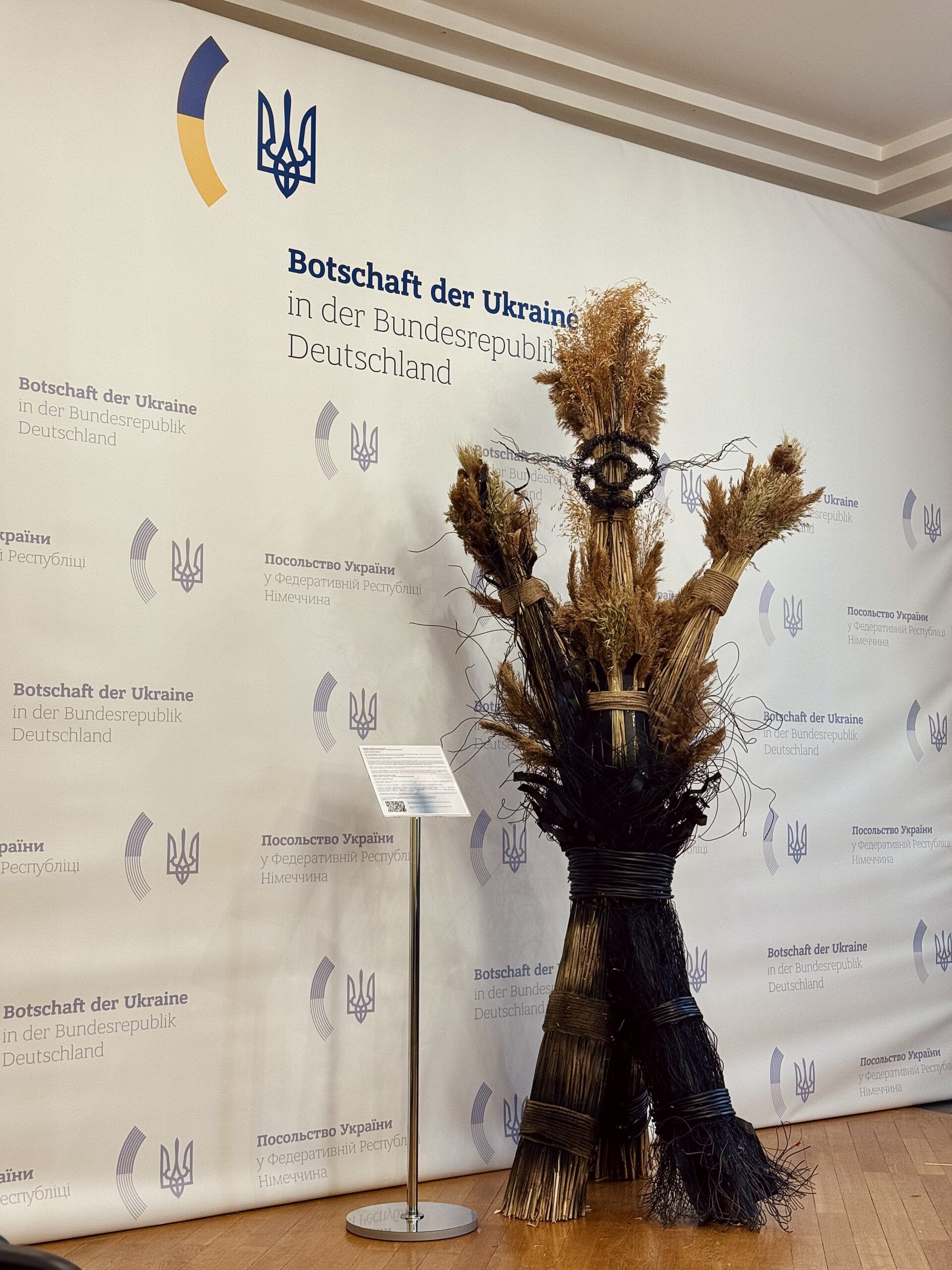
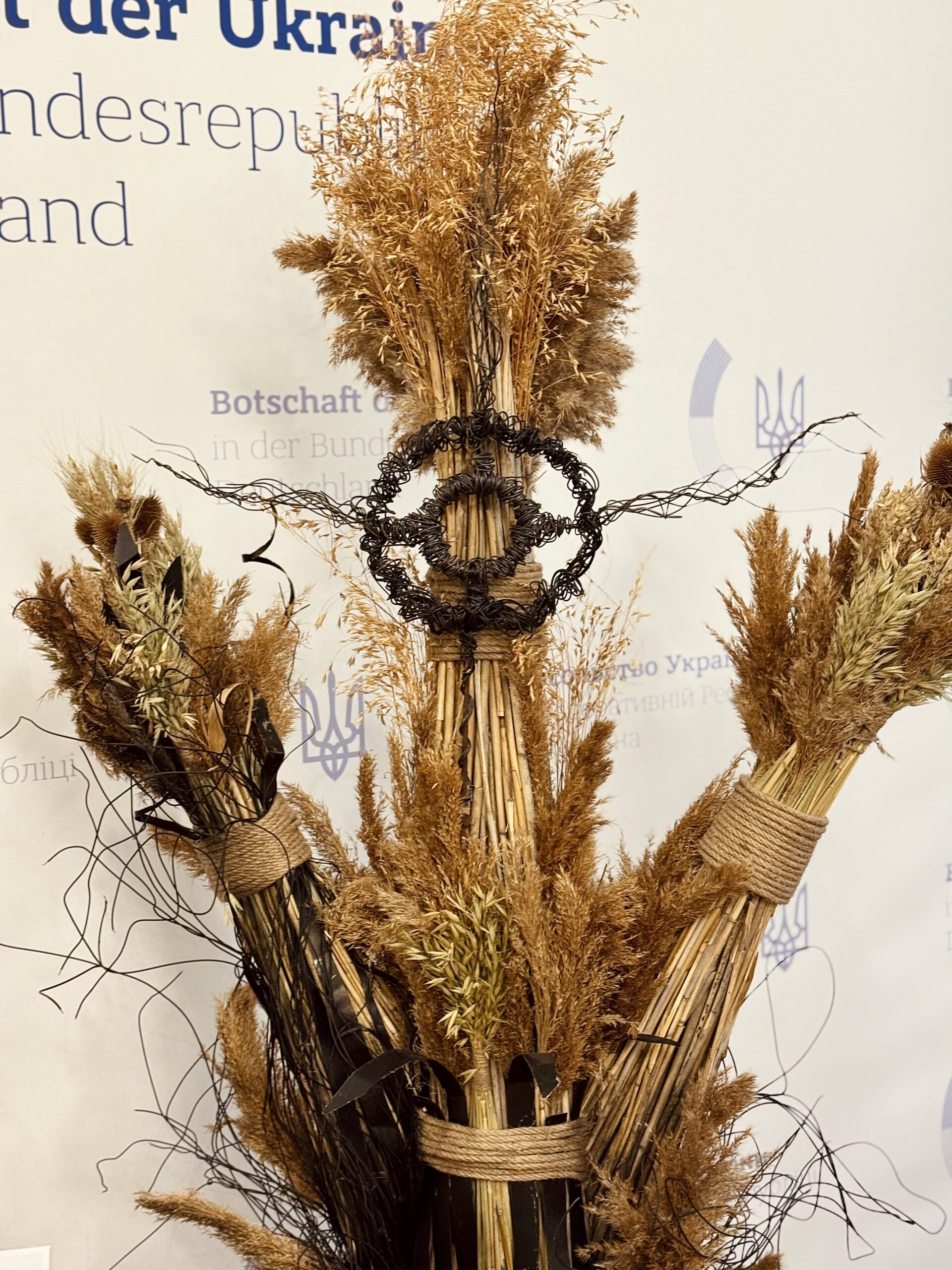
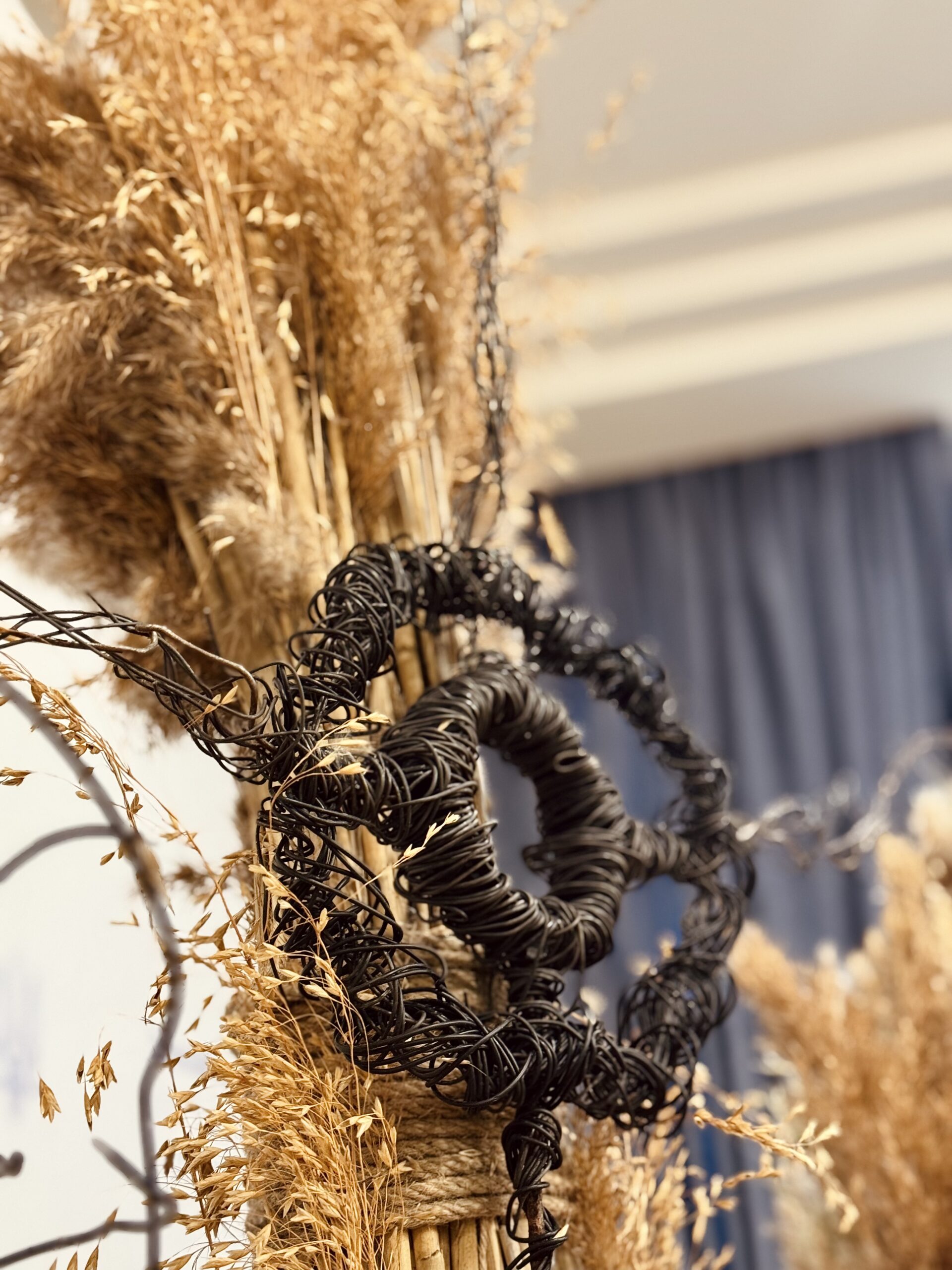
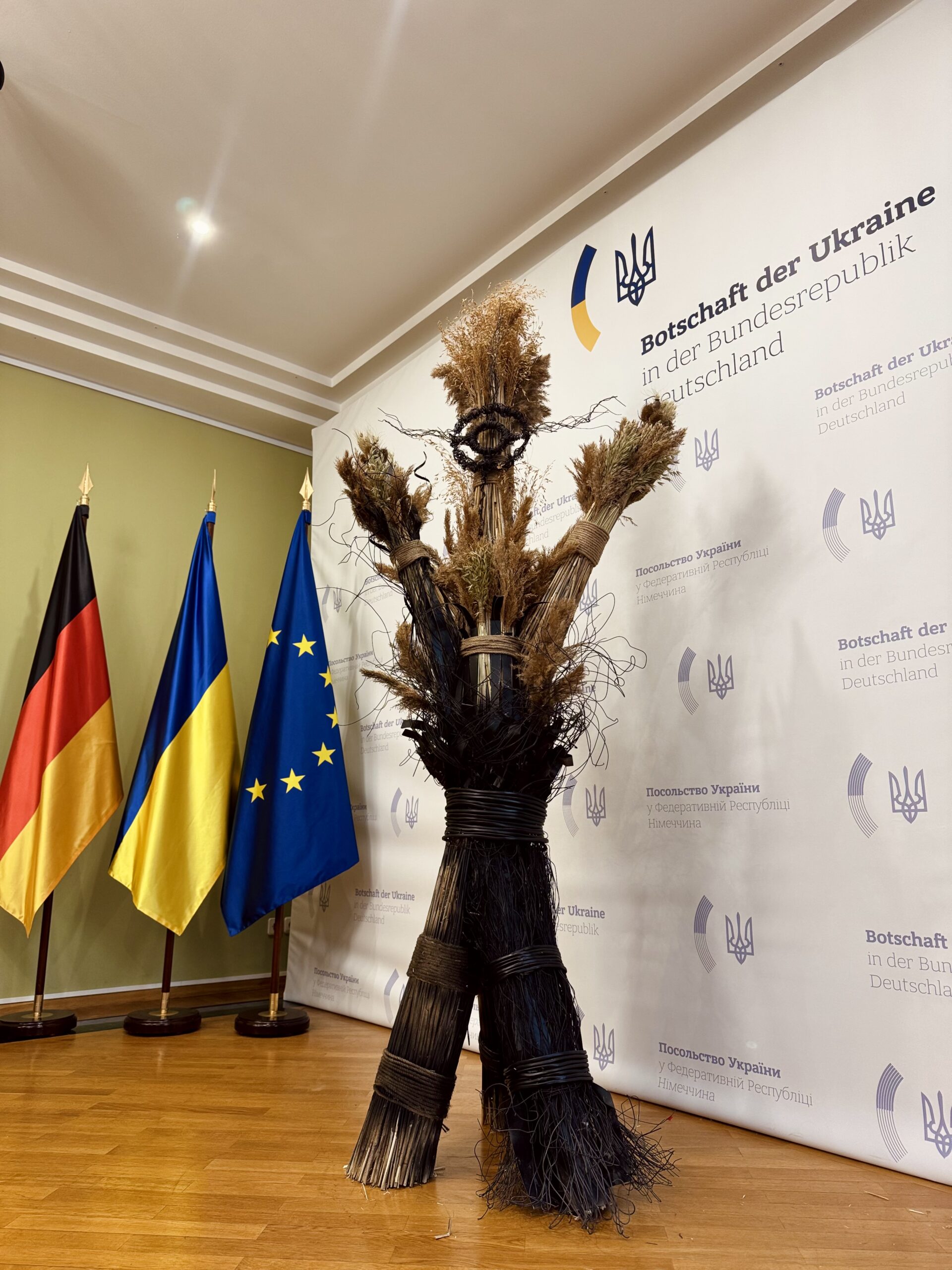
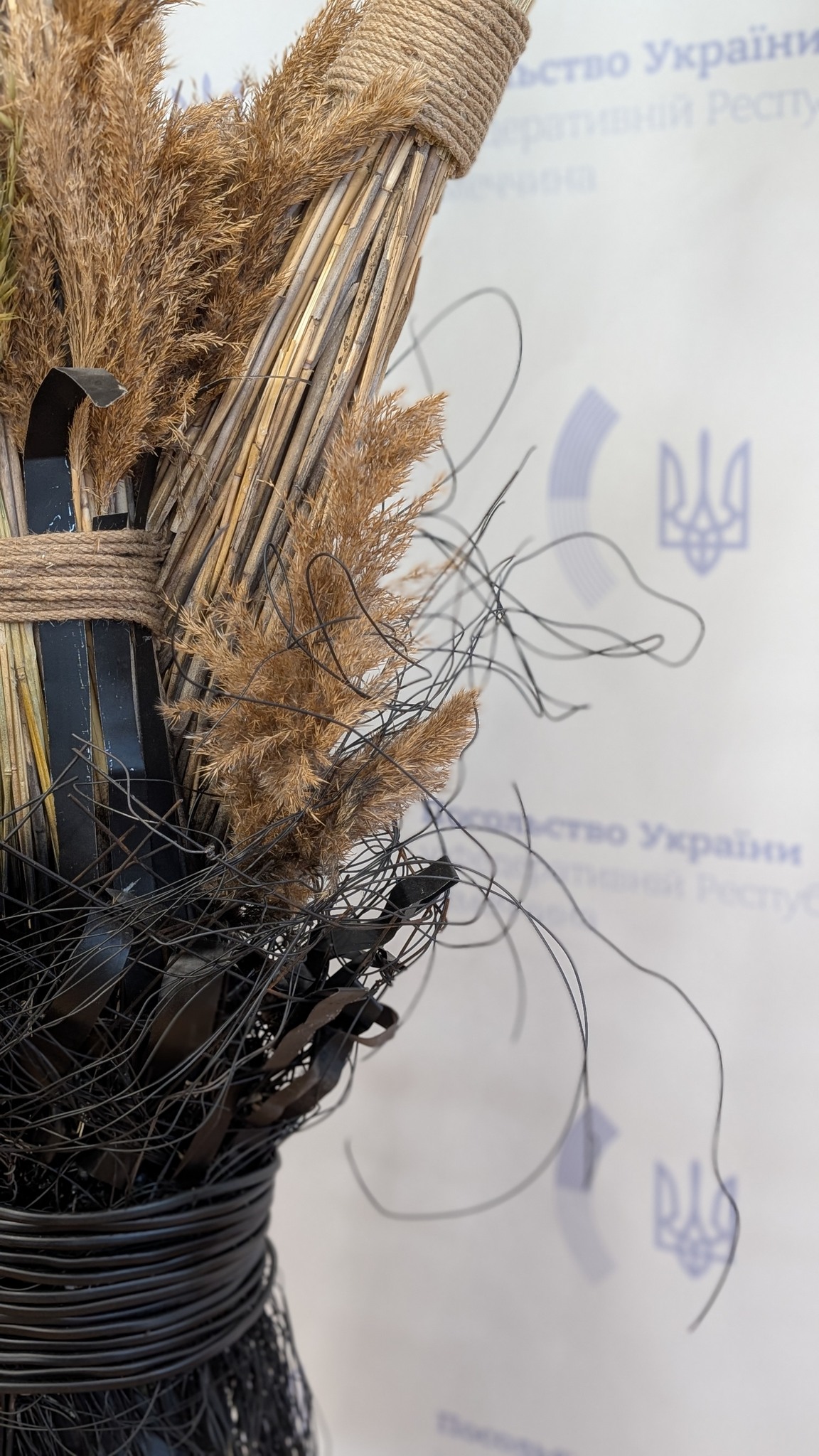
Artist: Sandra Bereza
The traditional Ukrainian Didukh is a symbol of family lineage, ancestors, and the connection between generations. But this Didukh is wounded by war. Its metal leg represents a missile transforming into a bowl from which life emerges.
Traditionally, a Didukh is burned after the holidays. This one will also be burned after the project ends — but its metal elements will remain. The metal sun on the Didukh will remain as well — a symbol of our resistance.
This work unites regions of Ukraine: the central part comes from Dnipro, the side sheaves from western Ukraine, and the top from Odesa. The Didukh represents Ukraine — a country that cannot be destroyed by war.
Embassies are not only administrative buildings — they are spaces for dialogue between countries and places where Ukraine’s image is shaped in the eyes of Europeans. That is why placing these installations in embassies became a public statement about ecocide at the international level.
The “Nature on Fire” project is also an advocacy tool that helps convey the truth to Europe: russia is destroying not only cities, but nature that belongs to the entire world. Each installation is a voice for those who cannot speak for themselves. For animals killed by shelling. For forests burned to the ground. For nature that cannot be restored.
We continue to speak about ecocide so the world will hear — and act. Join the #StopEcocideUkraine campaign.
The Nature on Fire installation project is produced by UAnimals NGO with the support of the Askold and Dir Fund as a part of the the Strong Civil Society of Ukraine – a Driver towards Reforms and Democracy project, implemented by ISAR Ednannia, funded by Norway and Sweden. The contents of this publication are the sole responsibility of UAnimals NGO and can in no way be taken to reflect the views the Government of Norway, the Government of Sweden and ISAR Ednannia.
SHARE
about UAnimals on social networks
SUBSCRIBE
to UAnimals news