



 19.08.2024
In early May, a forest in the Chornobyl Biosphere Reserve became the scene of another tragic incident. Border guards heard an explosion near their post. When they deployed a drone equipped with a thermal camera, the image it captured was heartbreaking: a rare Przewalski’s horse, listed as an endangered species, had triggered a landmine.
This year, Ukraine’s Minister of Environmental Protection and Natural Resources stated that our country is the most heavily mined in the world. Forests, meadows, and waterways in the east, north, and south of Ukraine are not only littered with mines planted by the invaders; Ukrainian forces have also laid explosives to defend the borders.
Mines in Nature Parks
Serhiy Kubrakov, director of the Desna-Stara Huta National Nature Park, periodically visits the ruined Desnyanka camp. There, he photographs an unexploded Grad MLRS rocket. “This rocket has been lying on the porch of one building for a year and a half,” says Kubrakov. “Fishermen have also reported unexploded Grad [rockets] stuck in the riverbank. This is what we’ve found. Who knows how much more is out there, embedded in the ground?”
A map reveals the extent of the danger: red zones mark areas that are mined or potentially dangerous, while yellow indicates possible mine contamination.
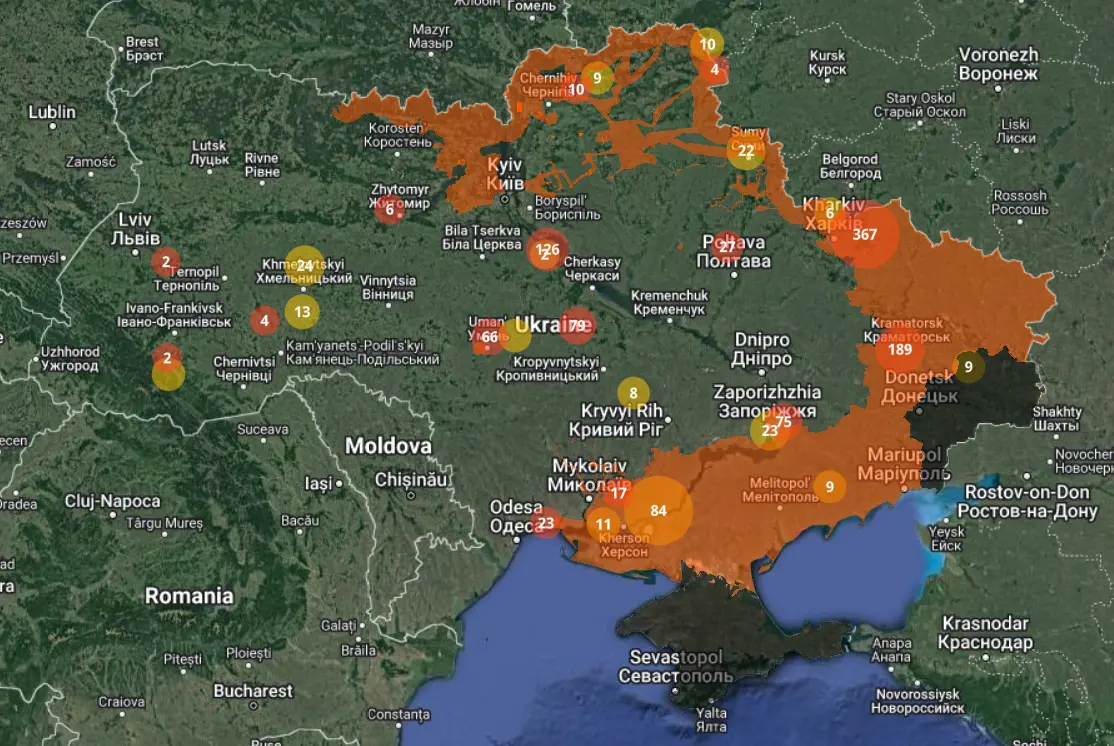
Source: SES Mine Action Service
Many nature parks and reserves fall within these red zones. In the Sumy region, for example, national parks like Desna-Stara Huta, Hetman National Park, and Trostianets, along with the regional Seymskiy Park, are affected. In Kharkiv Oblast, the Dvorichna National Nature Park is also under threat.
The State Emergency Service of Ukraine notes that natural areas, regardless of their ecological value, are demined last. In liberated territories, deminers prioritize areas where people live first, followed by roads and critical infrastructure. Only afterward do they move on to agricultural land and, finally, forests, meadows, and water bodies.
Even if deminers were ready to begin clearing natural areas today, most of these places are accessible only to the military. Fighting continues in many forests and near river floodplains, making humanitarian demining impossible under fire.
The Desna-Stara Huta park stretches along the state border with the Russian terrorist state. It includes the floodplains of the Desna River, which are partially accessible to park employees. However, the Stara Huta forests along the border are heavily mined by both Ukrainian and Russian forces.
“There have been incidents where our border guards nearly triggered anti-tank and anti-personnel mines. Enemy sabotage groups frequently enter the area, setting up booby traps and planting anti-personnel mines,” Kubrakov explains.

The park is littered with not only mines but also unexploded ordnance. While there is no official prohibition from emergency services, Kubrakov warns, “You can head in any direction, but it’s a one-way trip. Besides the mines, there are also Russian saboteurs. Last year, they shot at a milk truck and killed 10 people, including pensioners.”
Another park in the Sumy region, Seymskiy, is constantly shelled from the Russian side of the border, and its riverbanks are reportedly heavily mined.
Dvorichna Park on the Oskil River in the Kharkiv region, adjacent to the border, currently lies in an active combat zone. “We have no access to the area; it’s constantly under fire. The extent of the mining is unknown,” said park employees.
The first park close to the front lines where demining has begun is Holy Mountains in the Donetsk region. Almost the entire territory was liberated in October. After demining, park management plans to plow firebreaks—strips of land cleared of brush and other flammable materials. This will help prevent forest fires caused by shelling.
Forests near the Belarusian border are partially accessible to park staff and visitors, but they, too, are heavily mined. Blueberry and mushroom pickers are warned by special signs, although some have tried to use them as firewood or even as stakes for their tomato plants. Nevertheless, most foragers stay clear of the dangerous areas.
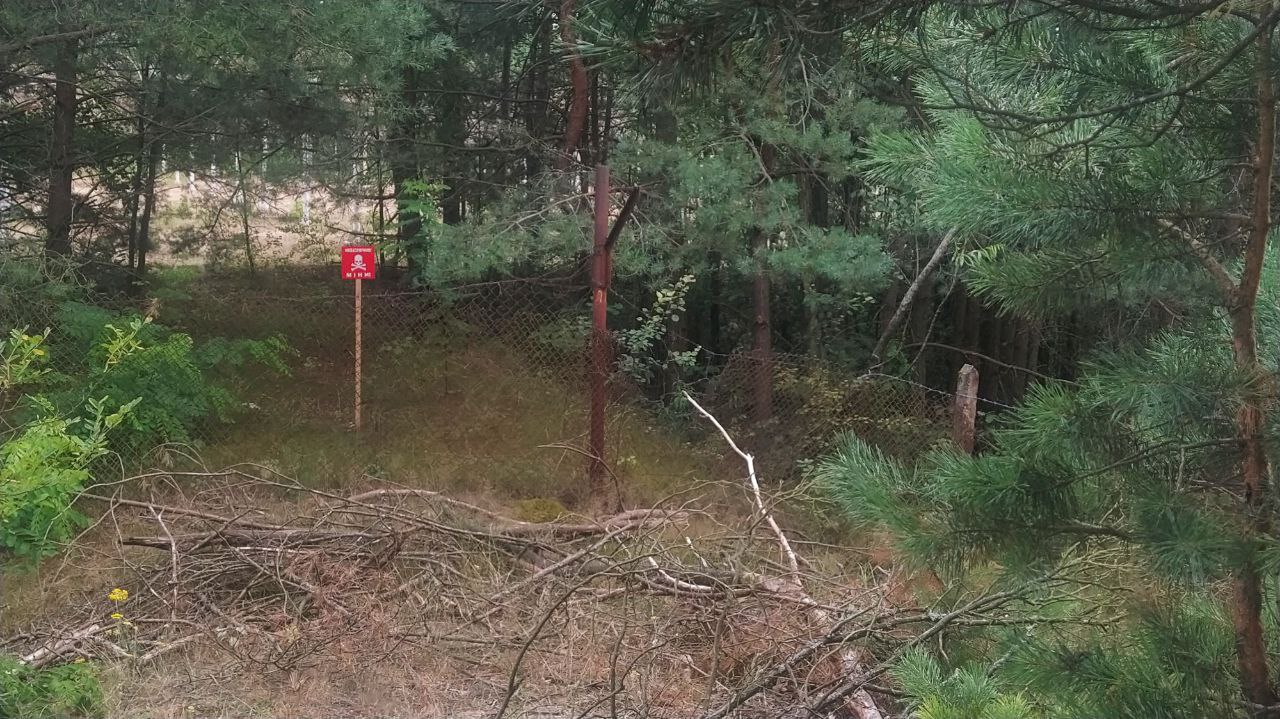
Forest in the Volyn region near Belarus
Do Animals Trigger Mines?
“These incidents are not uncommon, though they don’t happen daily. Since the death of the Przewalski’s horse, we haven’t recorded any similar cases,” says Yuriy Shakhraychuk, a press officer with the 9th Border Detachment.
In February of this year, near Makariv in the Kyiv region, a moose triggered a booby trap. A similar incident occurred in May in the Chornobyl Exclusion Zone, where a female moose was killed by a mine, and her calf, despite the efforts to save it, also died.
“In 2022, we spent a week working with combat engineers near Bakhmut,” recalls an infantryman from the 30th Brigade who wished to remain anonymous. “The combat engineers were setting up tripwires throughout that time. Every night, some animal would trigger them. It could be a fox, a boar, or a hare. We were expecting an enemy advance, but by the time they attacked, almost all the tripwires had been triggered.”
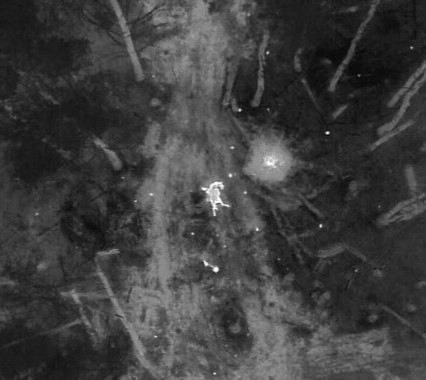
Przewalski's horse exploded on a mine in the Chornobyl Biosphere Reserve
However, documented cases of animals triggering mines are few, as it’s challenging to confirm what exactly happens in remote, mine-filled forests. “I’m always in touch with the military. They report that sometimes in the forest, where there are certainly no people, isolated explosions can be heard. It’s highly likely that wild animals are triggering these tripwires. No one would dare investigate an explosion in the middle of the forest, as it could cost them their life,” explains Serhiy Kubrakov, director of the Desna-Stara Huta Park.
Before the full-scale invasion, the park was home to bears, lynxes, capercaillies, numerous moose, and even occasional bison and deer. Whether these animals still inhabit the forests is unknown, says Kubrakov: “The entire territory needs to be surveyed. We don’t know how the fighting has affected animal populations, including rare species. Once we regain even limited access to these areas, such as along cleared paths, we can start drawing conclusions.”
Mines pose a threat not only in forests but also in water. From March 2022 to July this year, 68 carcasses of Black Sea cetaceans were found in the Tuzly Lagoons, according to the Ministry of Environmental Protection. The likely causes of death include bombings and underwater mines. If the animals didn’t die immediately, they succumbed later from their injuries.
What Types of Mines Threaten Animals and When?
“The corpses of animals with limb or torso injuries are a telltale sign of a minefield, something all soldiers are trained to recognize,” says Yuriy, known by his call sign Ram.
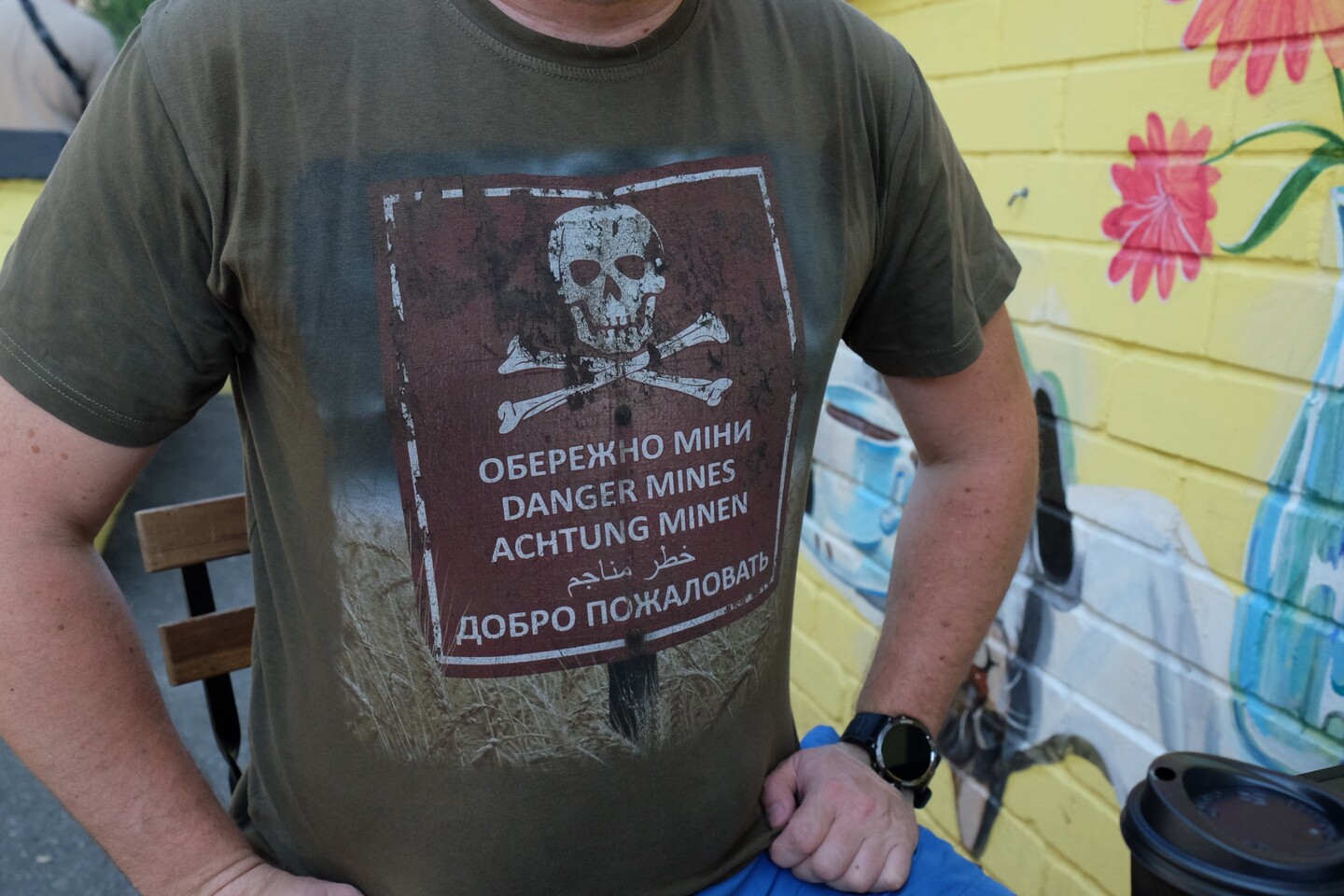
Yuriy Ram, as a soldier, conceals his face
Yuriy is a professional soldier. Although he’s not a combat engineer by training, he has learned just about everything about mine safety. He became an instructor in this field with the Ukrainian Legion, a civil society organization that has been teaching basic military skills since 2014. He explains the dangers that mines pose to living creatures in forests, meadows, rivers, and seas.
Not every animal that touches a mine or unexploded ordnance will cause an explosion. If a mine is pressure-sensitive, the outcome depends on the animal’s weight and whether it is walking or running. Each mine has an activation force (or sensitivity) measured in kilograms. For example, if a mine’s sensitivity is 5 kilograms, something weighing that much or more must press on it to trigger an explosion.
Pressure-Sensitive Mines
Yuriy shows pictures of deadly “tin cans” on his rugged military laptop. The international Ottawa Convention, which Ukraine has signed, prohibits our forces from laying anti-personnel mines. Russia is not a signatory to the convention.
Some of the most common anti-personnel mines laid by Russians in Ukrainian fields and forests are PMN and PMN-2, with sensitivity ranges of 8–25 kilograms. PMN-4 mines, with a sensitivity of 5–15 kilograms, are also frequently encountered. These mines pose a danger to many wild mammals, except the very smallest: hares (4–10 kg), foxes (3–14 kg), wolves (45–60 kg), wild boars (60–200 kg), roe deer (20–37 kg), and moose (360–600 kg). These mines can be dangerous for years before they are defused.
“Butterfly” mines (PFM) are used along the entire frontline. They are launched in large numbers from special dispensers and scatter randomly on the ground. Spotting a mine of this type is difficult: they are small, made of plastic, and even those who deploy them don’t know exactly where they land. While these mines usually don’t kill, they can cause severe bleeding and suffering. Their activation force ranges from 5 to 25 kilograms.
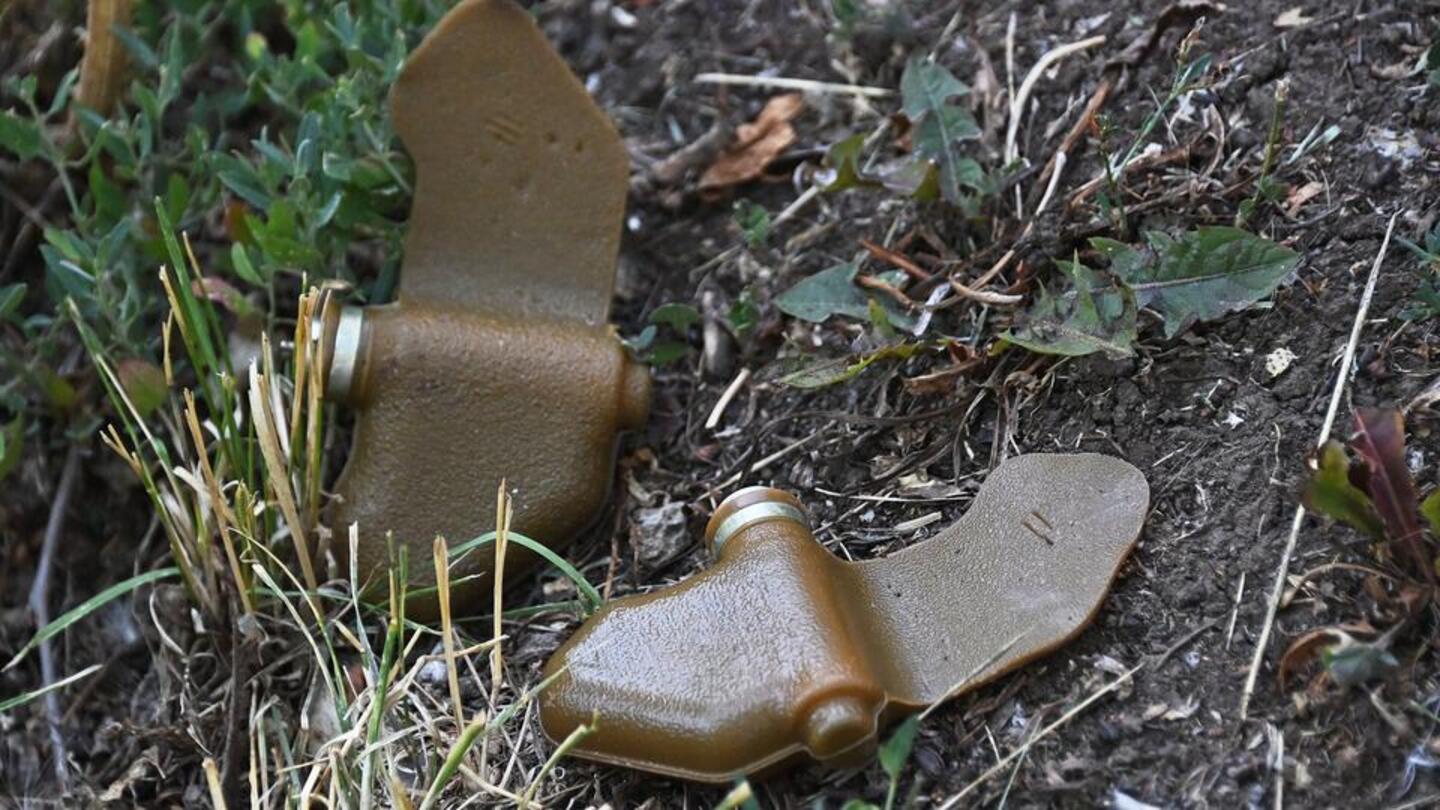
“Butterfly” mines
Anti-vehicle mines, which detonate under pressure, have higher sensitivity thresholds: the TM-57 mine requires 200 kilograms to activate, while the TM-62 series is triggered at as low as 120 kilograms. Some of these mines are cylindrical, while others resemble tin cans, similar to anti-personnel mines.
Anti-vehicle mines pose a threat to larger animals. “You won’t find these mines in dense forests, but they might be placed on clearings or roads,” says Yuriy. “If a moose decides to take a well-trodden path instead of trudging through the underbrush, it could be fatal.” These mines can also be set in steppe areas—anywhere without bogs or steep slopes.
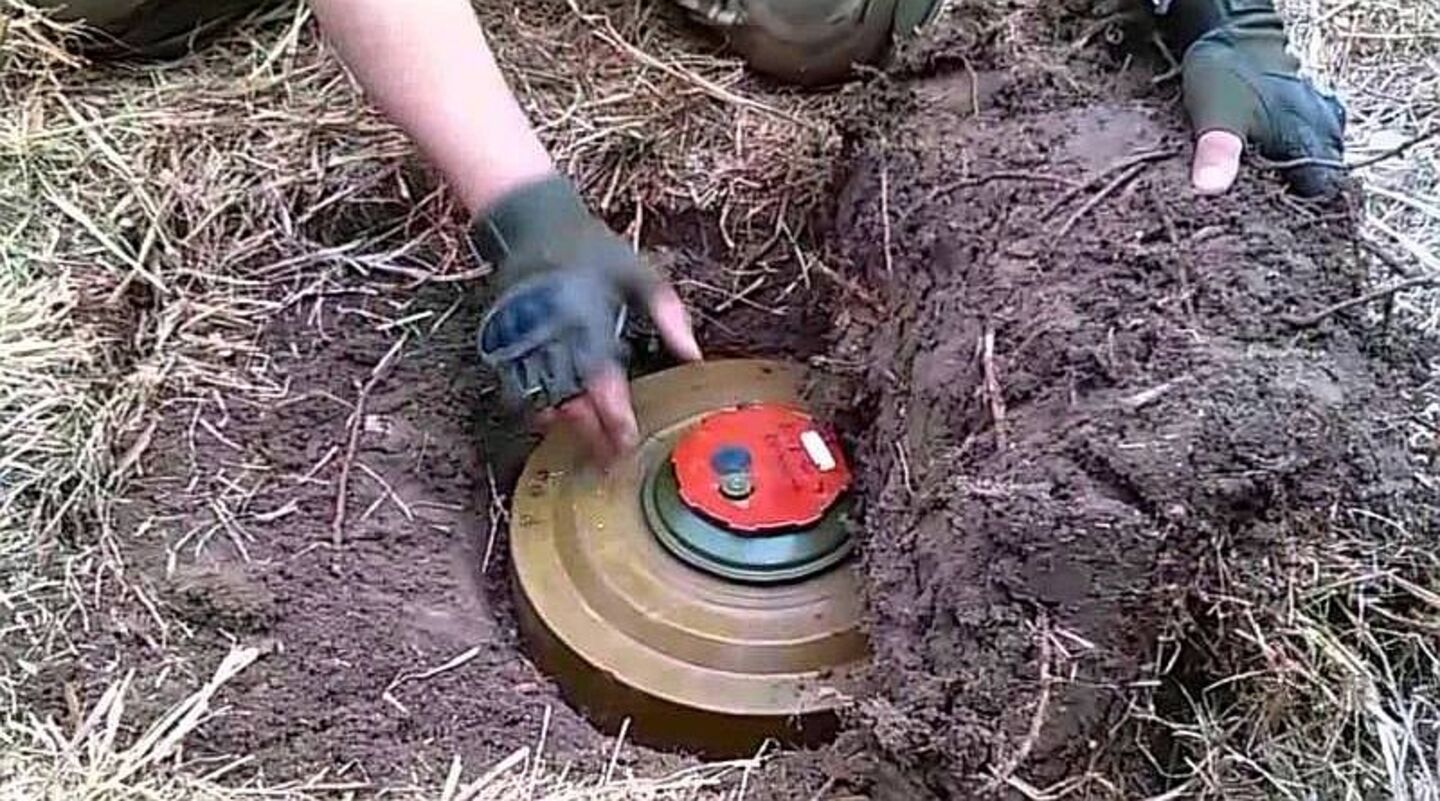
ТМ-62
Mines with seismic, magnetic, and infrared sensors are also used. These theoretically respond only to vehicles.
Mines with Tripwires
A tripwire is a wire or fishing line that connects a detonator to a tripwire-activated mine. Anyone who triggers the wire causes an immediate explosion. The tripwire can be set at a low level, where it might catch a crawling hedgehog or at shoulder height for a human. Any animal that exerts enough force to trigger the tripwire will most likely be killed.
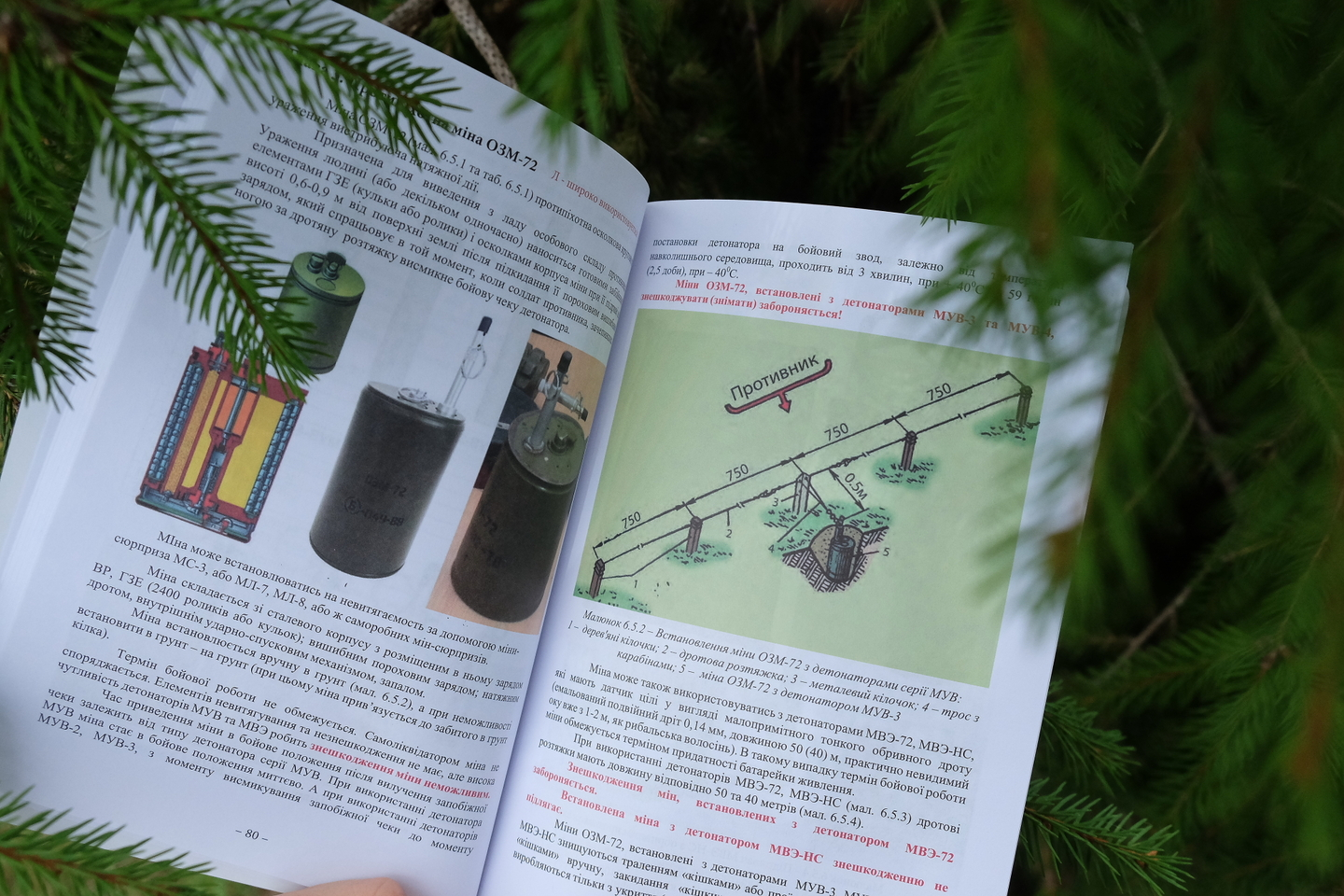
Russians frequently use the OZM-72 mine, another elongated “can.” It is buried in the ground, with the detonator connected to a tripwire. This mine has a sensitivity of 500 grams. If an animal or person touches the tripwire, the mine jumps out of the ground, explodes in the air, and strikes the victim with shrapnel.
The most sensitive mine commonly encountered is the POM-2. These mines are deployed through remote mining systems, which scatter them across the ground. A tin can with explosives lands on the ground, with four tripwire darts falling around it. “They scatter chaotically; one might land on a tree, another on a flower, and one could just lie on the ground. You stumble on it, pull the wire with a force of 350 grams… Even a hedgehog can do that,” Yuriy explains. This mine has a self-destruct mechanism that should activate no later than 100 hours after deployment.
Mines in the Water
Anti-landing mines (YaRM) are grayish cans hidden beneath the water’s surface. They are equipped with a cross-shaped sensor, also submerged. There is little to no chance of spotting one. The trigger force for these mines is 600 grams. Mines like these can be found in the Dnipro River and its tributaries in the Kherson region, “The explosion causes a powerful hydrodynamic shock, killing many fish.”
Another danger in coastal areas or shallow waters is the PDM-1M mine. It is a semi-sphere with a rod that is usually covered by water. If the rod is displaced with a force of 18 kilograms or more, the mine will explode. “Over time, these mines can break free from their anchors and drift out to sea after a storm. The destruction of the Kakhovka Hydroelectric Power Plant sent many mines into the Black Sea, where they drifted towards Turkey and Odesa. If a mine breaks loose, it will float like a buoy until it hits something. That could be a dolphin or a person who brushes against it with their hand or an oar.” At a few meters’ distance, the mine will kill anything nearby, while those farther away may suffer concussions.
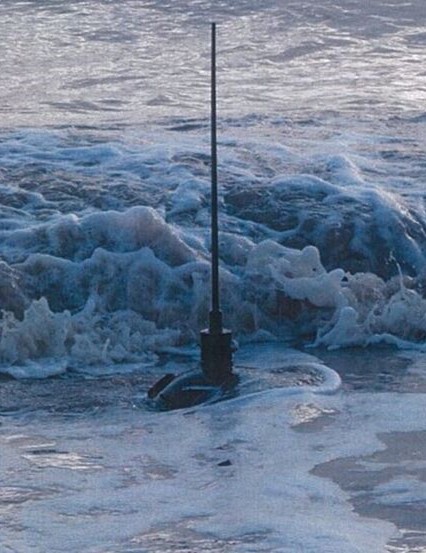
PDM-1M
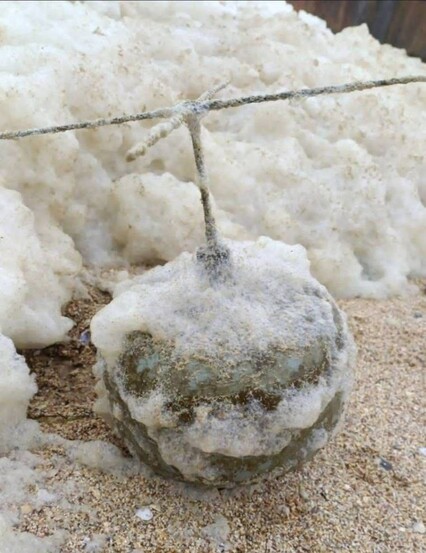
YaRM
Why You Shouldn’t Go Mushroom Picking in Former Combat Zones
“‘I won’t go mushroom picking in the forest,’ is an old combat engineer’s favorite saying,” Yuriy quips darkly. Until deminers provide a qualified assessment that an area is clear, entering it is off-limits, he warns. “There could be countless tripwires… Some might have been disarmed by the military, but others could have been missed. A mine might be buried in the ground, camouflaged by turf, grass, or branches, making it impossible to detect without special equipment. Plus, a soldier carries two tourniquets with them. But a mushroom picker goes with just a knife and a basket… If this person triggers a mine, they could bleed out in the forest. The phone might not work, there’s no tourniquet—and then what?”
While animals can trigger tripwires or set off anti-personnel mines, the primary danger mines pose is to humans, “If a mine is lying under the snow, a hedgehog might crawl over it without issue. But a person, thinking they can follow the tracks—’a hedgehog passed here, so can I’—will be in danger. The hedgehog weighs a kilogram, but a person weighs 80.”
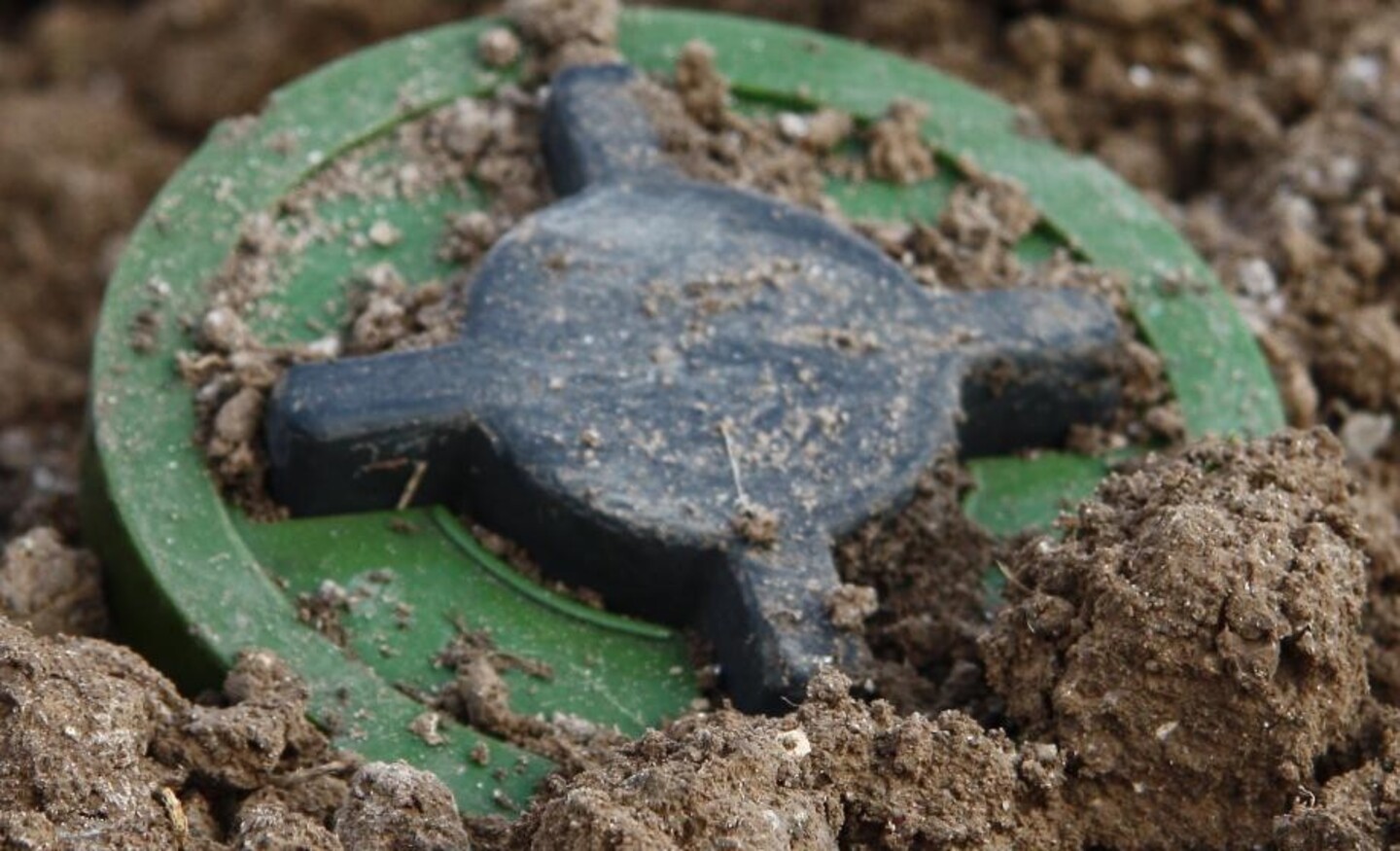
PMN-2
There are also mines that can explode just by a person approaching them, like the POM-3 mine with a seismic sensor. For this mine to detonate, one doesn’t need to step on it or trigger a tripwire. The seismic sensor detects the vibrations from a person’s steps and activates the detonator.
When Will We Be Mine-Free?
Let’s take a look at the map again and find the Falkland Islands in the Atlantic. For two and a half months in 1982, a war raged between Britain and Argentina over control of these islands. The intensity of combat was lower than in Ukraine, and the Falklands’ area is almost 50 times smaller than Ukraine’s. Yet it wasn’t until 2020 that the UK officially declared the islands fully demined—38 years later.
Some mines self-destruct after a certain period. Those without a self-destruct mechanism will remain a hazard for years, “These things can stay in a ready-to-kill state for decades. Metal and plastic can take years to decompose. Even if something is done incorrectly and water leaks inside, it won’t affect the mine’s lethality,” says Yuriy.
When will it be safe to go mushroom picking across all of Ukraine?
Predictions after the first year of the war estimated hundreds of years. As new technologies and vehicles have been acquired and more demining operators have begun working in Ukraine, those hundreds of years have been reduced to decades.
According to calculations by James Cowan, CEO of the Halo Trust is a charitable organization that performs humanitarian demining.
HALO Trust, one day of fighting in Ukraine equates to a month of demining. So, for now, we are at least 75 years away from being able to pick mushrooms safely in the Stara Huta forest.


This publication was compiled with the support of the European Union and the International Renaissance Foundation within the framework «European Renaissance of Ukraine» project. Its content is the exclusive responsibility of the authors and does not necessarily reflect the views of the European Union and the International Renaissance Foundation.
Content


