


 31.10.2024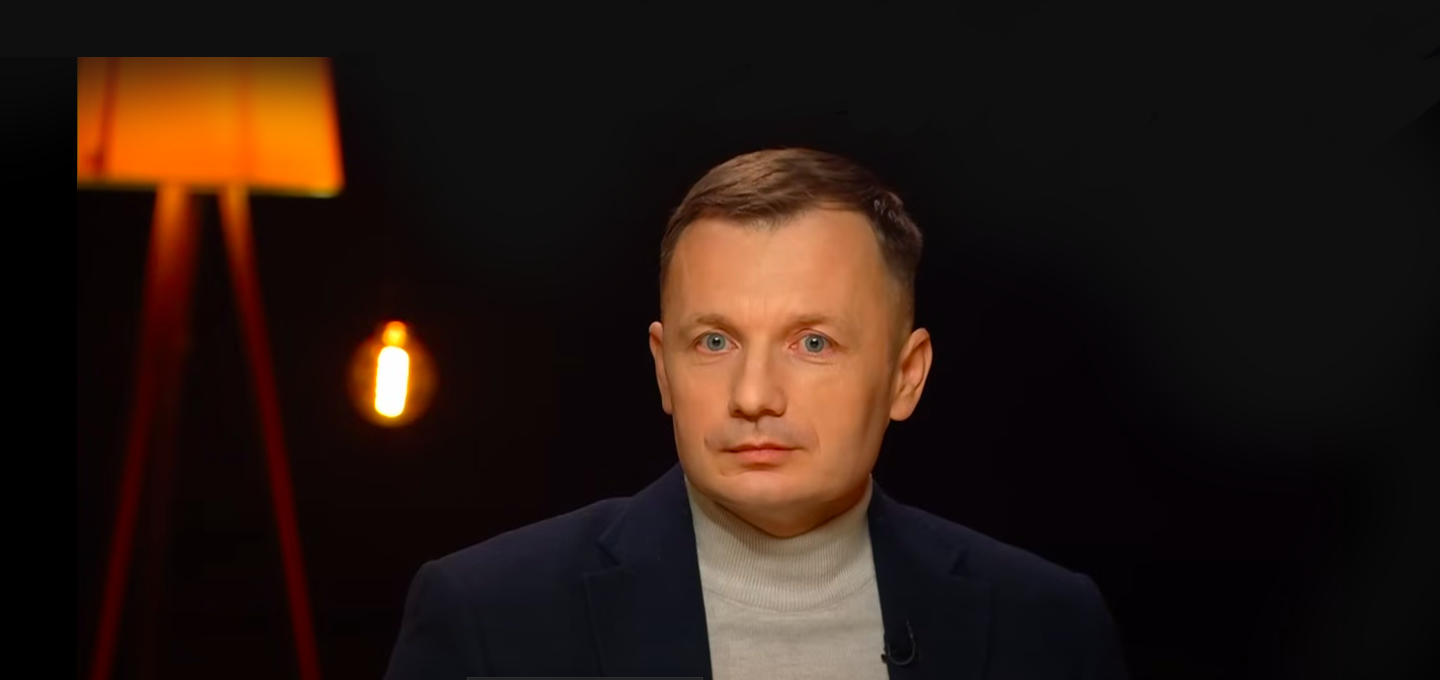
Viktor Shapoval has led Askania-Nova for two months longer than the duration of the full-scale war with russia. Prior to this role, he served for 20 years as a research officer and head of the biomonitoring and protected steppe laboratory within the reserve, joining right after graduating from Kherson State University. Over this time, he has not only acquired extensive knowledge about the unique steppe environment but has also, as he says, developed a deep love for Askania. It pains him to watch from afar as the reserve suffers under russian occupation, a situation he shares in the following interview.
History and Significance
The full-scale invasion marks Askania’s third encounter with war, and military conflicts are fundamentally incompatible with preserving natural reserves. During the Second World War, German and Soviet forces ravaged Askania-Nova’s infrastructure, showing little regard for the animals’ welfare; the Germans even transported a significant part of the collection away. This happened during the First World War as well. Currently, only its distance from the frontline provides a degree of safety.
Askania-Nova was seized on the first day of the full-scale invasion without notable resistance as the fighting began closer to the Dnipro River and near Melitopol. There were only isolated clashes near the reserve, and damaged military vehicles were found on its outskirts. However, the level of combat intensity witnessed in other Ukrainian protected areas did not occur in Askania-Nova.
It wasn’t until two months later, on May 2, 2022, that representatives of the occupation authorities arrived. During their visit, I heard much “instruction” about the so-called “special military operation,” responsibility, and other such nonsense. I made my Ukrainian stance and a lack of desire to cooperate clear. That, unsurprisingly, was not well-received. I also stated the amount required to sustain the reserve, and from their reaction, I saw that they appeared “a bit” surprised. They assumed they could simply step in and “rescue” us but this happened to be too expensive.
I believe the reason for their initial delay in coming to Askania-Nova was banal: they prioritized capturing profitable farms and agricultural enterprises. There is no need to look for any environmental logic or understanding of the historical value of Askania-Nova in their actions. They were utterly disinterested in the history, cultural and ecological value, or international conservation status of the reserve.

Money and Support
The reserve is a budget-funded institution, so we had a procurement plan, with the final stages of tendering scheduled for late February. Naturally, everything was disrupted, and we faced a challenge in sourcing food for the animals. This didn’t mean starvation struck immediately. We had some reserves, but the feed consumption in Askania-Nova is quite high.
The frontline severely disrupted and cut off all logistics — Askania-Nova essentially turned into an isolated island amid a swamp. We had no choice but to openly request help via social media. It was a risky move; it’s no secret that the FSB monitors social media.
When we posted our first message about Askania-Nova’s critical needs, we connected with Oleksandr Todorchuk [founder of UAnimals]. Late that night, he wired us a substantial amount. A person we had never interacted with understood the situation and trusted us. We used that initial donation from UAnimals to purchase the first batch of feed. And we are incredibly grateful.
Please, consider supporting UAnimals so the team can support reserves and shelters during this cruel war.
All those willing to help, including international partners and charitable organizations, could only support us financially. Delivering supplies to Askania-Nova from [Ukraine-]controlled territory was impossible, and requesting it from the other side was simply immoral, and we rejected that idea outright. We purchased goods within the occupied territory from our local farms. Thanks to this assistance, we managed to sustain ourselves in almost autonomous mode for more then a year.
Duty and Responsibility
The question of evacuation was not open for me for a long time. The responsibility for the reserve rested squarely on me as the director. For employees whose presence wasn’t essential on-site, we implemented remote work. However, those who cared for the animals and plants remained in the reserve on their workplaces.
We are neither a library nor a trolleybus depot — you can’t close us for a certain period of time and ask the animals to wait.
I left on the last day before the annexation was announced, on September 30, 2022. During the seven months I was in Askania, we stabilized the situation — securing feed, building materials for routine repairs, and spare parts for equipment maintenance.
A budget-funded institution has specific obligations, such as preparing financial and scientific reports. While on occupied territory, I couldn’t fulfill these. By leaving, I was able to meet with our partners and arrange charitable funding for the reserve, managing Askania-Nova remotely.
Even in such challenging circumstances, the reserve operated under Ukrainian jurisdiction. It’s telling that on collaborator Volodymyr Saldo’s channel, there was information of Askania-Nova “sabotaging” the russian authorities’ orders for over a year — a recognition of our resistance by the invaders themselves. To me, “sabotaged” is too mild a term.
On March 20, 2023, Dmitry Meshcheryakov was installed as the occupation director. Since then, all charitable expenses for Askania-Nova’s upkeep have ceased.
We still receive information about what is happening in the reserve, but I no longer have direct leverage. We document all the damage to the natural and artificial ecosystems in Askania-Nova, develop proposals for assessing these damages, and relay this to the relevant authorities and agencies to ensure future compensation through reparations from the agressor.
Our scientific work continues. We received a certification confirming the institution’s status as a scientific establishment, we continue to carry out a research program, and publish the professional journal Bulletin of the Biosphere Reserve Askania-Nova.
There are still many things that can be accomplished remotely. For example, we document all fires. Up until March 2023, we could inspect fire zones directly, but now we rely on satellite images.
Negligence and Lawlessness
In August 2023, there was a large-scale fire in the Great Chapelsky Hollow [also referred to as the Great Chapelsky Lowland] where hoofed animals are kept. Predictably, the invaders immediately blamed the Ukrainian Armed Forces, alleging that artillery fire was the cause. They even announced some sort of investigation, but judging by the silence that followed, they quickly realized their own involvement in the course of this “investigation.”
The lack of proper scientific and veterinary oversight in the reserve causes significant issues and animal deaths. For instance, in November 2023, three African buffaloes died on the Big Chapelsky Pod. You might ask why a warm-climate African animal was left in unsuitable conditions in November. The answer is simple: the occupation administration has no relevant experience. They failed to properly move the animals to winter enclosures. Another animal died from an injury caused by a vehicle — a buffalo fractured its cervical vertebra and died on the spot. We have reported all these incidents to law enforcement.
The animals also suffer from the constant flyovers of russian aircraft above Askania. In August 2022, during one such flyover, a nilgai antelope panicked and collided with a concrete wall. Environmental laws prohibit flying over reserves due to the stress it causes the animals.
The invaders are even stealing our animals. On December 1, 2023, they took seven animals, including two Przewalski’s horses. We notified the National Academy of Agrarian Sciences of Ukraine, the Ministry of Environmental Protection and Natural Resources, the National Commission for UNESCO, and the Ministry of Foreign Affairs through official letters.
The Przewalski’s horse is a species listed under a special appendix to the Convention on International Trade in Endangered Species of Wild Fauna and Flora, which russia has also ratified. But whether the terrorist state follows international norms is a rhetorical question.

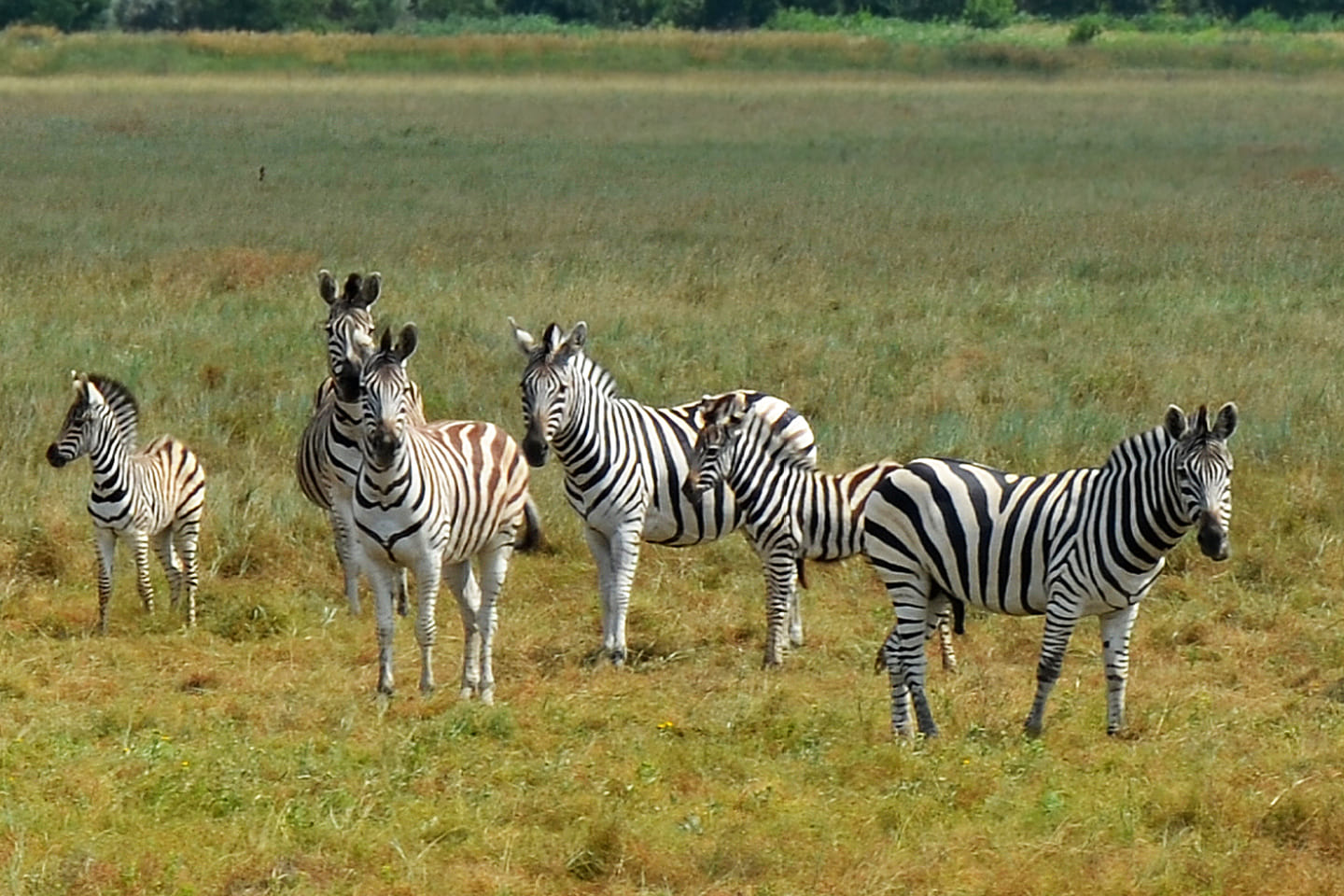
Onagers. Photo by Viktor Gavrylenko
Only the liberation of Askania-Nova will put a stop to the invaders’ unlawful actions. The only real safeguard against this is the Armed Forces of Ukraine.
Currently, Askania is operating on inertia, surviving solely due to the dedication of the Ukrainian staff with many years of experience.
Yet, I have to give the occupation authorities credit — they’ve become adept at creating an image of “happy life” under the russian flag. The russians have now opened up excursion routes and are claiming it as an achievement. These routes existed long before the occupation administration arrived and even long before I was born — dating back to Friedrich von Falz-Fein (1863–1920) was the founder of Askania-Nova nature reserve complex.Friedrich von Falz-Fein. Only professional propagandists could so skillfully claim others’ accomplishments as their own and parade them as their achievements.
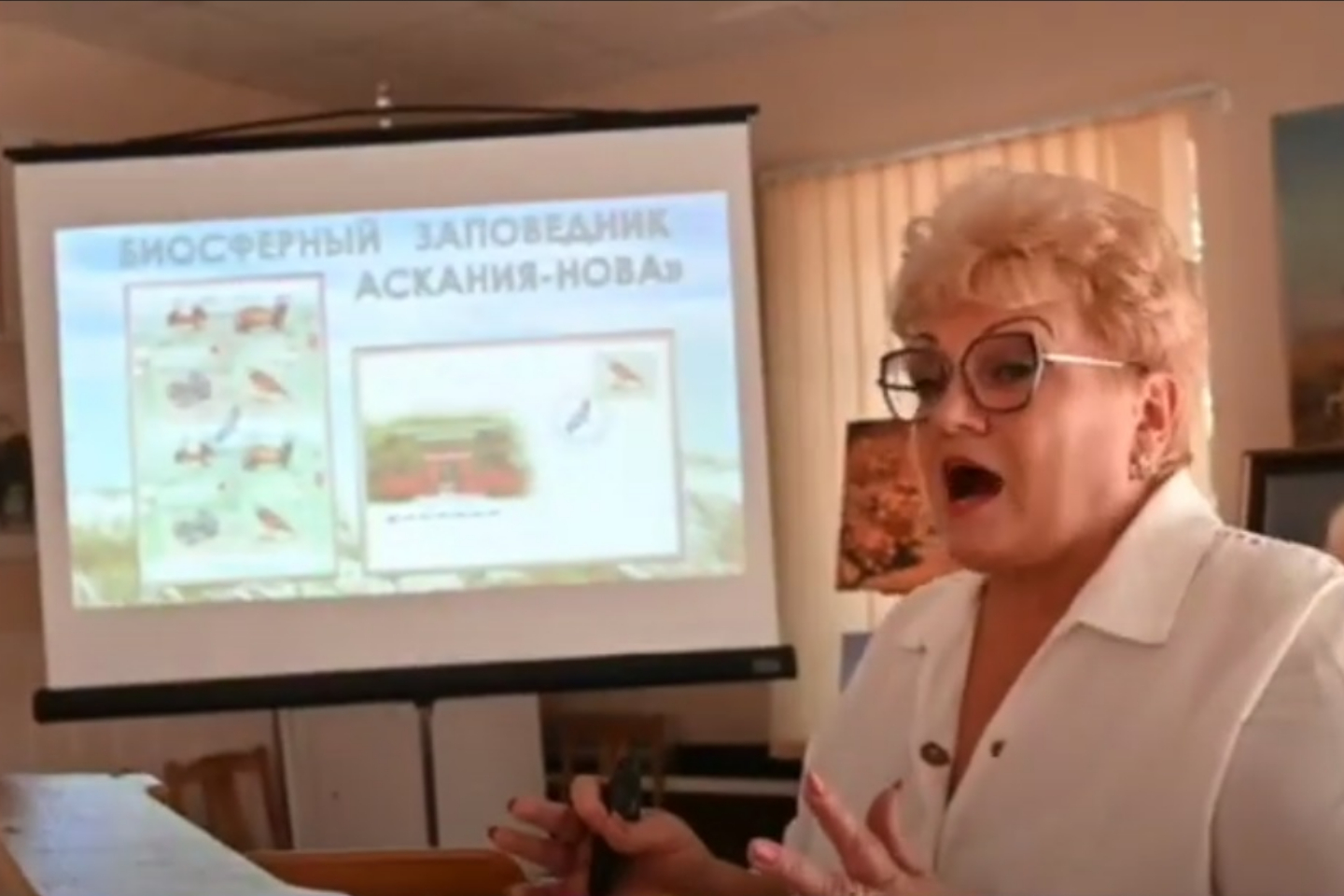
The presentation of a stamp that russians dedicated to Askania-Nova. Source: Rayon.Kherson
Liberation and Restoration
We are currently in a state of uncertainty. Only after the liberation will we understand exactly what needs to be restored in Askania-Nova.
It’s clear that the invaders will take some animals away, and some will die. But I believe some animals will remain — surviving even through catastrophic circumstances. We will work to restore their populations.
We might face a major demining problem in the reserve. The soil cover is also damaged by craters and trenches. The invaders started digging a trench even in the virgin steppe, but we managed to stop these insane actions.
We know that trees are being cut down in the arboretum, and certain significant collections have already perished. We will need to restore the infrastructure, the territory, collection funds, and the natural ecosystems.
Through this experience, I can say that I’ve come to fully grasp a deep love and attachment to Askania-Nova, one that only became clear to me when I was deprived of it. I am no different from the hundreds of other enthusiasts working in the nature conservation field. It’s not highly profitable, but for us, it’s a calling. This is work that captures you and demands a natural reverence for nature. It’s a commitment for life.


This publication was compiled with the support of the European Union and the International Renaissance Foundation within the framework «European Renaissance of Ukraine» project. Its content is the exclusive responsibility of the authors and does not necessarily reflect the views of the European Union and the International Renaissance Foundation.
Main image: Viktor Shapoval. Source: Dim TV channel
Content


