


 01.07.2024
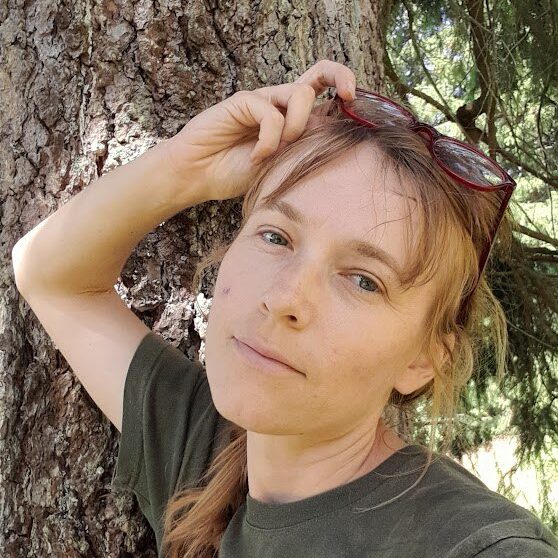
Veterinarian Andrew Kushnir sits in the lobby of a Kyiv hotel with a huge yellow backpack and several bags. “You never know what to bring to Ukraine; you might need anything,” he shrugs.
Andrew has long lived out of a suitcase. He volunteered at a shelter in India before he even studied to become a veterinarian, and while studying, he herded buffaloes in Zakarpattia during breaks. He spent several months at wildlife centers in Costa Rica. After our meeting in Kyiv, Andrew visited Kherson on a spay/neuter mission and has already returned to the United States to operate on an injured alligator and a snake that swallowed a golf ball.
Andrew travels the world, moving from one project to another. But he visits Ukraine most often, as his family originates from here.
A surgeon in animal shelters; an amateur musician who plays the bandura; a volunteer who sails to African islands to treat the livestock of local residents… And this all describes one person. It’s no wonder I didn’t want to miss the moment when Andrew was still sitting among his packed bags in a Kyiv hotel.
Andrew or Andriy?
We could stay at the hotel, but Andrew is restless: we set off for a café, but the central streets are closed, and the journey along the hilly right bank of the Dnipro in Kyiv takes almost an hour. It seems I grew more tired during this time than he did. We spoke in Ukrainian all the way, and upon arrival, we switched to English.
You’ve just arrived in Kyiv. Where have you been before you came here?
I was in Lviv at the Home of Rescued Animals shelter, working with the Worldwide Vets organization. We were spaying and neutering dogs and cats, and treating wounds, infections, and doing some surgeries with wildlife.
This is my fifth time in Ukraine.
I see you have a tattoo, where did you get it?
When I was little, my grandmother embroidered a shirt for me. The tattoo reminds me of this. I had it done at the beginning of the full-scale invasion in Lviv.

Can you tell us about your Ukrainian origin?
My father was born outside of Dnipro in a small village called Spaske during World War II. After two years, he and his family were taken to Germany for forced labor. After the war, he lived for 10 years in a refugee camp. Then, after 10 years, he came to the US with his father, mother, and two brothers. I have two sisters and a brother. My mother is American, but she understands some Ukrainian.
We spoke Ukrainian. How is it that you know our language?
When I was little, my parents founded a Ukrainian church in San Diego. There was also a school where we studied the Ukrainian language and culture. The church and school are no longer there.
Do you practice anything related to Ukrainian culture?
I play the bandura. Our family had a friend who was also from Ukraine and played the bandura very well. He was like an uncle to me. He taught me how to play this instrument. We ordered a bandura from Kharkiv, and I started playing at the age of five. I’ve been playing for over 30 years now.
What’s your favorite song?
Dumy Moyi and Shchedryk. I also sing. By the way, I sometimes cook borshch too.
The Nomad Vet
How did you decide to become a veterinary doctor?
Well, a book. I read a book called Appointment at the Ends of the World, which is the memoir of a wildlife veterinarian. He traveled around the world to very remote places to work with very exotic species. I read the book and thought, wow, that’s incredible; that’s what I want to do in life.
Ever since I decided to become a veterinarian, I have wanted to work with vulnerable animal populations around the world. I felt that I could make a big difference in not just animals’ lives but also people’s lives by helping those kinds of animal populations. These are animals on the streets and in shelters, but I also work a lot with wildlife—essentially with animals who don’t have anyone advocating for their health.
I work in different countries in different settings, and I’m always adapting to the situation. So, it’s always new. I’m always learning more and more.
What does your everyday life look like?
It depends on a month. This month, I’m in Ukraine working with shelters. When I go home, I’ll work at wildlife centers in Florida with birds, tigers, dogs, and cats. Then, I’ll go to Uganda to work with chimpanzees for a month to help with health checks and make sure that they are ok and healthy. And then I’ll go back to California for 3 or 4 months just to stay with my family and work with dogs and cats. Then, hopefully, come back to Ukraine to do more spaying and neutering.
I’m self-employed. I do a lot of volunteer work. This whole trip to Ukraine is volunteer work. In fact, I’ve saved money back home to come to Ukraine and work. If I work with organizations, I do get paid, but it depends on the project.
What’s the most unusual place you have been to?
Uganda is a pretty unique place. I go to a chimpanzee sanctuary in Lake Victoria on Ngamba Island every July. Victoria is the largest lake in Africa. It’s huge. And there is an island sanctuary where 50 chimpanzees live. Every July, I work with the team to conduct their annual health checks to make sure they are healthy and monitor diseases. This year, when we finish with chimpanzees, I’ll be going to other islands to set up mobile veterinary clinics to help people with their cows and goats, pigs, chickens, dogs, and cats. We’ll take a little boat with people from the chimpanzee island, and we’ll land at different parts of different islands. We’ll set up the tables and all our equipment, and then we’ll invite people with animals to come.
This is the first time I’m doing this – it’s a pilot project. So I wasn’t able to get any donations, but hopefully, after this first trip, I can reach out to different organizations for more funding in the future.
Do you have memorable cases from there?
Last year, when I traveled to Uganda, I brought a portable dental machine for human teeth. I was able to clean the chimpanzees’ teeth for the first time in their lives, which was really cool. They have the same number of teeth that we have. They were fully asleep.
Do you see differences in attitude towards animals?
I travel around the world, so I see many different perspectives that people have towards animals. And I found that no matter where I go, if people’s lives are good, they tend to treat animals well. When people are poor, they tend to treat the animals poorly. Maybe they don’t know better or just don’t care—they have bigger issues.
What about Ukraine?
I wouldn’t say that attitude in Ukraine is worse than in other countries I’ve been to.
I’ve seen the full spectrum of attitudes towards animals. When I came here to help, it was with very dedicated people, people who respect, care, and love animals, who put themselves in danger to evacuate animals. I’ve also seen another side when people tie up an animal and leave it.
Do you have any pets?
Oh, my dog Henry… I was working at the shelter in California doing surgeries one day, and I was doing my presurgical exam on lots and lots of dogs to make sure they were healthy for surgery and anesthesia. I met Henry that morning. He was scheduled for castration. I fell in love with him. And he’s been living with me for more than five years. He is lazy, emotional. He always looks sad. It’s because he’s a boxer, and it’s just the way their faces are, even if it’s happy – it looks sad. He is very loyal. Like me, he can sleep anywhere.
When I travel to the US, he comes with me. But when I travel to other countries, I leave him with my family.
To Ukraine During the Full-Scale War
After the full-scale war started, how did you come to Ukraine for the first time?
I pretty much stopped everything in my life. I had a full-time job, and I left to come and help where I could. In the second week, I was in Poland working on the Polish-Ukrainian border (Medyka-Shehyni border crossing point), with a tent, with people from IFAW, and we were helping refugees as they crossed into the EU with their animals. For about two months, I stayed at the border. It was really tough listening to the stories from people who had fled from Mariupol, Kherson, and Kharkiv. But I didn’t think about leaving at all. I knew that being able to help Ukrainians at this time was important for me.
Do you have any special memories from that time?
I think that was my third day at the border, midnight. And this woman came into our tent. She came from Mariupol with her mother and a cat. She was worried because her cat hadn’t peed for two days. We had rest cages for the cats, a place where he could hide, and a litter box. We put the cat in the little cage, and he immediately went to the kitty litter and started peeing. And she started crying. Finally, all the stress she’s been holding… She was so happy. I started crying, too.
We talked. She was saying how she had just left her home in Mariupol, how her house was destroyed, it was hit by a missile. And here is this woman who packed her life in several suitcases, and her biggest concern was her cat not peeing.
The whole reason I was at the border was because there were so many people crossing the border with their animals. They wouldn’t leave their animals behind.
Where did you go after that?
Then I came to Ukraine and traveled around—to Lviv and Odesa for a few months, and then home for June and July 2022. I came back in August. For three weeks, I was supposed to be volunteering with a couple of veterinarians in Odesa. I worked with exotic animals. That three-week trip became four months. I had to help with the evacuation abroad of lions from Odesa.
Evacuation of a Lion Pride
The lions got names — Stephania, Lesya, and Taras. I reached out to IFAW and asked them if they could help get permits to transport the lions from Ukraine to Poland and then to the US. Even during a war, the paperwork is complicated to transport big animals like lions, tigers, bears, and leopards. This was October or November of 2022… this was when Russia started to target energy infrastructure, power plants, and there were lots of blackouts. So the office which issued permits wasn’t open. So we couldn’t get the paperwork. Eventually, the Polish government said, “OK, you can bring the lion cubs over. We’ll make it work.” That’s when I traveled from Odesa to Kyiv with the three lion cubs and the two vets I was working with.
We went to Natalia Popova’s Wild Animals Rescue Center. Natalia also had a lion cub who was going to join the three and make one pride. She also had a black leopard cub, six adult lions, and an Asian black bear. All of them were evacuated to Poland.
We all went together. Natalia had a big transport truck. We put the cubs into crates and put them in the back of the truck. Small cubs were in small cages, and they sat in the front with us. They were small enough, and I was still bottle-feeding them. We drove from Kyiv to Poznan for 36 hours.
I felt bad for the zoo staff because we showed up with a lot of work, especially with the cubs. Four lion cubs and a leopard cub were eating 4-5 times a day. So I stayed at the zoo for about a month. I lived at the zoo. They gave me a uniform and a golf car. I drove to the cubs, and I fed them.
After a month, permits came to transport them to the US. Someone from New York very graciously donated a private jet to fly the lion cubs all the way from Warsaw to Chicago.
International airline regulations require each animal to be in a crate. Even though it would have been okay if they were free, we weren’t allowed to, and it’s safer for them to be in a crate. They were up in the cabin with us.
It was probably very stressful for them because they had to be separated from each other, and the plane was very loud.
The whole trip was long – 12 hours. In Chicago, we were met by the Wildcat Sanctuary staff. That’s where the lions are now. We loaded the lions into their truck, and then we drove 6 hours to the sanctuary.
The black leopard stayed in Poznan, and now it lives in France.
I saw a video where your arms were scratched!
They have very, very sharp claws. They tried grabbing and holding my arm as I was holding the bottle. When I shared the video with scratches, I was in transit, so I didn’t have time to go get gloves. But once I got to Poland, I definitely got gloves very quickly.
Is there any point when you must stop contact?
Yes. The sanctuary where they are now is a zero-touch facility, no one has any contact with them, which is absolutely the best possible way. It keeps people and animals safe. We, humans, have this fantasy that we can pet and touch and cuddle any animal. On social media, people are sharing videos of hugging monkeys, cuddling leopards, and sleeping on tigers.
Maybe it can be okay. In 90% of cases, there’s no issue hugging a tiger that has lived its whole life in captivity. But that 10% of the time when something goes wrong, that’s when people lose fingers, arms. There are even situations when a lion or a tiger attacks somebody, then this animal usually has to be put down or euthanized because it now has this experience. In reality, it’s just doing what it knows how to do.
A 20-30-second video takes it out of proportion. It’s not the reality of what it’s like to take care of these animals. These animals don’t make good pets. Once they are adults, they become too large to be able to safely play with. So, often, subsequently, they are put in little cages, where they live the rest of their lives. People often get these animals as pets when they are really young, they are so tiny and so precious. But they don’t stay that way forever. After 6-7 months, they already weigh 60 kg, and even if they are playing, they can hurt you. Most people’s reaction is, “if I can’t play with you, you have to stay in this little yard or cage”.
Does it happen in America too?
It does. It depends on the state. I think we have more tigers in captivity in Texas than there are in the wild.
Each state has different laws regarding private ownership of these types of animals, but we are cracking down and getting better in terms of who can privately own a tiger or a lion and who can legally breed them. New laws are in place, and the effect can be released in several years, but the goal is to have none of these animals in captivity anymore in private ownership.
Animal Shelters in Ukraine and in the US
Do you have any stray animals in America?
Oh yeah. We have a lot of stray cats. And we would have a lot of stray dogs, but we have many shelters. So, if a dog is a stray, very soon, he will go to a shelter. If we didn’t have so many shelters, we would have many more dogs on the streets.
Are shelters in the United States different from Ukrainian ones?
Some shelters in the US are very nice and well-designed. Most shelters are indoors with access to yards outside. They are built as shelters. Every dog and cat has its own room. It’s possible; it just has to be really big.
They are in cities, so people are more likely to come and say, “This dog is cute; I’ll adopt it.”
They have a lot of money and can pay staff. They get donations. An animal shelter in a city will have a contract with the city itself.
There are many successful animal shelters. They have a whole team of people whose job is to find money for the shelter. They have wealthy donors, and they get them to donate money every year.
The shelter I did my training at saw 90,000 animals that year. They are adopted regularly.
Most animal shelters have at least one full-time veterinarian and a clinic where they do surgeries all the time. It is a big difference from the shelters here in Ukraine. They don’t have their own veterinary staff. Maybe they are run by babushkas. If the shelter has a doctor and a veterinary nurse, the spread of diseases will be stopped faster, and they will treat injuries sooner than when animals have to be taken to clinics. The longer you go without sterilizing the animal, the higher the chance there will be more puppies, and you are creating a bigger problem for yourself.
What are the biggest problems you saw in Ukrainian shelters?
Probably the biggest challenge at all animal shelters – there are too many animals and not enough resources: not enough food or access to veterinary medicine. An animal that is sick and needs medication twice a day can’t get that treatment because there are not enough people to give the medication to the animal.
I have seen shelters with way too many animals, and they have no plans to move some of the animals. They just take five dogs from the street and put them with the rest of the population: there’s fighting, biting, and disease.
What can we do to improve it?
Spay and neuter every animal that comes to a shelter or even every stray animal you can trap. One female dog can have 10 puppies, and then from these you’ll have 100 puppies, of those you can have a thousand puppies. Spaying and neutering reduces the number of stray animals, reduces disease spreading, it’s a public health concern.
Separation is really important. There should be individual areas for the dogs, for example, ten dogs in this room, ten in that one, which do not mix, and then a plan to reduce the number of animals.
I know, it’s easier said than done.
Do you see differences between American veterinary care and the Ukrainian system?
I worked with a lot of good veterinarians, very smart, very capable. One of the differences is that in the US, we have more access to the advanced machines which we use, which do exist here.
We actually have a specialization in the US called “shelter medicine”. There’s no such a specialization in Ukraine. But that type of medical care is very different from a local clinic. In a shelter environment, you have lots and lots of animals with little resources, you have to keep diseases under control.
After I finished vet school, I did one year of a shelter internship.
Together with the Veterinarians Without Borders organization, you conducted and published a webinar about medical care in Ukrainian
The key point of the lecture was reducing stress. When animals are stressed, just like us, their immune systems go down and then they are more susceptible to disease. In the shelter environment, where lots of animals are mixing together, disease can spread really quickly. Which is why having separate rooms is important. And reducing noise, not having cats next to dogs.
What do you enjoy the most in your job?
When I work with wild animals, for instance, when an animal comes to me first, it’s injured or sick, and I’m able to fix it, and I get to see it get to the point where it’s healthy and can go back to the wild. Those releases are absolutely my favorite moments.
I had a great horned owl. These are very big and powerful owls. This one came in, it had a broken humerus. So, I did a surgery on it, I put pins in the bone to stabilize it. It took a long time to get to the point where the fracture was healed. It took 3 months doing physical therapy every 3 days, removing the hardware, putting him in an aviary, where he could recover. And then, finally getting to the point where I’m putting him in a box, going to the wild, then releasing him – and he flew away. It’s a great feeling knowing that that owl got a second chance at life because of the work that we did.

Content


