


 01.05.2024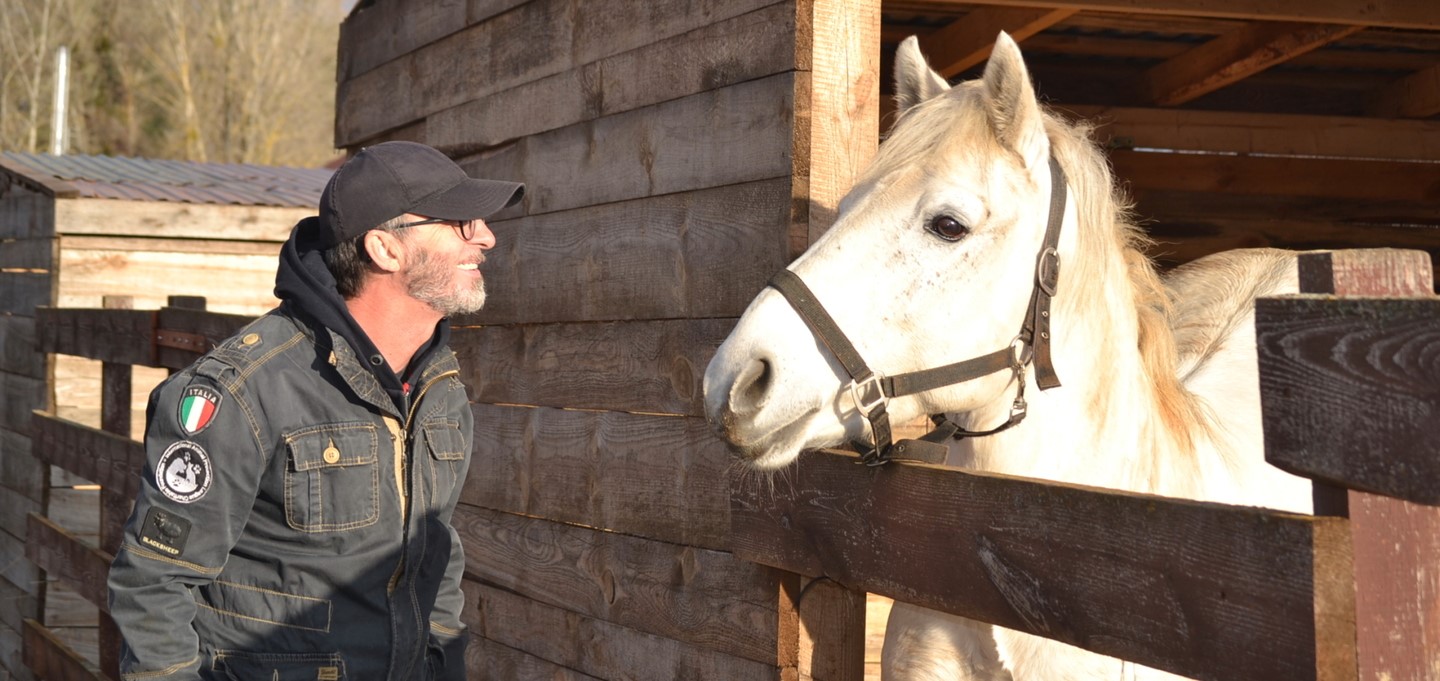
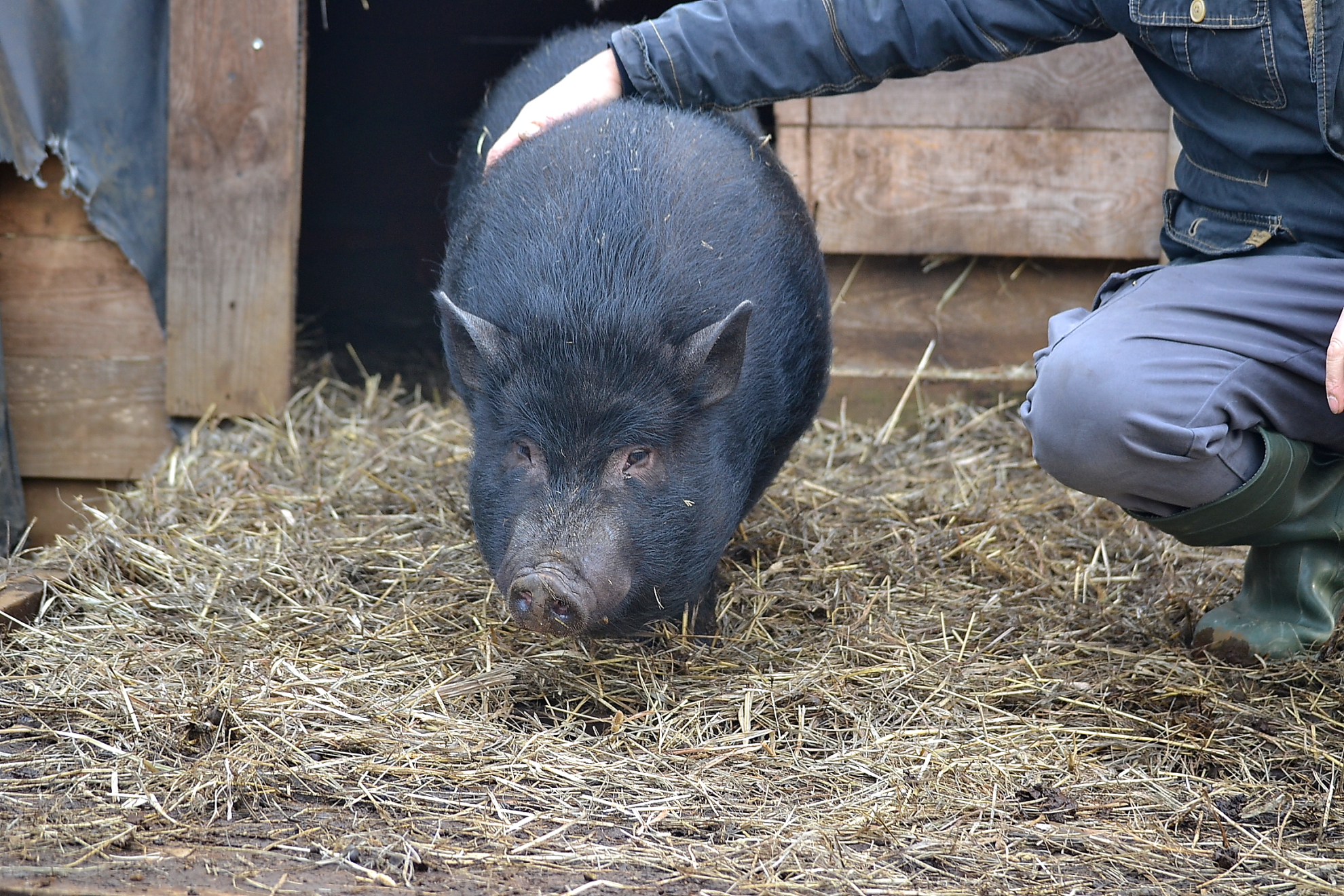
Kabachok used to live in Donetsk region. Where exactly is classified as the militarymen found him on a mission. He’s a Vietnamese pot-bellied pig by breed, but more like a dog in his behavior. Out in the field and on the road, he used to live in an empty ammo box. Now, he has a much more sizable home. On his way to the shelter, Kabachok was accompanied by eight soldiers and two journalists.
“He’s completely tame. Eats everything, but we’re watching his diet so he doesn’t gain too much weight. Kabachok should be ‘sportivo’,” says Andrea Cisternino, owner of the Rifugio shelter in Lisovychi.
This svelte Italian in rubber boots used to be a fashion photographer. Now, he has chosen a different mission — taking care of hundreds of animals in northern Kyiv region.
For nearly a decade, Rifugio has been a place for homeless and poorly-treated animals to find a new home. It recently had many new arrivals from Kherson oblast, hotspot towns and villages, and also — pets of soldiers who had to leave for the front lines. Right now, the shelter is housing approximately 500 animals. Nobody knows the exact amount — once the number broke 400, the workers simply lost track.
NOSE TO THE GRINDSTONE
“At six in the morning I light the wood stove by the kittens and puppies,” tells Natalia from Liubymivka, “while another coworker heats up the one in the kitchen and starts making porridge. Then, I clean up and go help her out. We give the porridge to the dogs, then feed the pigs and clean their enclosures. And the other person goes to wash the dishes, while I go wash the eyes of our kittens. I do whatever other procedures the animals need. After that, we go to clean the dogs’ enclosures. Switch out their water and all that.”
Work continues deep into the evening.
Natalia and her colleague take care of pigs, cats, and dogs. Three other men work with horses, goats, and sheep. The owner also often takes up the pitchfork, but he also has other duties, such as looking for funds to support the shelter. Andrea says, “My main mission is to make sure all of these animals are well-fed.”
FROM ITALY TO LISOVYCHI
Next to the enclosures at the edge of the forest, Andrea also built a photo studio. There’s not much to show right now: the corkboard only has two pictures pinned to it. One of them depicts the dogs Chupi and Bruno, the other — the supermodel Helena Christensen. Both photos were taken by Andrea. In Italy, he took pictures of top models and sportscars. Right here is where he keeps the old and weathered photographer passes for “Formula-1” and various runways.
In 2009, fashion photographer Andrea married Vlada, a Ukrainian, and moved to live with her. By that time he was already involved with animal rights activism, and he was shocked by the scale of dog hunting in Ukraine.

Back then, Kyiv was preparing for UEFA Euro 2012. In order to “clean up the streets”, homeless animals were simply put to death. Andrea says that politicians turned a blind eye to dog hunters — what’s more, the government at the time was directly complicit in animal extermination.
In Kyiv, Andrea got in touch with volunteers who took care of homeless animals. “There was one time I got a call from a volunteer who was taking care of 35 dogs. That day, 20 of them had been brutally killed. And this is just one of dozens of cases that I have documented. Every day, I brought more evidence to Ukrainian politicians, and each time they shrugged and said they knew nothing about it,” says Andrea.
After that, he began publicly protesting animal cruelty in Ukraine. In response, dog hunters published Andrea’s private information on their websites. Since then, the Italian Embassy has assigned him a personal bodyguard.
Andrea and his wife Vlada set one question for themselves: what constructive steps can be taken to rescue homeless dogs? That was when the couple decided to create a shelter — but founding a shelter required massive funding.
What happened next was something straight out of a movie.
On Christmas Eve in Milan, Andrea met a woman who read one of his interviews and asked to meet with him.
“We had coffee together and talked for an hour and a half. Then she asked me if I had any pressing concerns. I said that we had many, but the most important was purchasing land so we wouldn’t get kicked out. She immediately wrote out a check for the required sum. It was a Christmas miracle.”
Rifugio began construction in 2014. At first, Andrea started taking in homeless dogs.
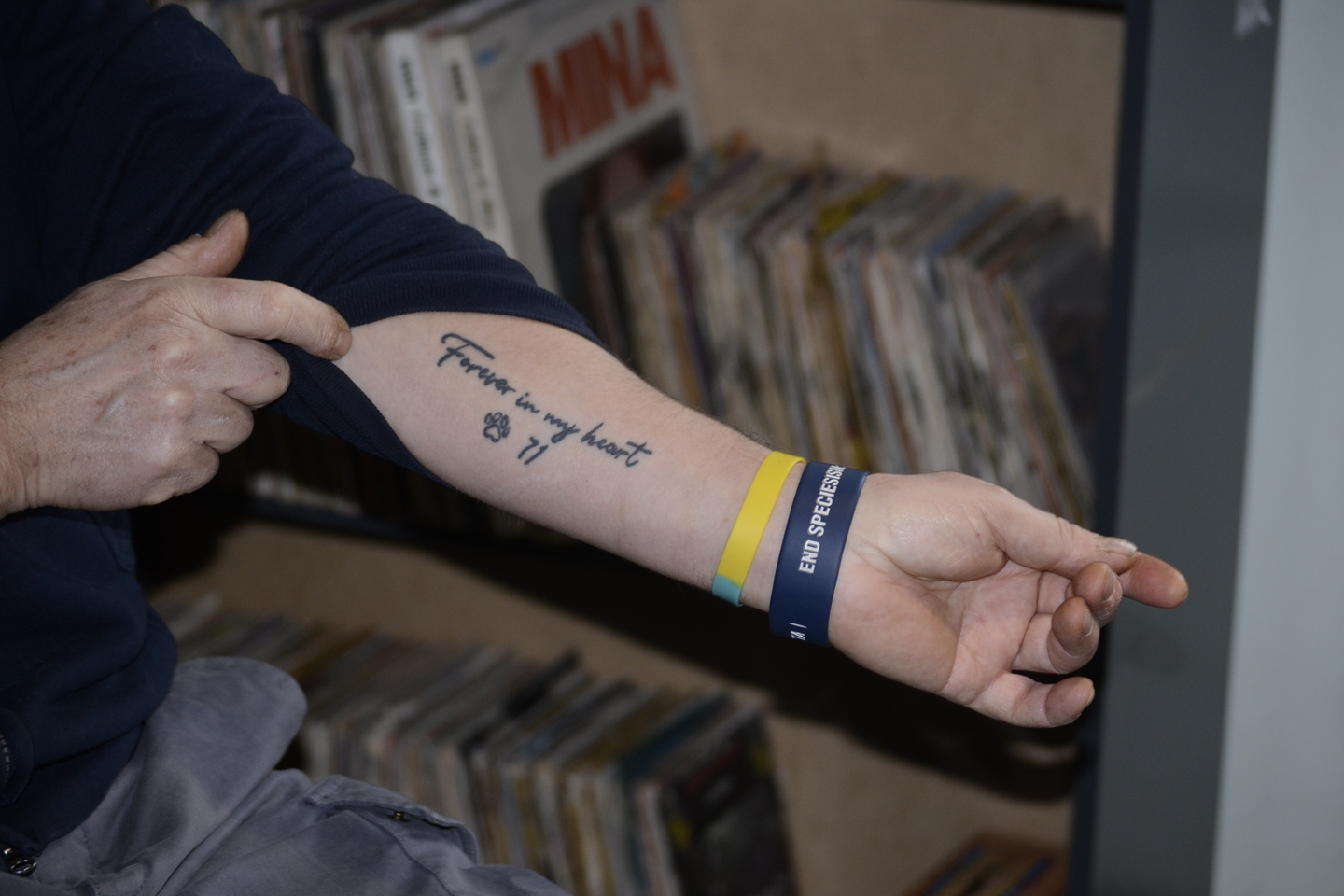
In the very first year, the shelter was struck by a fire. 71 animals died that day. Andrea shows a tattoo on his arm. “Always in my heart.” It’s dedicated to the dogs who passed that day.
The police found no signs of arson, and so no case was opened. But eventually, the culprits came forward of their own accord with an apology. They said they didn’t know what Andrea was doing and why. This apology confirmed Andrea’s suspicion that arson had indeed occurred, but his lawyer convinced him not to sue.
Andrea did not give up because of the tragedy. On the contrary, Rifugio now houses five times as many animals as back in the day and not just dogs. The shelter gets by mainly thanks to Italian sponsors. The shelter also established connections with Ukrainian volunteers. The townspeople, Andrea says, help out as well.
“The locals nowadays see our shelter very differently, all thanks to years of hard work. With our Italian friends, we organized free sterilization days, and people would bring their pets to us. Some of the townsfolk work here, too. If all I used to see before in Ukraine were dog hunters, then now we get daily phone calls asking for help, or people bringing in homeless animals on their own,” Andrea tells us.
And to think that very recently, the shelter had a very real chance of disappearing for good.
40 DAYS OF OCCUPATION
“I was cleaning the stables when I heard two russian fighter jets overhead. One of them started descending. I thought it was going to shoot, and that’d be the end of our shelter. The jet got so low to the ground I could see the pilot,” Andrea says as he describes the spring of 2022.
Later in the afternoon of February 24th, the shelter was abuzz with fighter jets and helicopters. Aircraft battles took place right above the village. Andrea shows us an audio recording of the explosions, “Day and night it was like this, day and night.”
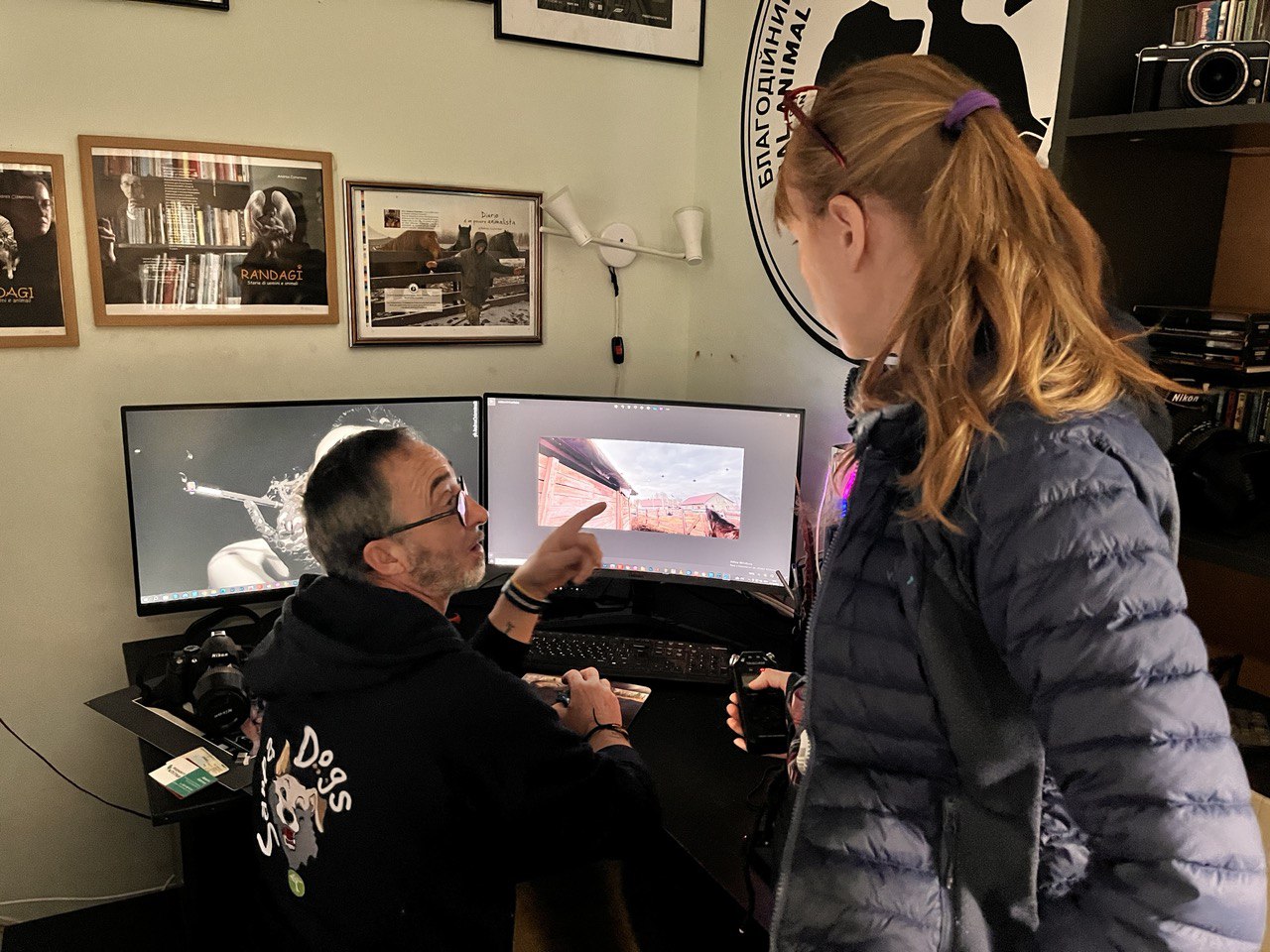
“One of the worst moments happened when we heard that russians were running out of food,” says Andrea. The shelter ran out of food too, on occasion, whether for humans or animals. Even though the staff were making stockpiles a month before the invasion, by the middle of March they had nearly run out.
Andrea lost 12 kilograms and even broke two ribs.
“I was cleaning the stables, slipped, and broke two ribs. Naturally, I couldn’t just go to the russian or chechen soldiers to get patched up. I grit my teeth and waited for Ukrainian soldiers to liberate our territory.”
Natalia lost weight too: she gave part of her rations to the dogs she was taking care of. The shelter staff knew that aid for animals was coming through to Kyiv, but between Lisovychi and the nearest blockpost lay thirty kilometers — a distance nobody could risk braving at the time.
Andrea received offers to evacuate on more than one occasion. Even during the occupation, the Italian embassy insisted he leave the country, even going as far as to develop a plan and receive approval from the military…
“I asked, ‘Will you take everyone — my employees and animals, too?’ They said no, just me. So I stayed with my animals,” tells Andrea.
In total, Andrea spent 40 days in occupation, though he only managed to count that after the fact.
On April 2nd, he says, at a very unusually quiet time he heard a car horn. Strangers were at the shelter. Did the russians climb the fence? One of them shouted in Italian, “Andrea, hello, it’s me!”
“Russian soldiers speaking Italian? Impossibile!” recounts Andrea.
In reality, standing by the gates were the Italian journalist Claudio, translator Tetiana, and a Ukrainian volunteer. Waiting by the fence was a car with supplies — and a Ukrainian flag flying on the roof.
“I thought I was dreaming. Only when Claudio hugged me and I felt the pain, I remembered my broken ribs and understood — this is real.”
MEET THE VIPS
The first large animal at the shelter was a cow by the name of Margo. Now, she also has company in Mikaela. And right next door are two more esteemed signoras.
“Frieda, Frieda, Kapla!” Andrea calls out. Finally, two considerably-sized pigs waddle out of the barn, squinting from the sun. “Oh, buongiorno!”
Above all else, these refined dames love getting mud baths and scratches. The pigs can tell people apart and even respond to pet names.
Aside from domestic pigs, there are also two Vietnamese ones: the already familiar Kabachok and Harry. Though he is Kabachok’s closest relative, their personalities couldn’t be more different. Harry can only be found in the barn, sleeping in the hay. He’s chewing in his sleep, showing off his sizable tusks. Sleeping is his favorite hobby.
“Harry befriended a duck around here,” says Andrea. “Other ducks were bullying her, so she found safety in his company. They sleep and eat together.”
Marcio, Ser, Mina, Mami, Annushka, Roza, and Lola are the sheep community at the shelter. They arrived here from large farms where animals are raised for meat. That’s also how the shelter found their chickens, geese, and ducks.
The goats peek out from the barn. It almost looks like they want to give an interview of their own — and boy, do they have stories to tell. Take Berbek, for example this billy was wandering on his lonesome by the belorussian border when the locals found him and suggested Andrea take him in.
Mary the pony was on her way to a slaughterhouse when Andrea picked her up. Later it was found that Mary was pregnant when she got rescued: she gave birth to Op, and he is no pony at all. The stallion lives in the same enclosure as his mom and is nearly thrice as big as she is.
The racehorse Voron would have similarly ended his career at the slaughterhouse were it not for the shelter’s staff. Thelma and Louise came under Andrea’s care from the mounted police. Another mare by the name of Tatanka used to live in the same pasture with them — she died in 2023 because of a russian rocket that fell next to the shelter. Tatanka’s heart stopped then and there.
“And this one here is from Lisovychi,” Andrea shows us the gray Baron. “He spent his whole life as a workhorse. A woman from the village brought him in because two of her sons enlisted in the army, and she couldn’t take care of him on her own. Careful, he bites! Though… seems like he’s in a good mood today.”

Cats’ apartments
The cats have a separate space from the other animals. Here we can find former strays: some were brought in by Andrea, others by volunteers. As soon as I step in through the door, they cling to me and start purring. Some are trying to climb into my lap, some — onto my shoulders, and all of them are sniffing me curiously all over. You can pick them up by the armfuls, that’s how many there are.
The feline enclosure is comfortable and fully furnished. People from Lisovychi donated a sofa for the cats specifically. Andrea points to the WC sign: “Our cats can read.”
Outside, Natalia is hard at work. “Cats were trying to drink from the mop bucket, I took it outside,” Andrea says in Italian. “Ah, I had to run to break up the dogs and forgot all about it,” Natalia replies in Ukrainian. “I understand his Italian,” she says. “How? Sometimes through a translator. And then, after a while, you learn to understand each other bit by bit.”
She picks up a stick off the ground and leads me to a completely different world — the world of dogs.
POTAP, DON’T BOTHER BABAIKA!
“Everyone! Quiet down, kids!” Natalia waves the branch around in front of the enclosures.
“You call them ‘kids’?”
“I mean, that’s what they are. Though we call some by their patronymic, too. We’ve got Dina Nikolaievna and Tamara Petrivna.”
The dog enclosure reminds me of a long apartment building, full to the brim with canine residents of all kinds — cheerful and melancholic, friendly and not so much. I can point at any dog here at random and Natalia will know its story from beginning to end:
“I assign them enclosures by personality. Here we have six dogs, and they all get along just fine. We could probably add another calm dog here no problem. When Harold moved in, he was an instant leader. Doesn’t bully anyone, it’s just that he might go around sniffing everyone’s bowls — and only when he’s done, everyone starts eating… And the more aggressive ones, you need to group them up with dogs that have character. They set each other straight. Dina Nikolaievna, shush! Potap, don’t bother Babaika! And this one is Hera. Hera, come here. She’s really smart. Hera, who was making all that noise in the enclosure, hmm? Who did that?”
To feed them all, the workers cook 300 liters of porridge every day.
“Two of us use mopeds to get around, takes about 40 minutes to feed everyone. And this enclosure we call Verkhovna Rada. Liashko, come here! He’s the most talkative of the bunch. That one’s Poroshenko — the chubby one,” Natalia introduces us to the rest of her dogs. “Behave, I said!” she shouts to the “deputies”.
Many of the dogs here were brought by volunteers from frontline territories. For example, this shepherd from Mariupol was found among ruins by a couple driving out of the city. They just picked it off the road and took it with them.
There are also arrivals from Kherson. Andrea already arranged for four Kherson dogs to be transferred to Italy. Two more are getting ready for their trip.
“We had two dogs come in from Kherson recently,” says Natalia. “They lived in apartments. Enclosures like this were foreign to them. Stasik here… He spent all his time in his dog house, curled up and crying. So we brought him a proper bed and made a little room for him. Two others from Kherson are going to Italy soon. Stasik is already there.”
Later we run into Cefina, an American Staffordshire terrier, who made herself at home in the boiler room. There’s also the playful Lulu and the giant, though no less playful, Lucky. In Rifugio, these dogs are waiting for their masters who are defending Ukraine on the battlefield.
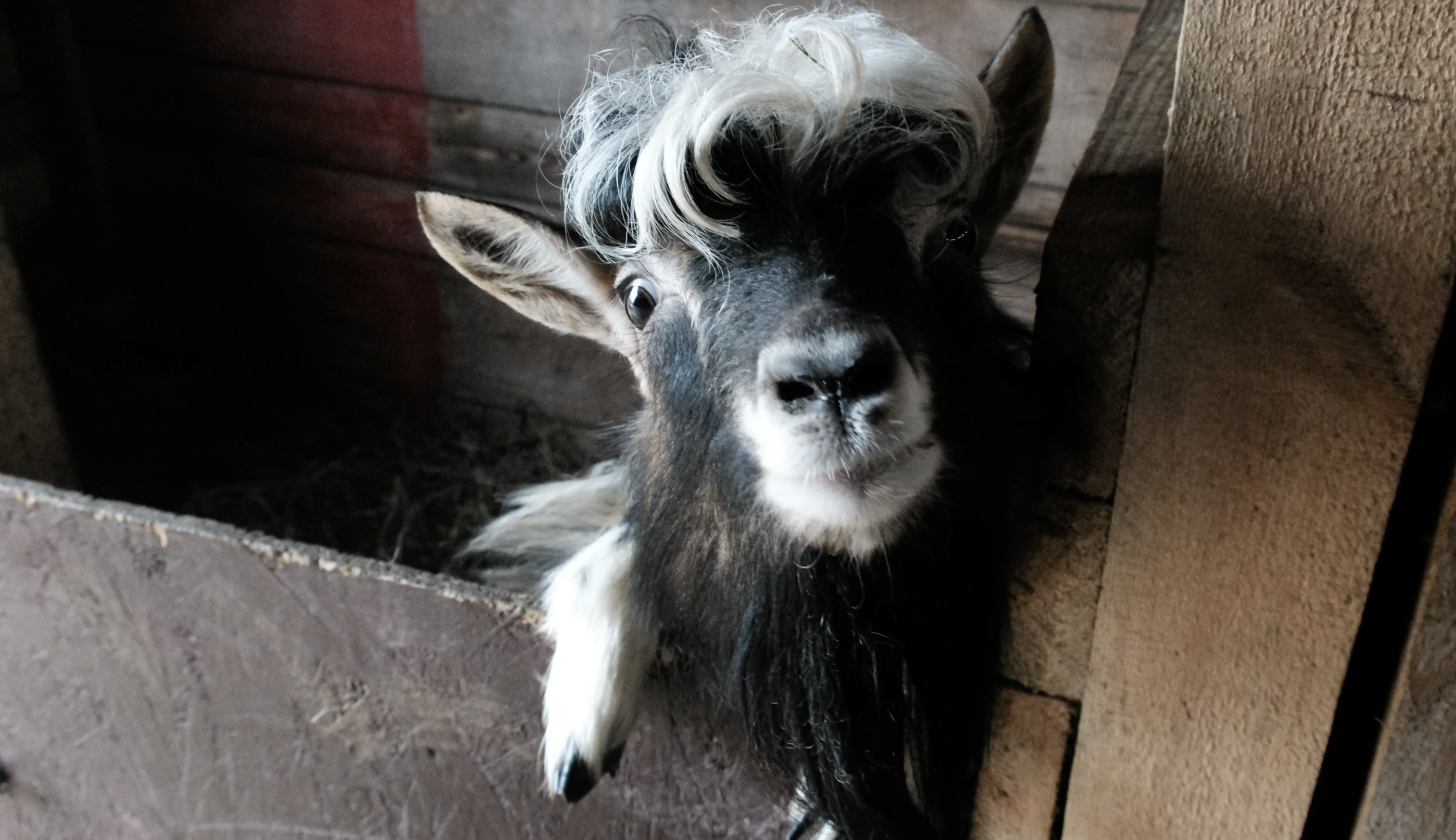
This winter, Rifugio was able to stoke the stoves and cook food for all the dogs. There were blankets to give to Harry, Kabachok, and the others. Everyone who donated to UAnimals contributed to this. The organization transferred 120 thousand hryvnias to Rifugio to purchase firewood and hay. Join the fundraisers at UAnimals: your aid will go straight to those of our furry and not-so-furry friends who need it the most.
Content


