


 30.10.2024
Rallies, photo exhibitions, film screenings, installations in European cities and overseas — activists and politicians often raise the issue of ecocide. They draw attention to crimes against the environment and call for the punishment of the perpetrators. However, just punishment requires not only high-profile events and publicity, but also meticulous legal work.
This is exactly what the team of the Truth Hounds NGO do: they study facts, collect evidence and testimonies, compile legal theories, and thus help law enforcement officers in Ukraine and abroad bring the perpetrators to justice.
Next, we will talk about the ins and outs of this work: why Ukrainian law enforcement agencies are registering fewer and fewer cases under the ecocide article, whether Ukrainian and international law protects the environment in times of war, and how Ukraine’s ratification of the Rome Statute will help.
The Work of Truth Hounds
— Truth Hounds has been studying environmental damage from hostilities in eastern Ukraine since before the full-scale invasion. Could you tell us about the most serious incidents you documented at that time?
— In the occupied part of the Donetsk region, russians decommissioned mines without proper safety measures. As a result, these inactive mines were filled with water. This is dangerous for several reasons. First, after coal mining, harmful substances settle in the mines. Second, there was information that some mines were used to test underground nuclear explosions. The radioactive materials generated after the explosions and other harmful substances from the mines can seep with the water into different layers of the soil.
— Have you tried looking for those responsible for this negligence?
— Our goal was not so much to expose those who planned, organized, and authorized the decommissioning of the mines, but to highlight russia’s treatment of nature in the occupied territories. However, the environmental damage in the war-torn territories, even before the full-scale invasion, is not limited to the coal industry. According to our Training and Strategic Projects Coordinator Maryna Slobodianiuk, potential war crimes include the shelling of the Avdiivka Coke Plant, Lysychansk Oil Refinery, the burning of dead wood in the Luhansk region, and the fire at the Azot Factory. However, all of these cases require not only rigorous investigation, but also long-term monitoring of the environmental impact. After all, it is important to prove that the actions of the russians have caused extensive and lasting damage to the environment.
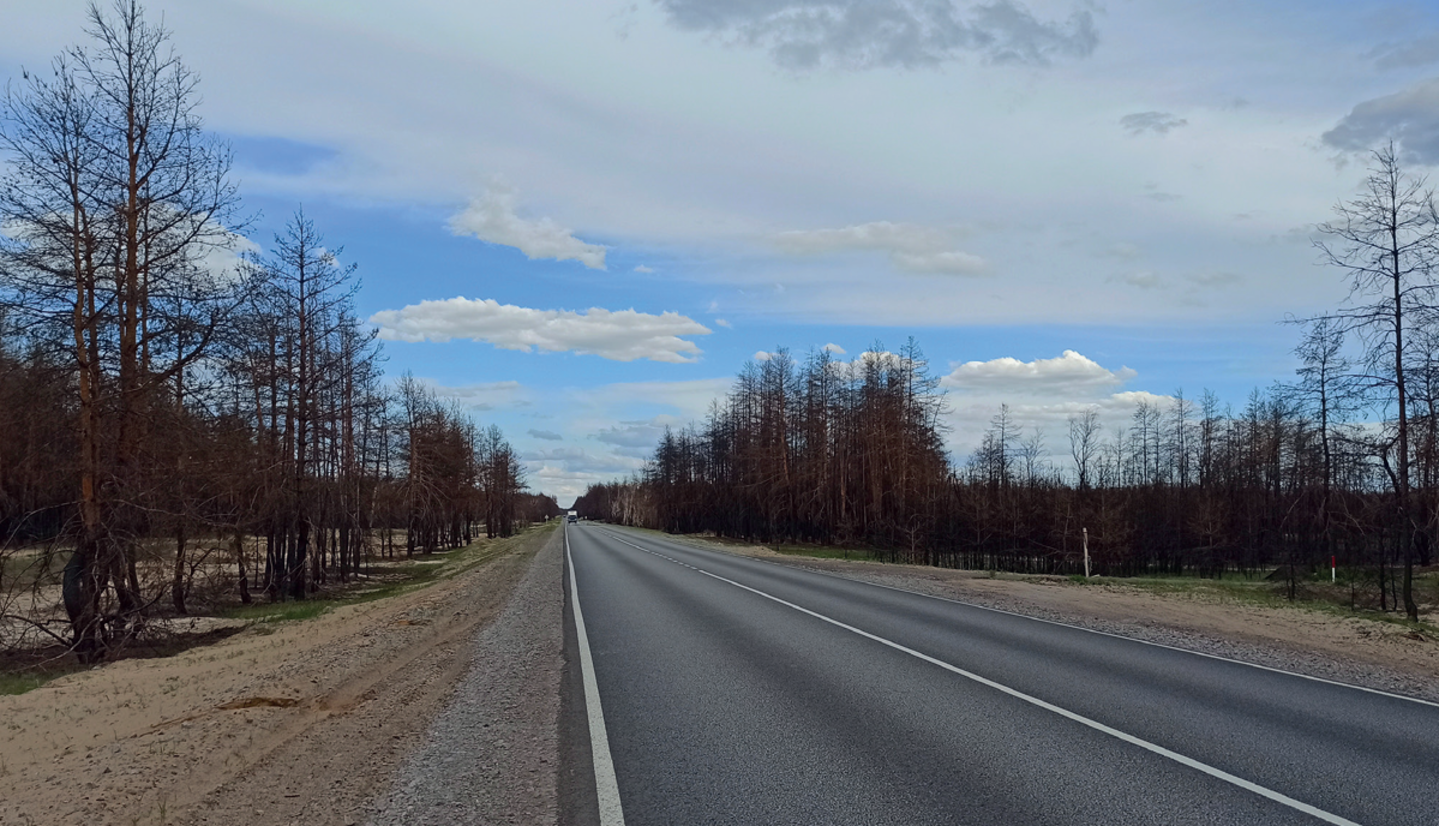
The consequences of the forest fires in 2020, the highway from Siverskodonetsk to Novoaidar, May 6, 2021. Source: Truth Hounds
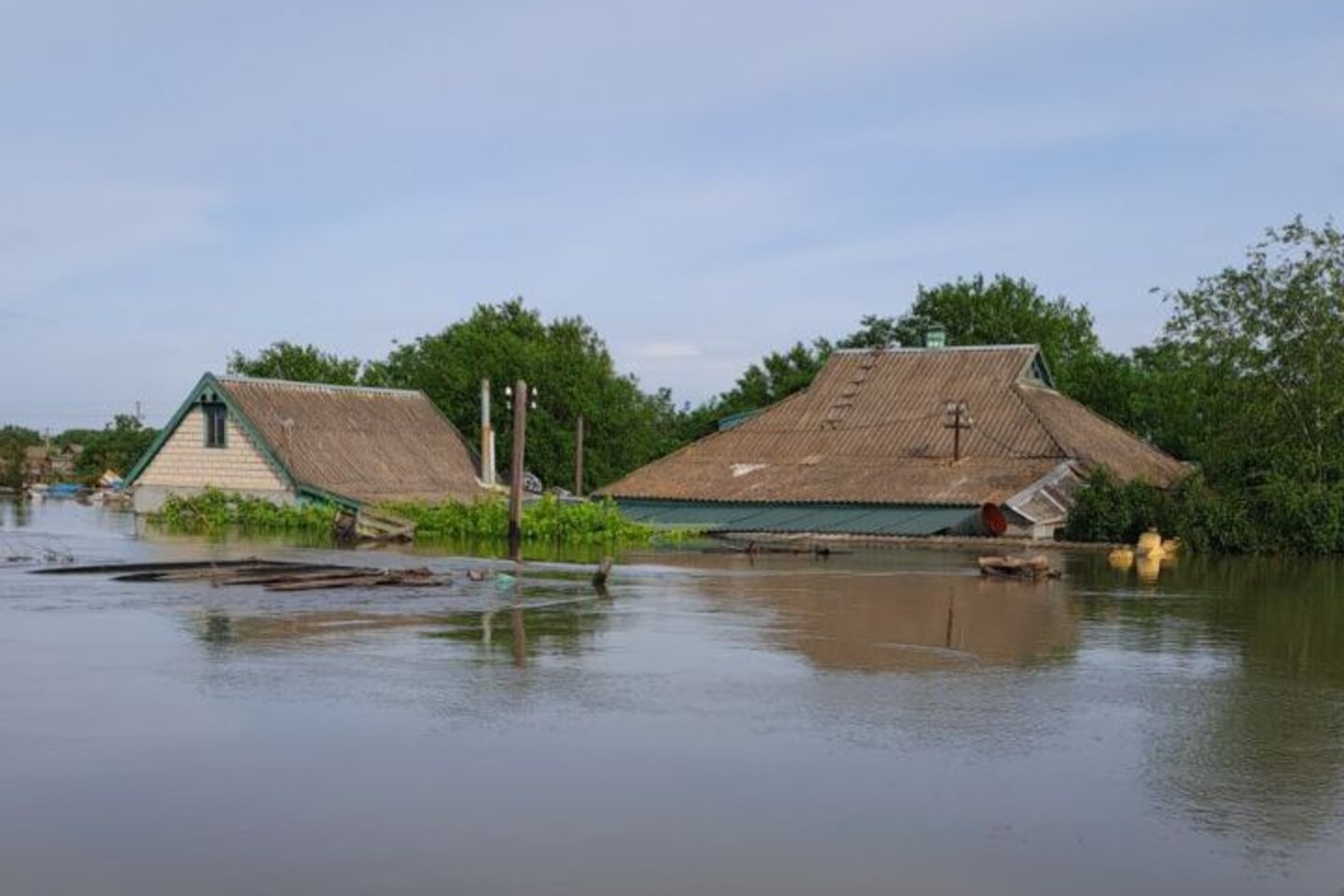
— Next, let us consider a case where the damage is large-scale and very obvious: the destruction of the Kakhovka Hydroelectric Power Plant dam. On the anniversary of the disaster, Truth Hounds released a study proving that the russians were responsible. You called on the International Criminal Court to conduct a thorough investigation of this crime and to expel russia from the bodies of environmental conventions. Did you manage to achieve this?
— Our position was not romantic: we did not expect that the investigation would immediately lead to a response and the exclusion of russia from everywhere. We simply stated our position: it is unacceptable to involve russia in discussions about the future of the world in terms of environmental protection when it treats the environment with such disregard.
It is difficult to say to what extent the bodies of environmental conventions hear and consider these calls. It is important to understand that not all countries understand what is happening in the same way as we and the Western world do. Some either see the world differently, or have limited information, or simply cannot afford to support the position of Western powers without a second thought. So, there are limits to the exclusion of russia from various organizations, even if much has been achieved. I think we are standing somewhere on this threshold, and we should not be expecting russia to be actively excluded any further. At the same time, calls for this must be voiced.
So far, we have held only a few advocacy events, such as a discussion in The Hague at the Environmental Peacebuilding Association conference. But there are other events coming up — several events with a focus on environmental organizations, including those from the United Nations system. Perhaps this will give more space to share the truth about what happened in Kakhovka.
Also, the International Criminal Court is definitely looking at this episode and deciding whether to move forward with a full investigation. It depends not only on how serious a crime russia has committed, but also on the prosecutor’s overall strategy.
Join the campaign for a fair punishment for russia!
UAnimals has written a letter to the International Criminal Court calling for russia to be held accountable for the destruction of the Kakhovka Hydroelectric Power Plant dam.
Each signature under this letter brings the punishment of those responsible for the crippled Ukrainian environment closer and shows that we care about our shared ecosystem.
Please sign it too, it only takes a few clicks to support an important cause.
— Do our law enforcement agencies take into account the information collected by Truth Hounds documenters about this crime?
— Just a few days after the presentation of the report, we received a request from the Specialized Environmental Prosecutor’s Office: they asked us to officially provide them with the report and all the information we had collected, because this is the only way they can take this evidence into account. We provided all the materials.
However, this is not the only line of our cooperation. We have also organized three workshops at the request of the Specialized Environmental Prosecutor’s Office. We shared the experience gained while writing the report and explained to prosecutors how international law regulates environmental protection and defines crimes against the environment.
We have also presented our findings in the Kakhovka case to prosecutors from both the Specialized Environmental Prosecutor’s Office and the Department of War. This can help them better prepare for the trial. After all, there are quite a few options for describing the Kakhovka tragedy in legal terms. That description determines what evidence to collect, how to combine it, and the general logic of the assessment to be offered to the court.

Ecocide or Not?
— The destruction of the Kakhovka Hydroelectric Power Plant dam is almost a textbook example of ecocide, which is most often mentioned in the media. But the Prosecutor General’s Office also named the occupation of the Chornobyl and Zaporizhzhia nuclear power plants as examples. Why can these actions of the russians be characterized as ecocide? What other crimes would you call ecocide?
— Not every kind of environmental damage during a war can be considered ecocide. International humanitarian law applies in such circumstances, allowing for the shelling of the territory of another state and environmental damage during such shelling. The only requirement is that the damage must be proportional to the military advantage anticipated. Therefore, only a violation of this requirement can be called a war crime or a war crime and ecocide.
The Specialized Environmental Prosecutor’s Office of Ukraine is considering a number of such episodes.
For example, the attack on the Kakhovka dam can be qualified as an attack on a civilian target or a disproportionate attack on a military target, which is a war crime. Due to the environmental consequences of this crime, we can call it ecocide. In this case, we can definitely consider a double classification.
I think the shelling of the Zaporizhzhia Nuclear Power Plant can be a similar case. This is an attack on a protected site that can be considered a war crime. Next, we need to look at the damage, be it actual or potential.
In the case of the Chornobyl power plant, however, it is not so much an attack on the facility itself as its use to shield military operations. Under international humanitarian law, there is an obligation not to locate military facilities near civilian ones. There might be a possibility to consider such actions as a war crime, and if there was damage to the environment, it may be labelled as ecocide as well.
Another angle that prosecutors focused on was attacks on oil storage facilities and other fuel storage facilities. The environmental damage here is obvious, and at least it falls under the Ukrainian definition of ecocide. However, international humanitarian law considers such facilities to be military rather than civilian. In order to consider attacks on them as a war crime and ecocide, one would have to develop a very sophisticated legal framework.
The crime of ecocide can also be seen in the management actions of the russians in the occupied territories. If they cause damage to the environment, it can be characterized as ecocide even without being linked to a war crime. Currently, we do not have access to that territory, so information is limited and it is difficult to proceed. But after the liberation, everything is possible.
— Could the actions of the russians in Askania-Nova and other occupied reserves be called ecocide? For example, the kidnapping of rare animals, their negligent treatment, and fires in the virgin steppe.
— Any definition of ecocide is heavily burdened with value categories and lacks specificity. The Ukrainian definition under the criminal code states that an environmental catastrophe must be caused. There is no definition of an environmental catastrophe in Ukrainian law, so it all depends on how investigators interpret this concept: by encyclopedic definitions or by experts.
Alternatively, to substantiate ecocide, the concept of “mass destruction of flora or fauna” will be required. It is also not defined, so it needs to be interpreted. Will the removal of a few animals from Askania Nova be a mass elimination of wildlife? Hardly. Is it possible to build an ecocide case against Askania-Nova in general? Perhaps. But to prove that this is an environmental disaster, we need to show its impact on the future.
How Laws Work
— Article 441 of the Criminal Code of Ukraine really lacks specifics about what constitutes ecocide. Some environmental activists and human rights defenders are calling for amendments to this article. Others object, saying that then we will not be able to retroactively punish crimes that russians have already committed in Ukraine. What do you think?
— I am not against changes to the article. It can be improved and harmonized with the international definition of ecocide, which is important for promoting its criminalization. I do not see any major risks that the amendments to the article will affect previous investigations. The old law will still be applied to previous episodes.
— The Prosecutor General’s Office provides the following statistics on Article 441: 16 cases were opened in 2022, and seven in 2023. All of them are still under pre-trial investigation. In 2024, no cases were opened at all. Why do you think the figures are on the decline? It would seem that more and more testimonies and evidence should have surfaced.
— For me, this is an indication that the system is recovering. Prosecutors are becoming more aware of how difficult it is to prosecute environmental damage. They are carefully allocating resources to cases with real chances of achieving results in line with international standards, avoiding the pursuit of the number of registrations.
— What is even more confusing about these figures is that the Prosecutor General’s Office has only been investigating ecocide crimes since February 2022. But the war began eight years before that. We have already discussed that even back then, russians were committing environmental crimes. Why do you think such cases were not opened earlier?
— Previously, crimes against the environment were classified under other articles. For example, they used to prosecute for illegal mining.
However, there is now international interest in criminalizing ecocide. There is no statute of limitations for such crimes, so it is possible to hold russia accountable for damage to the Ukrainian environment if sufficient evidence is found. Difficulties with this arise due to the lack of access to the occupied territories: we have not been in Crimea for more than 10 years. All we have are satellite images and testimonies of those who have left. But I think it is quite possible to accomplish at least some things. As for mining in the Crimean protected areas, it can be considered ecocide.
— Most people say that the main responsibility for the russian ecocide in Ukraine lies with the leadership of the terrorist state. They unleashed the war and issue criminal orders. But can we also bring to justice those russian military personnel who commit environmental crimes?
— We can, but it depends on two key things: how much these soldiers participated in the illegal actions and what they knew about the consequences. For example, if the perpetrators had been told that the Kakhovka dam [disaster] would be a targeted explosion and that the amount of explosives would destroy only a small part of it, we could not charge them with a war crime. However, our report contains evidence to the contrary. We have a video where russian soldiers talked about the consequences of the dam destruction.
Similarly, at the Zaporizhzhia Nuclear Power Plant, we know of cases where the russian military tortures workers. This is a crime, and they jeopardize the safety of the entire power plant. Artillerymen who direct fire against the plant, especially repeatedly, know exactly where they are aiming. So it is not only the military and political leadership of russia that is responsible for these crimes.
On the Rome Statute and the Criminalization of Ecocide
— Ukraine has recently ratified the Rome Statute. Will we now be able to more actively advocate for the criminalization of ecocide?
— Ukraine now has a number of options available to it, the key of which is the ability to vote and initiate consideration of issues at the assembly regarding the introduction of ecocide as a fifth international crime.
We can also better understand internal sentiment: previously, we had only a general idea of which countries supported the criminalization of ecocide, but within the system, the position of each participant is more obvious. Thus, it is possible to more accurately calibrate the approach to raising awareness of this crime in bilateral relations with a particular nation.
— Do you think other countries are ready to criminalize ecocide?
— There are definitely governments today that strongly support the criminalization of ecocide. A certain coalition of countries has already been established, but there is no full consensus yet.
Opponents of criminalization have a number of reservations. In particular, they fear that accusing company executives of ecocide will limit international business and that such accusations will be used politically. Some believe that the four defined crimes are enough to punish environmental offenders. In particular, crimes against humanity cover other inhumane acts, which theoretically may be the acts of ecocide.
Experts and entire nations are working to convince most countries in the world to criminalize ecocide. Because it will protect the environment rather than lead to a global catastrophe.


This publication was compiled with the support of the European Union and the International Renaissance Foundation within the framework «European Renaissance of Ukraine» project. Its content is the exclusive responsibility of the authors and does not necessarily reflect the views of the European Union and the International Renaissance Foundation.
Main image: Dmytro Koval. Source: Truth Hounds.
Content


