 16.09.2024
There’s a persistent stereotype that swamps are nothing but rotting, darkness, and treacherous bogs that will immediately swallow you whole. I only agree with the last part: swamps do pull you in—you can’t help but want to explore their unique features more and more. This exploration is both desirable and necessary for preservation.

First, let me clarify: in this text, for simplicity, I refer to wetlands as “swamps.” Wetlands are divided into five categories: marine, estuarine, lacustrine (lake), riverine, and palustrine (marsh). All of these types are carefully protected and studied globally because they are incredibly valuable.
In fact, as far back as 1971, world leaders established the Ramsar Convention on Wetlands of International Importance. The countries that ratified this convention committed to creating nature reserves to protect swamps. To date, 172 countries have ratified this convention—Ukraine joined in 1996. Unfortunately, not all significant wetlands have yet been designated as Ramsar sites.
So why is it so important to care about swamps? Because they are natural reservoirs of fresh water. Contrary to popular belief, the water there is not stagnant or rotten. Thanks to special soils—peats—water in swamps is naturally filtered, and the vegetation on their surface slows down evaporation under the sun.
Swamps also absorb seasonal water surpluses, protecting people from floods. They act as local temperature regulators during particularly hot periods, which is why they are so crucial in our era of climate change.
Moreover, swamps are hubs of life and species interaction. About 40% of Earth’s living organisms reside, reproduce, and feed in wetlands. Each finds a safe and comfortable niche within the waters. For example, birds like the Eurasian penduline tit, the aquatic warbler, the marsh warbler, and the great reed warbler build their nests in the heart of swamps, where it’s moist and out of reach for predators.

The great white egret. Photo by Yevhenii Dovhaliuk

The Eurasian blackcap. Photo by Yevhenii Dovhaliuk

The European penduline tit. Photo by Yevhenii Dovhaliuk

The great reed warbler. Photo by Yevhenii Dovhaliuk

The goldfinch. Photo by Yevhenii Dovhaliuk

The purple heron. Photo by Yevhenii Dovhaliuk

The great cormorant. Photo by Yevhenii Dovhaliuk
The Ramsar Convention particularly focuses on protecting waterfowl. And it was through birds that I became involved in wetland research. Completely by accident.
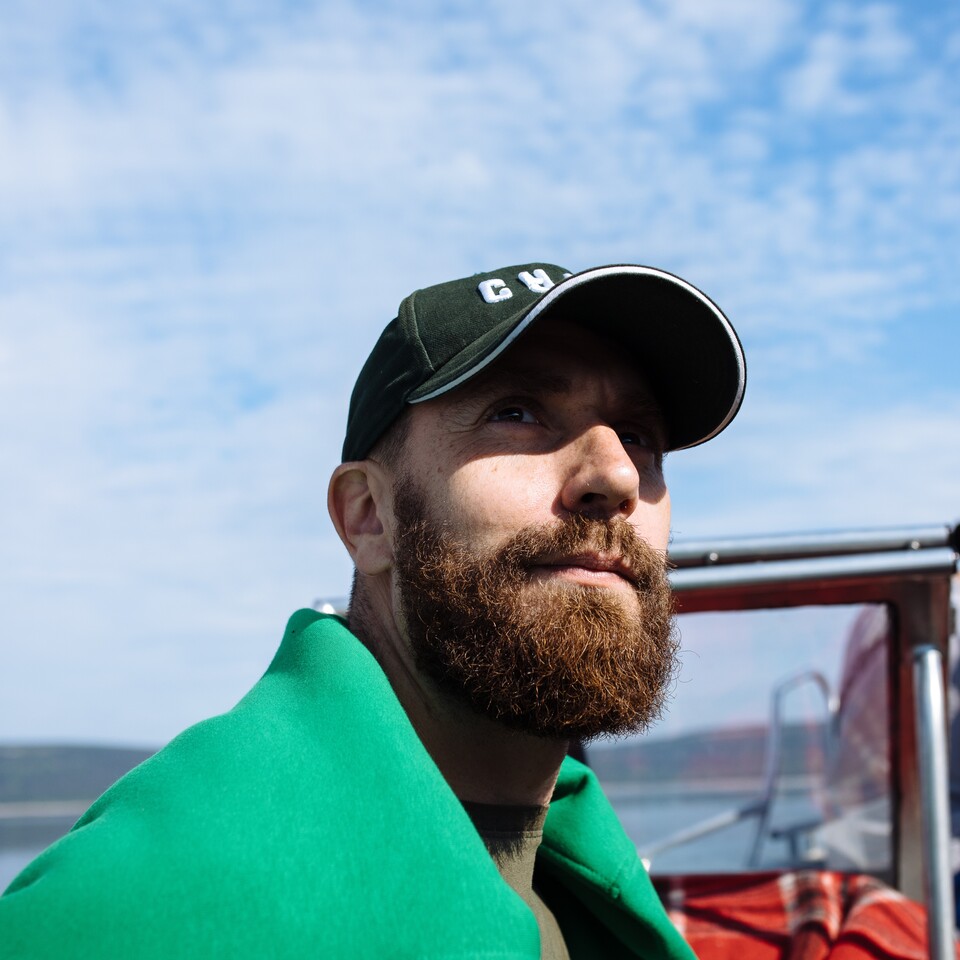
It all started with a childhood dream of buying a house by a lake. In 2019, I made that dream come true, and by the spring of 2020, during the COVID-19 pandemic, I had settled near Lake Supii. The village I moved to has only one street, with gardens that lead straight to the water. This is how I became a constant spectator of nature’s theater and one morning, I witnessed something extraordinary: about 100 mute swans filled the sky and then descended onto the lake. Until then, I had only seen such sights on National Geographic. This sight moved me so deeply that I started to explore our swampy surroundings more actively. Eventually, I registered a civil society organization to study and protect the local environment.
Since then, I’ve learned that our region has a long history of swamp destruction for agricultural achievements. During the Soviet era, drainage systems were built on the Supii and most small rivers in this part of Ukraine, and the rivers themselves were straightened and channeled. Their natural winding courses were redirected through canals, and the areas where the rivers used to flow were planted with sunflowers. In this way, wetlands were industrially converted into arable land, disrupting natural processes.
I’ve met with the Ukrainian scientists who planned and implemented these drainage projects. They told me their intentions were positive: to increase crop yields and boost the country’s economy. Now, they acknowledge that even if we restore all the rivers “broken” back then, only about 20% of the ecosystem would recover. The rest is lost. Forever.
Still, agricultural machinery continues to plow closer and closer to the edges of the swamps near Lake Supii each year. To understand how this affects nature, our organization constantly monitors local biodiversity. Almost daily, we record the flora and fauna in the same areas using the iNaturalist app by National Geographic. We also track bird populations with the Merlin Bird ID app by Cornell University.
For instance, this summer, we noticed that due to plowing near the swamps, the population of the aquatic warbler has decreased. This is a vulnerable species listed in the International Union for Conservation of Nature’s Red List.
To preserve our vulnerable bird species and their habitat—the swamp—we need to create Ramsar sites on Lake Supii and other wetland areas. The Ramsar Convention must not just remain a signed piece of paper—it must be actively implemented. As an activist, I believe that what helps the most is raising awareness and fostering a sense of responsibility for nature in each of us. That’s why I never tire of explaining: swamps are valuable ecosystems, meticulously designed by nature, and our task is simply to study them without interfering.
The texts in the Columns section reflect only the author’s opinion and do not necessarily align with the position of UAnimals media’s editorial team.