


 08.10.2024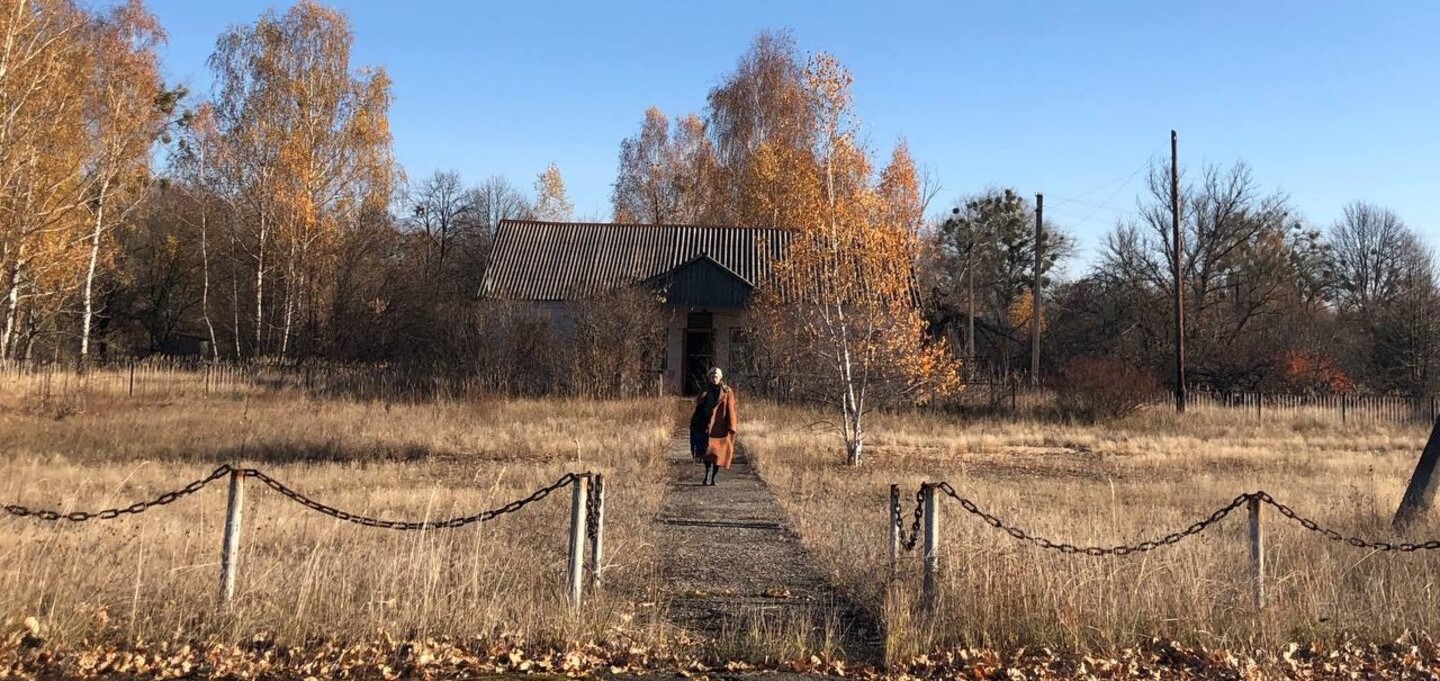
At least $600 billion is the estimated cost of damage to Ukraine’s protected areas and biodiversity caused by russia’s invasion, according to the Ministry of Environmental Protection and Natural Resources. However, the real loss far exceeds monetary value. It includes countless dead animals, devastated ecosystems, and stolen beloved places—places dear to each and every Ukrainian.
In this article, Ukrainian opinion leaders share their favorite places, which, because of russia, we have either lost or are losing right now.

Sasha Tab. Source: Kalush Orchestra Press Service
Sasha Tab’s Crimea
“At Cape Aya near Sevastopol, I first saw bioluminescent plankton. We swam at night, and I couldn’t believe my eyes—my hands turned into some sort of neon light. These are incredible memories! Sadly, I haven’t seen this magical plankton again,” recalls Sasha Tab, vocalist of the band Kalush Orchestra.
Sasha was fortunate to visit Crimea several times in his youth, traveling to Yalta, Partenit, Koktebel, Hurzuf, Feodosia, and Kaihador (then known as Ordzonikidze).
The damage inflicted on Crimea’s unique nature by russians during the 10-year occupation is hard to assess. However, it’s known that military drills involving missile launches and bomb drops are conducted in the Opuk Nature Reserve. Additionally, illegal sand extraction has flooded about 10 hectares of the Bakalska Spit Regional Landscape Park.

Many other russian crimes against nature likely remain undocumented, and we may only confront their consequences once Crimea is liberated.
“My best memories are about Crimea,” Sasha Tab says. “The younger guys in my band have never been there. That’s unfortunate. But I hope we’ll still have a chance to see these places.”
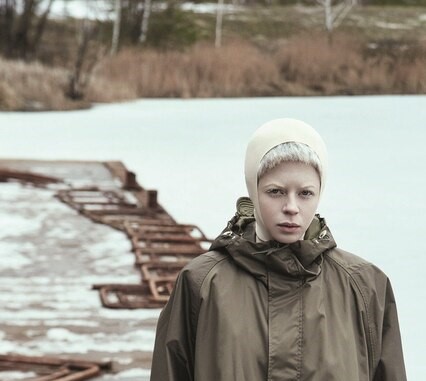
Nataliya Zhyzhchenko in the Chornobyl Zone. Source: ONUKA archive and Vogue Ukraine
Nataliya Zhyzhchenko’s Chornobyl
“The last time I visited Chornobyl was April 26, 2021, at 1:23 a.m.—precisely on the anniversary of the disaster. I was there with the plant workers, and I brought my father. We visited the Shelter Structure and honored the memory of those who perished,” shares ONUKA lead singer Nataliya Zhyzhchenko.
From a young age, Nataliya was familiar with the details of the Chornobyl catastrophe because her father worked as a liquidator at the plant from 1986 to 1988.
“There’s history here, lessons to be learned, and sadly, they are repeating. Chornobyl has always been a source of pain for me, but also inspiration and awe.”
Nataliya has been to the Chornobyl zone about 20 times, doing internships at the power plant, filming documentaries, modeling for Vogue, and composing songs. As she puts it, Chornobyl allowed her to escape people and recharge.
After almost four decades of recovery, nature in the Chornobyl zone is once again under threat, this time from russia’s full-scale invasion. In 2022, Ukraine’s State Nuclear Regulatory Inspectorate recorded elevated gamma radiation levels, likely caused by russian military vehicles stirring up radioactive dust.
“The nature there is unique,” says Nataliya. “The reserve is extraordinary because of the absence of humans and the environmental condition. When I was there, I saw a fox on the streets of Prypiat. I saw a moose and her calves when I stopped the car by the roadside. She looked directly into my eyes, assessed the situation, and simply walked away. Everyone [in the car] held their breath.”
The exclusion zone is home to many animals, including deer, roe deer, wolves, raccoons, wild boars, storks, lynxes, and bears. In total, over 300 species of vertebrates live in the area, 75 of which are listed in Ukraine’s Red Data Book of Ukraine.
“After all the harm humanity has inflicted on this area, it’s hard to imagine how else we could damage it. Nature will overcome this too. It will forgive this too. Unfortunately, but also, in a way, fortunately,” concludes Nataliya.

Anton Ptushkin in the Tuzly Lagoons. Source: Blogger’s personal archive
Anton Ptushkin’s Tuzly Lagoons
Blogger Anton Ptushkin’s memories of the Tuzly Lagoons are quite recent. In August 2022, he began filming a documentary there about animals during the full-scale war.
“We were filming the mass death of dolphins and cetaceans due to russian aggression,” Anton recounts. “I saw dead dolphins with my own eyes, lying on the shore.”
The Tuzly Lagoons, a group of saltwater lagoons [lymans in Ukrainian] in the southern Odesa region, are home to dozens of bird species, including some that are endangered. Despite the grim circumstances, Anton was struck by the beauty of the area. He was particularly amazed by the pelicans, noting he had never seen so many of them before.
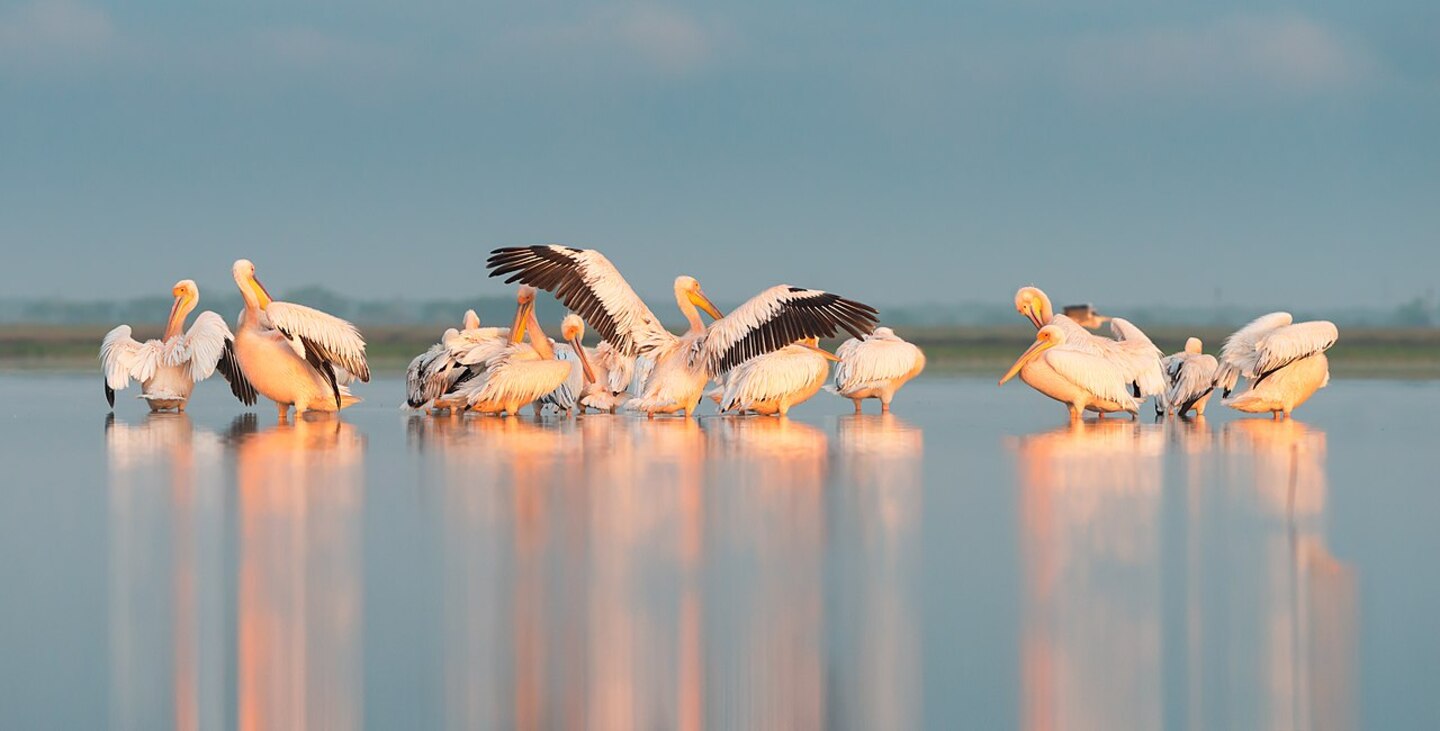
Pelicans. Photo by: Serhiy Ryzhkov. Source: Nature Reserve Fund of Ukraine
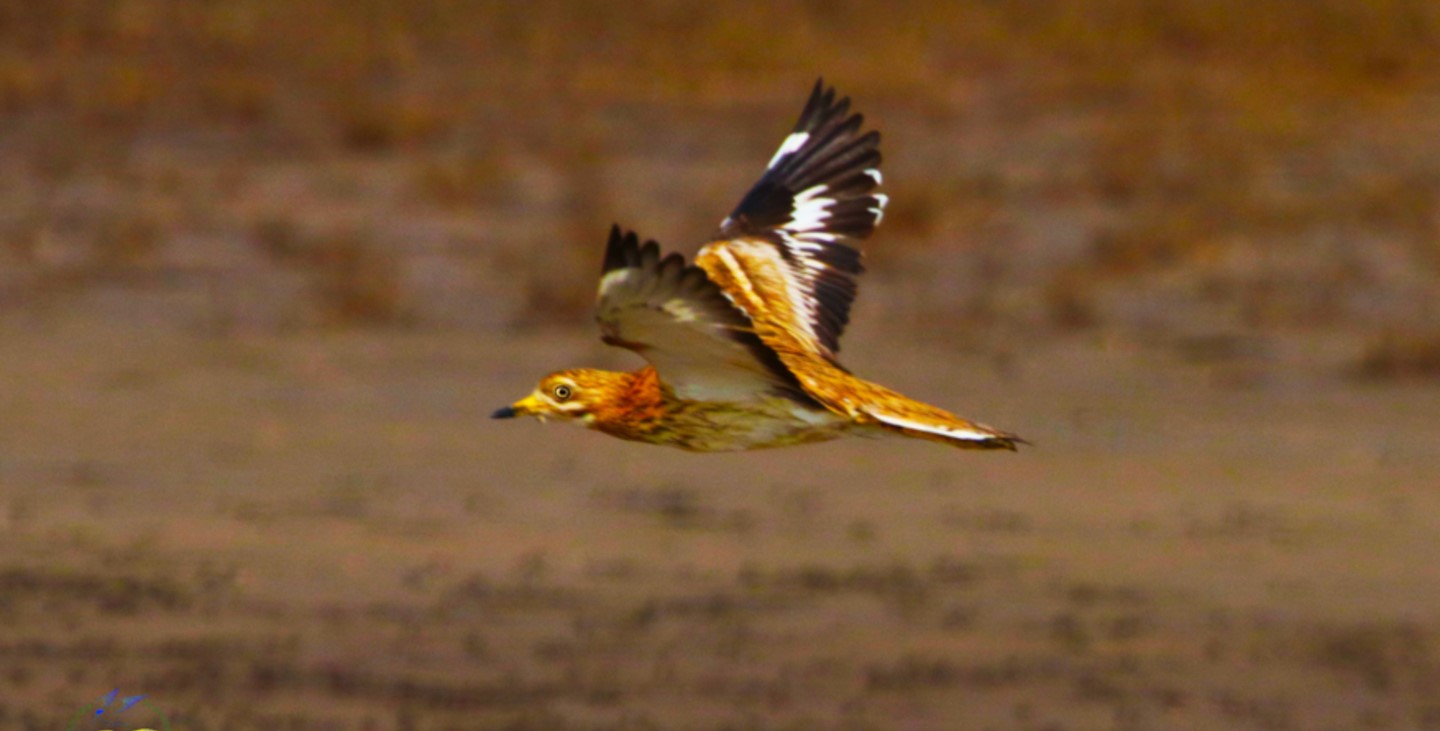
Eurasian stone-curlew in Tuzly Lagoons National Nature Park. Source: Ukraïner
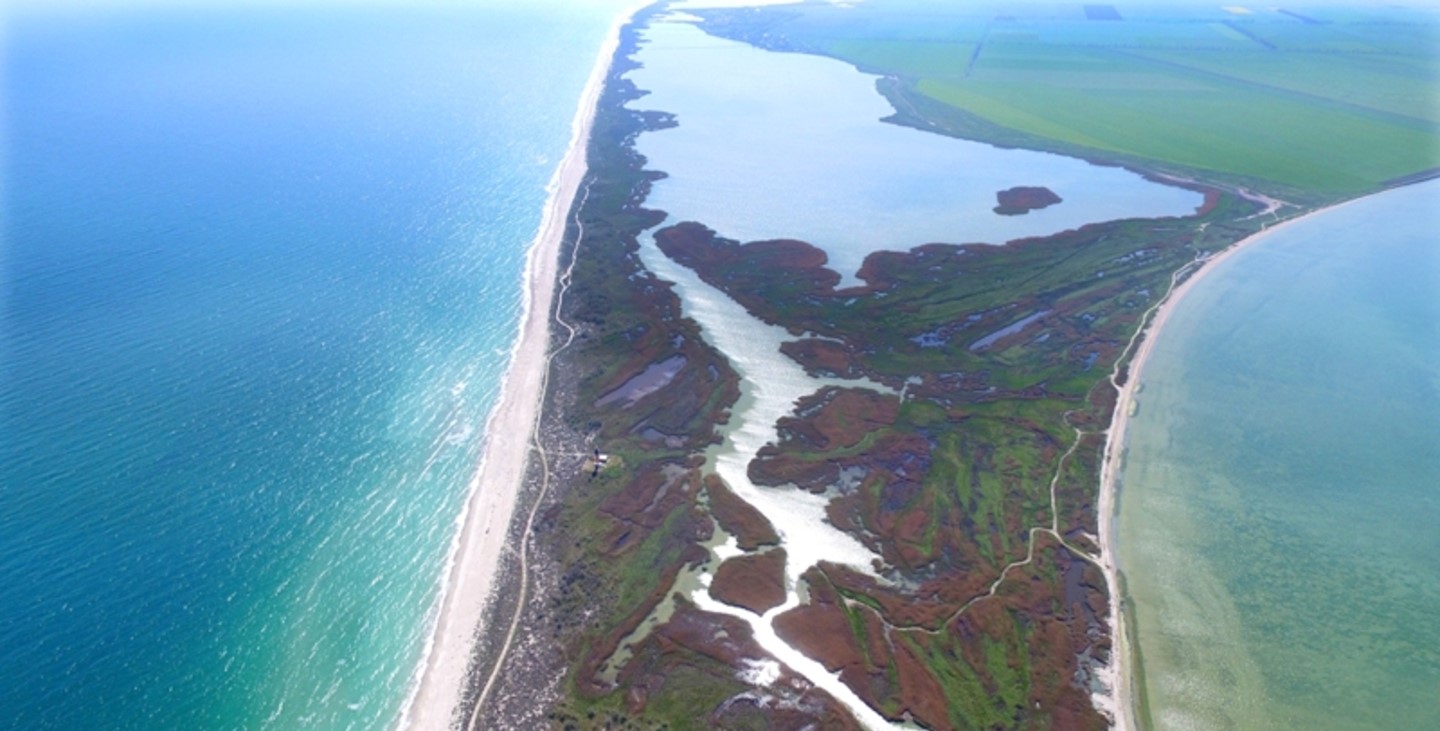
Tuzly Lagoons National Nature Park. Source: Nature Reserve Fund of Ukraine
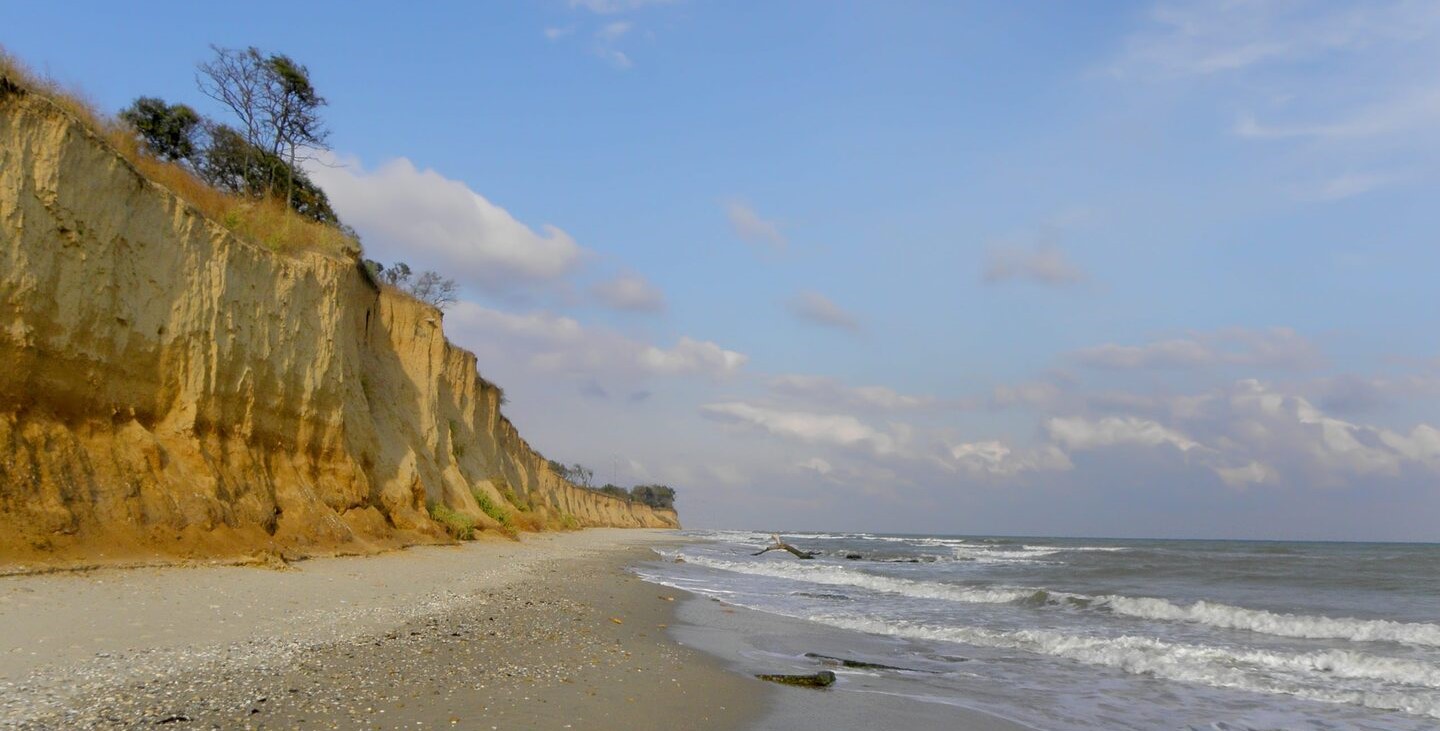
Tuzly Lagoons National Nature Park. Photo by: Ivan Rusiev. Source: Nature Reserve Fund of Ukraine
This part of the Black Sea is also home to porpoises, one of the smallest cetacean species, including a unique subspecies known as the Azov porpoise [Phocoena phocoena relicta], which inhabits Ukrainian waters.
The natural park has been under enemy fire, with fragments of russian missiles found there. Anton was joined by a prosecutor investigating crimes against Ukraine’s ecosystem, who conducted autopsies on the animals to send samples to Germany and Italy to determine the cause of death.
“The park’s director, who has studied cetaceans for many years, believes that sonars and missile launches caused the mass deaths of dolphins,” Anton adds.
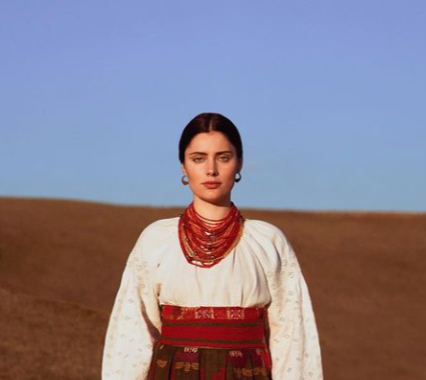
Anhelina Usanova. Photo by: Stepan Lisovskyi. Source: Anhelina’s Instagram page
Anhelina Usanova’s Askania-Nova
“When I think of my time at Askania-Nova, I remember its peaceful atmosphere. But now, it’s far from a place of relaxation and connection with nature,” says Miss Eco International 2024 Anhelina Usanova.
She visited the reserve as a child during a nearby camp stay. She recalls reading about Przewalski’s horses and being determined to see them. Though she didn’t spot the horses, she saw many other exotic animals, including Caffra buffaloes, Chapman’s zebras, Père David’s deer, and American bison.
Today, these animals’ lives are in danger. We have previously reported on the fires in Askania-Nova, the largest occurring on August 22 and September 1, 2023. These fires destroyed plants listed in Ukraine’s Green Data Book. Since the start of the war, over 5,500 hectares of the reserve—nearly one-fifth of its territory—have burned.
Askania-Nova’s director, Viktor Shapoval, reported that three Caffra buffaloes died because the occupation administration failed to move them to winter quarters in time. Additionally, endangered species are illegally taken from the reserve to russia and Crimea, often to worse conditions where they lack the freedom they enjoyed in Askania-Nova.
A comprehensive assessment of the impact of russian occupation on the reserve’s ecosystem will only be possible after its liberation. After Ukraine’s victory, Anhelina plans to join a volunteer mission there.
“Our land will need a lot of work to restore everything, especially places as incredible as Askania-Nova. Its value cannot be measured in money, it is simply priceless,” she says.
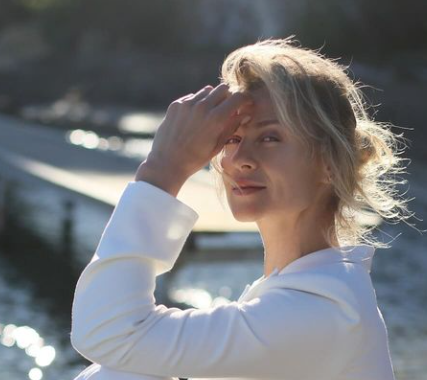
Olha Martynovska. Source: Olha’s Instagram page
Olha Martynovska’s Kinburn Spit
“As a student, we used to vacation in Kobleve and Ochakiv, coastal towns near Mykolaiv. The Kinburn Spit was something like a foreign country for us, something exotic,” recalls Olha Martynovska, judge of the culinary show MasterChef.
One day, she and her classmates went to the spit that so “tenderly and delicately enters the open sea.”
“After that, I had many foreign countries, islands, peninsulas, oceans, and seas, but this first one was like my first love. It stays forever, and the Kinburn Spit is a place of power for me.”
Now, Kinburn Spit is part of the russian-occupied territory, from which the mainland of Ukraine is regularly shelled. Fires frequently break out on the peninsula, and according to local residents, the invaders prohibit extinguishing them. Anticipating the advance of the Ukrainian Armed Forces, russians have mined the spit, posing a threat to wildlife.
“When Ukraine liberates Kinburn Spit, I’ll go searching for the roe deer and hares I used to see there,” Olha shares her plans.

Polina Uvarova in Kyianytsia. Source: Blogger’s personal archive
Polina Uvarova’s Kyianytsia
“I remember how in Kyianytsia, you could hear the birds’ songs so well that we would stop just to listen. Now, alongside the birds, KABs and Shaheds fly,” says travel blogger Polina Uvarova.
Kyianytsia is a small village in the Sumy region, just 30 kilometers from the russian border. Polina and her friends used to love visiting Kyianytsia to enjoy nature and tranquility.
“There’s a stunning architectural monument there—Kyianytsia Palace—and the nature is just incredibly beautiful,” she recalls.
The forest, with its many streams, abundant wildlife, and picturesque lake, is how Polina remembers this place. But now, due to constant shelling, locals no longer travel to Kyianytsia to unwind.
“After the victory, I’d love to return and walk the same paths. I’d look for the springs and stroll by the lake. I’d go to the local store, buy some coffee, sit by the lake with an ice cream, and just soak in the energy of this place,” she says.
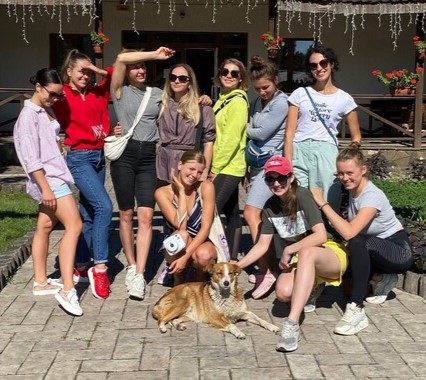
Sasha Shabalina with friends near Dzharylhach. Source: Comedian’s personal archive
Sasha Shabalina’s Dzharylhach
“Dzharylhach is a place that russia has stolen from me,” says comedian Sasha Shabalina. Dzharylhach Island is the largest island in Ukraine and the Black Sea. Sasha visited it in the summer of 2020. “YouTube convinced me to go to Dzharylhach: there were so many videos calling it the ‘Ukrainian Maldives.’ The videos showed crystal-clear water and wild animals.”
Sasha decided to go and was amazed by the natural beauty and the peacefulness of the wildlife. Right after arriving with her friends, they spotted a dolphin playing near the shore.
“There was this feeling that we were guests, and the true hosts—the animals—were nearby, so we had to behave respectfully. For the first time, I saw how people can show respect for both nature and each other.”
Since the beginning of the invasion, the russians have occupied Dzharylhach. Since then, the local ecosystem has been fighting for survival, as the russians are now using the island as a firing range. In August 2023, a fire raged on Dzharylhach for a week in the part of the island home to rare species. Endangered animals such as the steppe viper and the unique empusa fasciata, a type of praying mantis that can mimic a drop of water, were at risk from the flames.
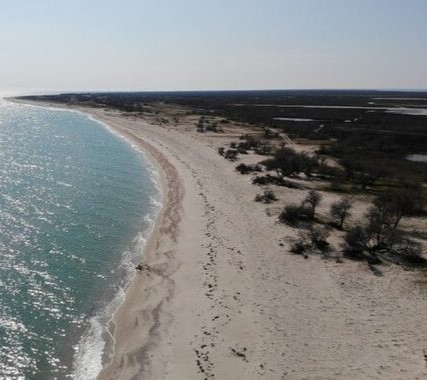
Dzharylhach in August, 2013. Source: Dzharylhach National Nature Park
Dzharylhach now faces the threat of being turned from a protected area into an industrial site and resort. In 2023, russian authorities permitted fishing, hunting, logging, and the extraction of clay, salt, oil, and natural gas. They also allowed the construction of hotels and restaurants in the national park.
Additionally, the invaders built a land bridge between the mainland village of Lazurne and the island to facilitate access for military vehicles. Environmentalist and zoologist Pavlo Holdin explained that this artificial connection posed a threat to the Dzharylhach Bay ecosystem. Fortunately, the sea washed away the land bridge during a powerful storm.
“I think I would have removed that bridge with my own hands. It is ecocide,” Sasha Shabalina says in frustration. “I really want to believe that nature will heal itself. Since learning about the occupation of Dzharylhach, I’ve been dreaming of all the animals rising up to defeat the invaders, just like in the movie Jumanji.”
Let’s Increase International Pressure!
The UAnimals team calls on the United Nations and the UN Security Council to condemn the ecocide committed by Russia by its aggression against Ukraine. You can join this initiative.
Cover Photo: Nataliya Zhyzhchenko in the Chornobyl Zone. Source: ONUKA archive and Vogue Ukraine.
Banner Photo: Animal autopsy in the Tuzly Lagoons. Source: Anton Ptushkin’s personal archive.


This publication was compiled with the support of the European Union and the International Renaissance Foundation within the framework «European Renaissance of Ukraine» project. Its content is the exclusive responsibility of the authors and does not necessarily reflect the views of the European Union and the International Renaissance Foundation.
Content


