


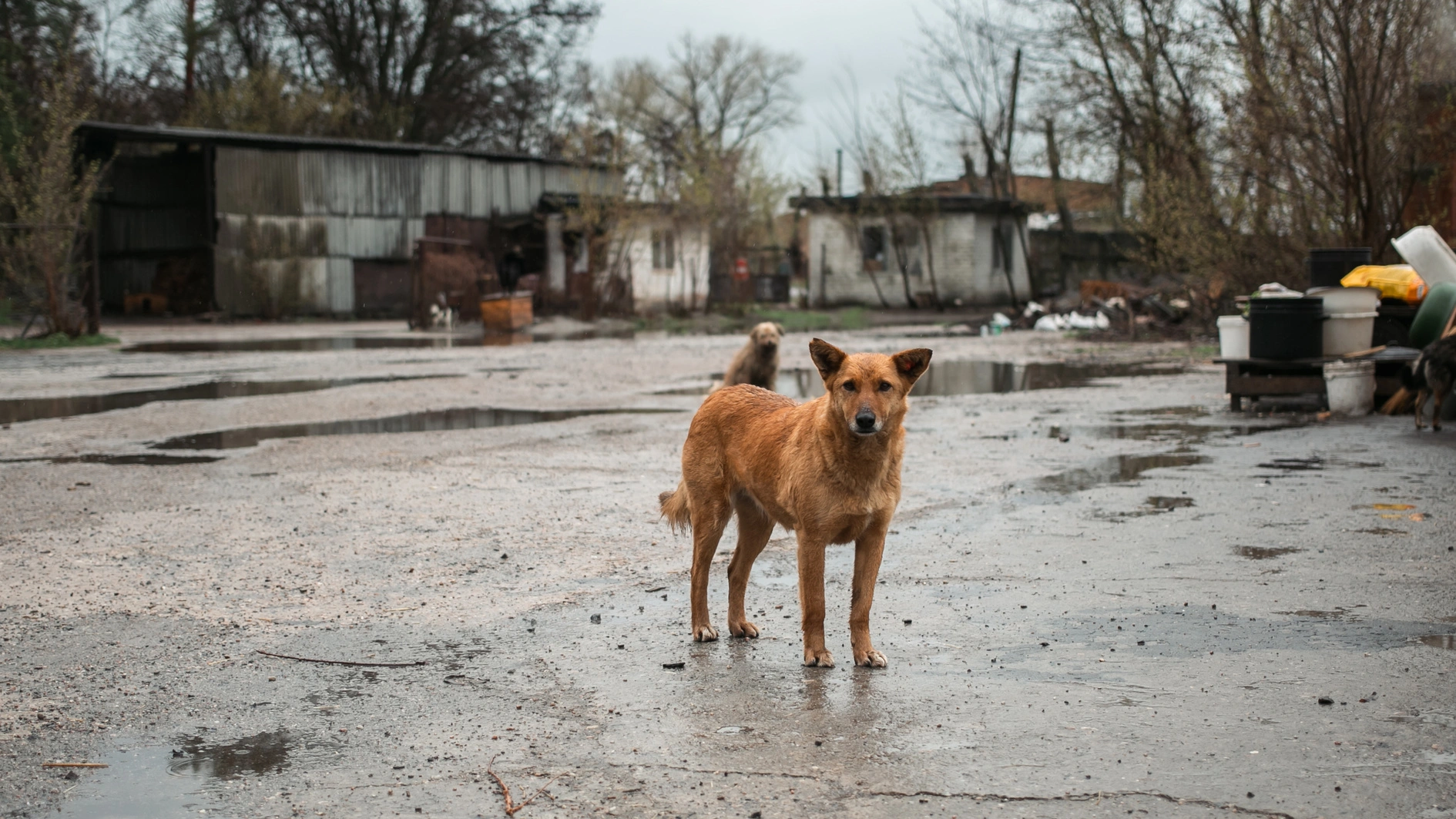
Russia’s full-scale war affects not only people, but animals as well. A new scientific study shows that domestic dogs living near the front line have, in a relatively short period of time, changed in both appearance and behavior — increasingly resembling their wild relatives.
The New York Times reported on the findings, citing a study published in December in the scientific journal Evolutionary Applications.
What Did the Researchers Discover?
Researchers analyzed data on 763 dogs across nine regions of Ukraine. The team worked with shelters, veterinarians, and volunteers who collected information about stray animals in both relatively safe and high-risk areas.
Some of the field observations were conducted directly near active combat zones. They were led by Ihor Dykyy, a zoologist from Ivan Franko National University of Lviv, who has been serving in eastern Ukraine since 2022.
According to the researchers, since the beginning of the full-scale invasion, thousands of pet dogs have lost their owners. Some families evacuated with their animals, but many dogs were left behind in frontline and occupied settlements. As a result, formerly domestic dogs found themselves in conditions where survival literally depends on their physical traits and behavior.
What Changes Were Observed?
Scientists found that dogs living for extended periods near the front line display more characteristics typical of wild populations — such as wolves, coyotes, or dingoes:
- Short-snouted or extremely elongated breeds are less common;
- The average body weight has decreased;
- Upright ears and straight tails are more frequent;
- White markings in coat coloration are less common;
- Dogs more often live in groups;
- There are fewer elderly, sick, or injured animals in the population.
Although the study focused on domestic dogs, many of them had long been living as strays without human caretakers.
“What surprised us most was how quickly these changes appeared. The war had been ongoing for a relatively short time, yet the differences between frontline dogs and other populations were already very pronounced.” said Małgorzata Witek, a researcher at the University of Gdańsk.
However, the researchers emphasize that this is not an example of accelerated evolution. Rather, it reflects natural selection under extremely harsh conditions. War creates an environment in which animals with certain characteristics are more likely to survive. For instance, smaller dogs are less likely to trigger anti-personnel mines, can hide more easily in shelters, and present a smaller target for shrapnel. Such traits increase their chances of survival.
Despite the emergence of “wild” features, most dogs remain dependent on humans — particularly for food. However, some supplement their diet with plants or small prey. Researchers also documented cases of complete independence from humans, with dogs surviving on their own in combat zones.
This study once again reminds us that war destroys not only infrastructure and human lives, but entire ecosystems. Domestic animals left without care are forced into environments where they must rapidly adapt — or perish.
For us, this is an additional argument for why it is important to evacuate animals, support shelters and soldiers who care for animals at their posts, conduct veterinary missions, and develop sterilization programs in frontline regions.
Photo: from the UAnimals evacuation flight in April 2025


