
A mass die-off of cetaceans has been recorded in the Tuzly Estuaries National Park as a result of the war. Scientists warn of the threat of an ecological collapse
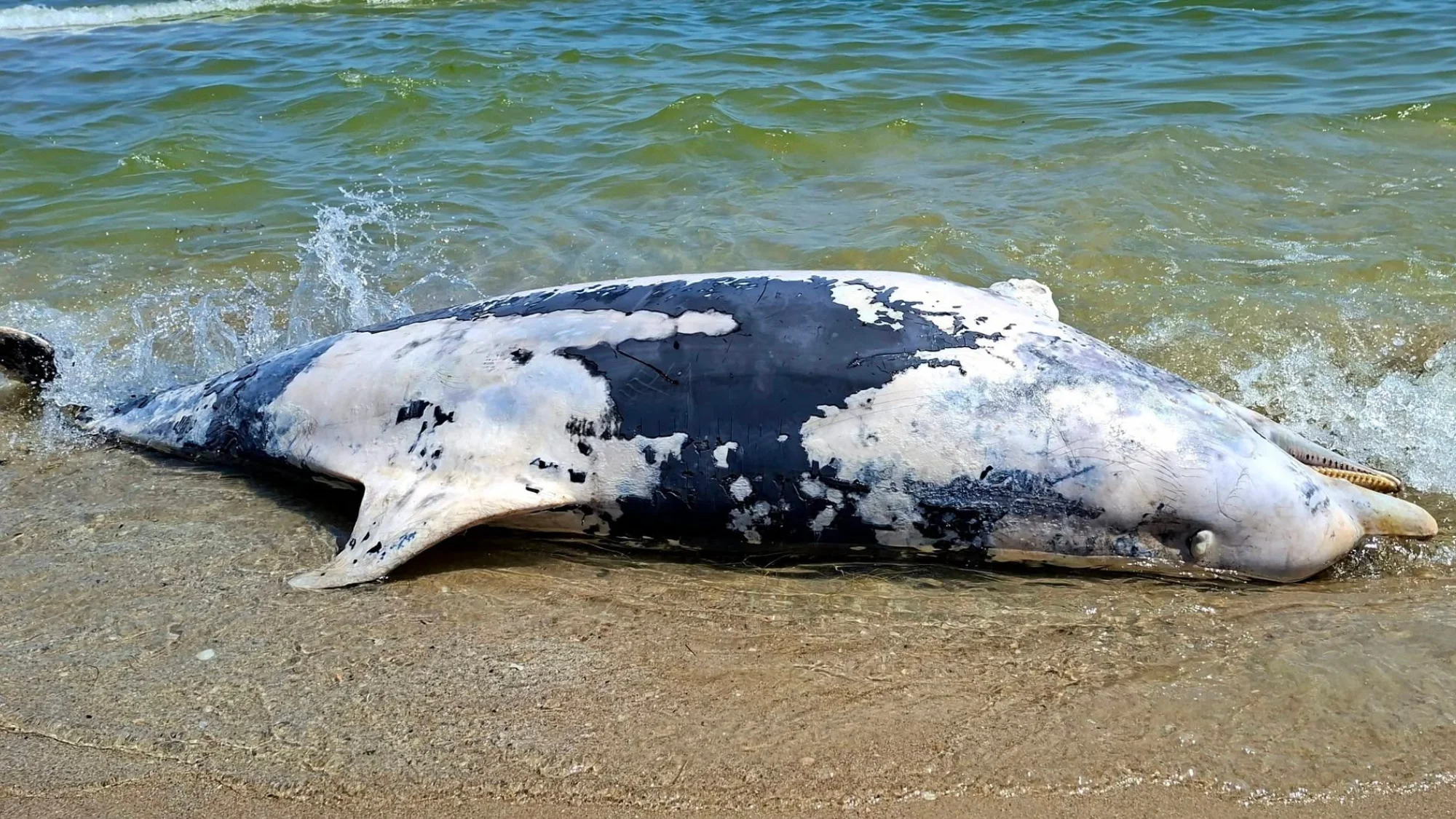
Russian aggression continues to destroy the Black Sea ecosystem. In just one day, on June 5, 22 dead cetaceans washed ashore at the Tuzly Estuaries National Nature Park: 20 Azov dolphins, one bottlenose dolphin, and one white-beaked dolphin.
The head of the national park’s scientific department, ecologist Ivan Rusev, reported on this unprecedented tragedy. According to him, the animals died over a month ago, and only now has the sea washed them ashore. Scientists have surveyed only 25 kilometers of the coastline, so the actual scale of the die-off in the waters may be many times greater — thousands of dead mammals are simply sinking into the depths.
The tragedy is not localized. During the same period, dolphin deaths were recorded along the coasts of Romania and Bulgaria, and in the Gulf of Odessa, live but severely injured animals were spotted again. Such a scale takes the Black Sea back to the catastrophic year of 2022, when the very first massive wave of marine mammal deaths occurred.
Ivan Rusev emphasizes that the sole root cause of this horror is russia’s barbaric war against Ukraine. The dolphins have faced an ecological disaster that combines several deadly factors:
In recent years, due to hostilities in the northwestern part of the sea, levels of nitrates, phosphorus, and nitrogen have also risen critically. Black Sea cetacean populations are losing their genetic capacity for recovery every day.
National park scientists, together with border guards, are documenting every such incident. This data is needed not only for science but also for a future international trial of russia for crimes against Ukrainian nature. If the world does not stop the aggressor, the Black Sea risks losing its unique inhabitants forever. The terrorist state must be held accountable for every life destroyed — on land, in the air, and at sea.
The world needs to see the scale of the environmental disaster caused by russia. You can help amplify our collective voice: share this news on your social media pages, especially if you have international followers. Public awareness is also a weapon in the fight to hold the enemy accountable.
Photo: from Ivan Rusev’s Facebook page
SHARE
about UAnimals on social networks
SUBSCRIBE
to UAnimals news


