preloader

A Forest Found Nowhere Else in Ukraine: What’s Happening at the Bottom of the Kakhovka Reservoir Three Years After the Disaster?

img

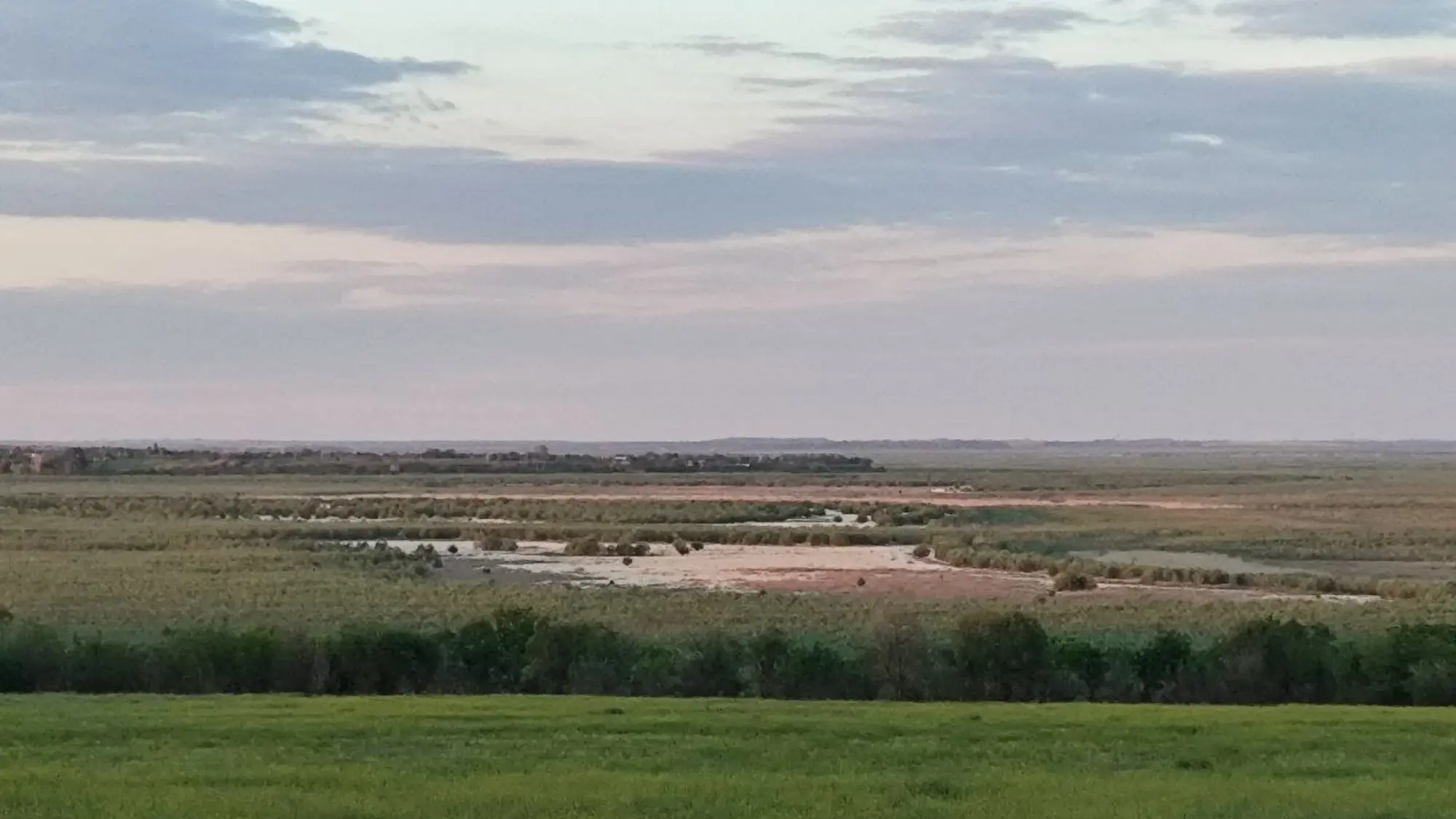
On June 6, 2023, russian occupiers blew up the Kakhovka hydroelectric power plant. The explosion destroyed the dam, flooded about 80 settlements, claimed the lives of people and animals, and devastated an ecosystem that had taken decades to form. What remained after the water receded looked like a dead zone — the bare bottom of the former reservoir, covering an area of over 2,000 km², resembled a desert, without a single plant.
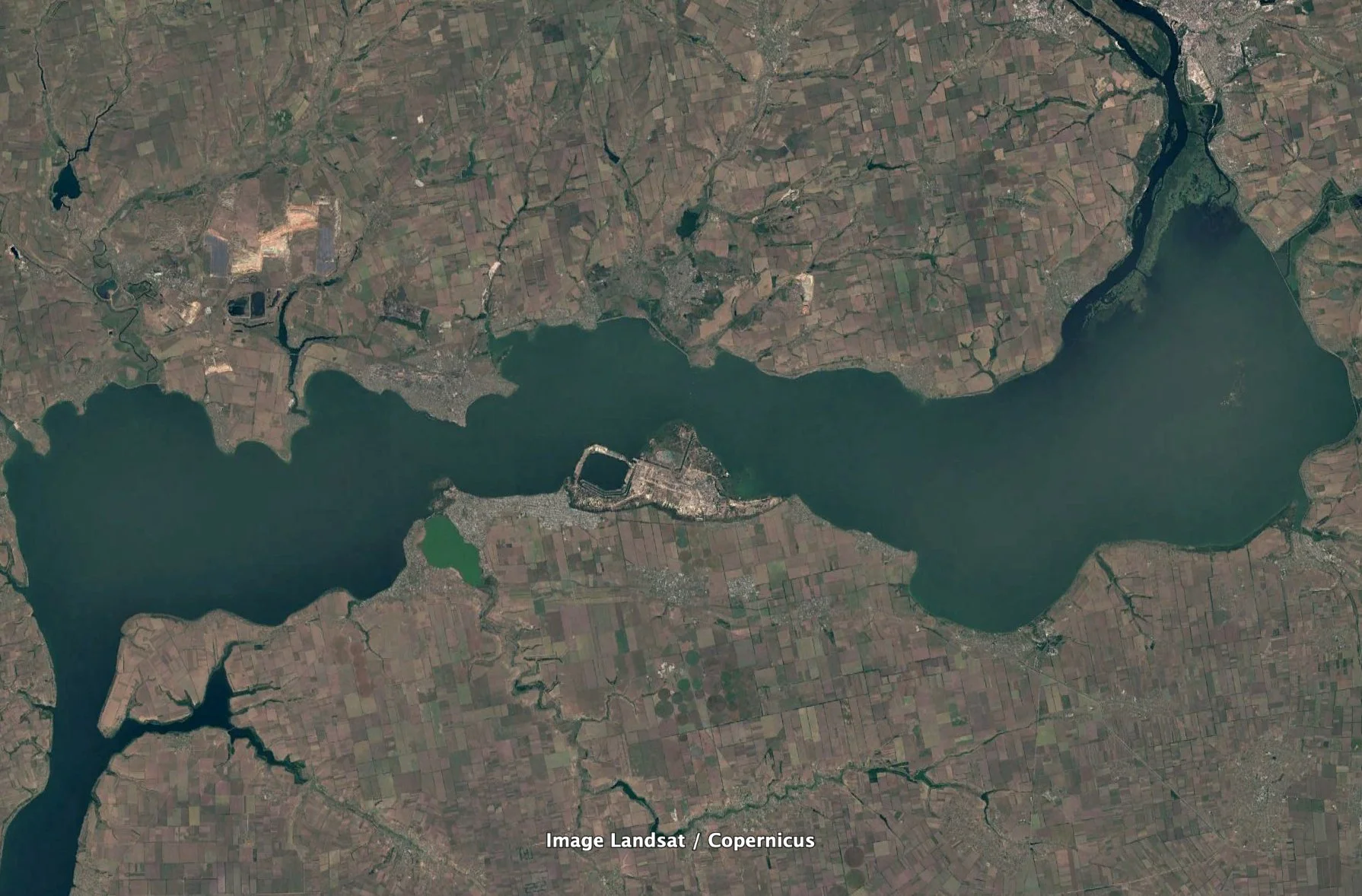
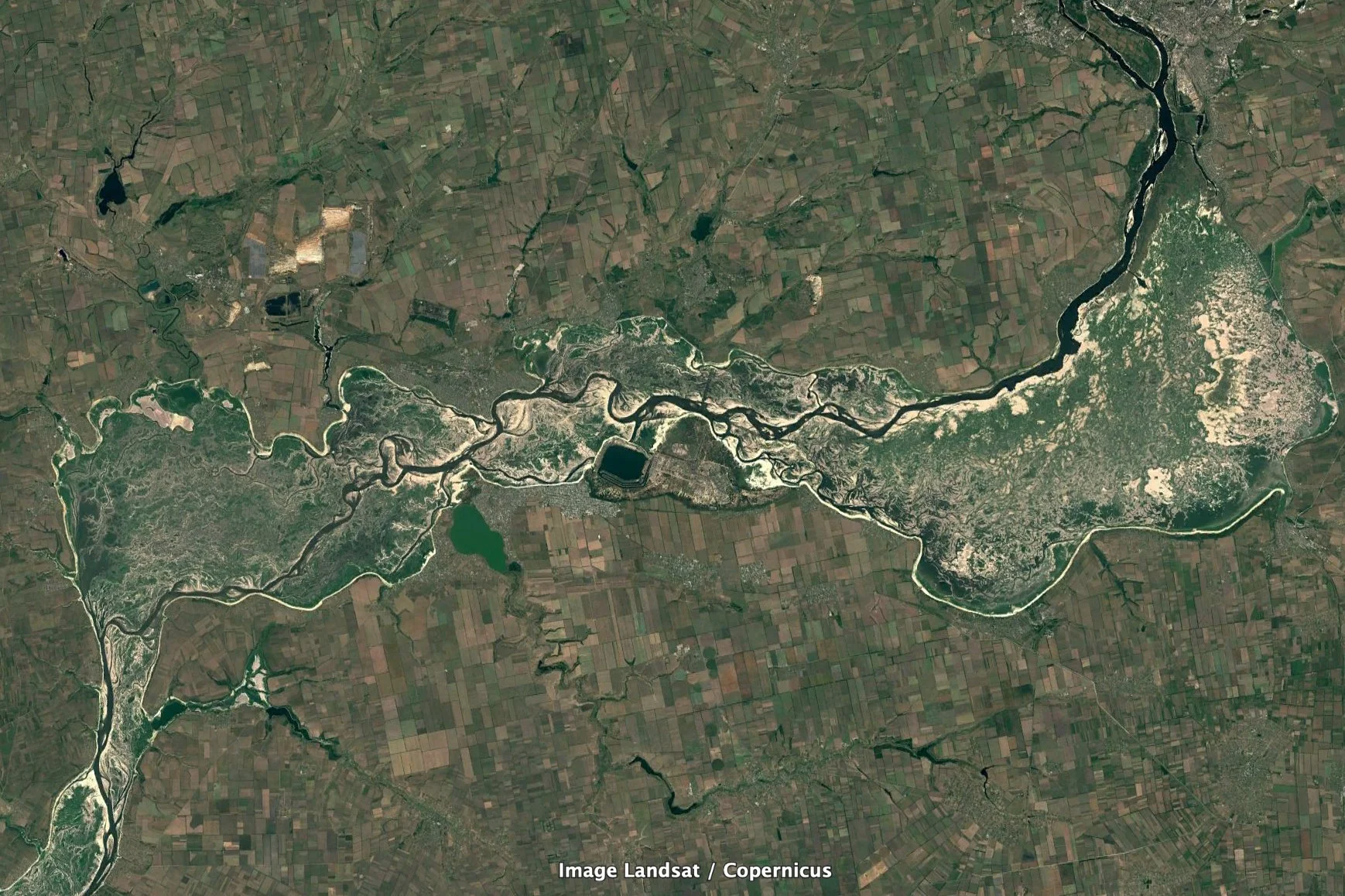
img
img
arrow
arrow
01 / 00

Three years later, in May 2026, a group of Ukrainian scientists set out on another expedition there. UAnimals spoke with one of its members — botanist, Doctor of Biological Sciences, and professor Ivan Moysienko. Here’s what the researchers saw.

Between willows and drones

This time, the scientists chose a new route. Previous expeditions took place in the Kamyanska Sich area, where the width of the reservoir between the banks was only 3,600 meters. Now the team headed to Novovorontsovka — the widest point of the former reservoir, where the distance to the left, occupied bank reaches 13,500 meters.

img

“I wouldn’t say this place is completely safe, but it’s the safest spot in the entire Kakhovka Reservoir,” says Ivan Moysienko.

Working conditions, though somewhat safer, remained challenging. Explosions rang out constantly, and drones appeared over the forest from time to time. As soon as the researchers heard the characteristic sound, they hid in the willows and waited.

Moisienko recalls one incident near Hrushevka in particular: an unknown drone hovered over the team and began to descend slowly.

img
img
img
img
img
arrow
arrow
01 / 00

For five tense minutes, the researchers didn’t know who it belonged to, until the drone descended to a height of ten meters. It later turned out to be a Ukrainian drone — shortly after, military personnel and police arrived at the team’s location, checked their documents, and reminded them of the dangers of being in that area.

Despite all this, the team worked all day. Plant physiologists — Oleksandr Polishchuk and Kateryna Romanenko — began their measurements at six in the morning and didn’t stop until eleven at night: they recorded how the willow “breathes” at night, at dawn, during the day, and at dusk. Moiseenko notes that they set up an entire field laboratory in the middle of a young forest in the combat zone.

The former Kakhovka Reservoir is now a real forest

The main finding of the three-year observations is that a full-fledged forest has formed at the bottom of the Kakhovka Reservoir. Scientists mentioned this as early as last year, but now they have managed to study entire layers of forest vegetation.

As a scientist explained to us, according to European standards, a forest begins with trees over 5 meters tall. In 2023–2024, there was no basis for calling it a forest. But by 2025, the average tree height had surpassed that mark. Height measurements have not yet been taken this year; new data will be collected in the fall.

For comparison: in the summer of 2023, only 11 pioneer plant species were recorded on the lake bottom. By October of that year, the number had risen to 69. In 2025, scientists counted over 340 species. This season, the number is expected to increase significantly. The counting process is still ongoing.

img
img
img
arrow
arrow
01 / 00

In addition, during this year’s May expedition, the team used full-scale geobotanical methods for the first time — studying established plant communities rather than individual plants. All present species were recorded in 10×10-meter sample plots.

img

“We expected to count 20–30 plant species, as in mature willow forests. But we found even more than 40, up to 50 species in a single plot. And that’s even more than in old willow forests,” says Moiseenko.

The scientist explains this diversity as follows: the ecosystem is very young, so alongside the perennials characteristic of willow floodplains, there are open areas occupied by annual plants. According to him, over time, as the vegetation cover closes in, sedges and reeds will displace them — and species diversity will stabilize at the level of a mature forest.

But even now, the forest has all the necessary layers: tree (willow and poplar), shrub (tamarisk), herbaceous, and even moss-and-lichen — Moisienko says that this year there has been noticeably more moss on the ground. For a three-year-old forest, this is impressive maturity.

img

“We have a more or less mature forest ecosystem, even though it is only three years old; this maturity is evidenced by the presence of forest-typical layers and the high species richness of the community,” the scientist concludes.

Mediterranean character

There is one more detail that distinguishes this forest from everything else growing along the banks of Ukrainian rivers. In floodplain willow-poplar forests throughout Ukraine, the shrub layer is formed by buckthorn and gray willow. Here, it is formed by tamarisk — a plant more typical of the Mediterranean and Asia, which in Ukraine can only be found in the far south.

img

“Tamarisk isn’t found anywhere else. It turns out that these forests — they’re also special. It’s clear that this is a southern, Mediterranean variant of these forests taking shape,” says Ivan Moysienko.

Tamarisk actively colonizes poorly developed soils where willows struggle to thrive — and with its lilac-purple, fluffy inflorescences, it gives the floodplain a Mediterranean character. Anna Kuzemko, a leading research fellow at the Mykola Kholodny Institute of Botany who also participated in the expedition, spoke about this in a comment for LB.ua. According to her, the vegetation is shifting toward coastal communities: spring yellowroot is blooming profusely, and two species of pigweed, characteristic of slightly saline soils, have appeared. Even the shell deposits, which were bare just last year, are now overgrown with Tatar lettuce — a native species with lilac-colored flowers.

The Willow That Breaks Records

img
img
arrow
arrow
01 / 00

The most striking data from this year’s expedition were collected by plant physiologists Oleksandr Polishchuk and Kateryna Romanenko — they conducted their own research and sought to understand what makes this area so unique that the willow is growing at record rates.

They measured photosynthetic efficiency — how well the leaves convert light into energy for growth. There is a specific parameter — the photosystem II activity index. Its theoretical maximum is 0.83 — it doesn’t get any higher than that. In the lab, where scientists have ideal conditions, they managed to achieve 0.78–0.80 units. At the Kakhovka Reservoir, the willows showed 0.83 — the absolute benchmark.

“Even in the lab, under ideal conditions, we couldn’t achieve such a result. This means that these young willows are carrying out very intense metabolic activity,” says Ivan Moysienko, recounting his colleagues’ observations, and adds that the key to the explanation lies in the soil. The bottom of the former reservoir has accumulated a thick layer of silt, extremely rich in organic matter. Now that the silt is dry and exposed, microorganisms are actively breaking down this organic matter — and releasing a huge amount of carbon dioxide. Indeed, his colleagues found that at night, when the willow canopies are closed and the air is almost still, the CO₂ concentration between the ground and the treetops reaches 600–700 ppm — almost twice the atmospheric norm of 400 ppm. As the sun rises, the willow literally “consumes” this excess.

img

“Carbon dioxide is the element from which plants are built as a result of photosynthesis. The willow intercepts and absorbs it. If there were no willows, this gas would enter the atmosphere. But the willow preserves it — in its wood, in its trunks, in its roots," explains Moiseenko.

The paradox is this: the flooding of the hydroelectric plant created conditions under which a huge amount of organic matter at the bottom of the reservoir began actively releasing greenhouse gas. But the willows that grew on that very bottom neutralize this gas. Nature found a way to close this cycle.

Nightingales, weasels, and other animals

While botanists were studying the vegetation, zoologist Oleksiy Vasylyuk — head of the Ukrainian Nature Conservation Group — made the first attempt to systematically describe the fauna of the new forest. Due to security restrictions, it was only possible to survey a narrow strip along the shore — about 200 meters inland. But what was seen was enough.

He noted that, judging by the tracks, foxes, jackals, and polecats are gradually settling in the forest. Among the birds near the water bodies, protected species — the black-headed bunting and the red-backed shrike — can be found. But the sounds were the most striking — hundreds of nightingales sing here at the same time, and there is simply no other forest like this in all of Europe.

In addition, at the beginning of the formation of the vegetation cover, plants whose seeds are dispersed by the wind predominated. Now, as Moiseenko noted, plants whose seeds are spread by animals, including insects, are playing an increasingly important role. This is an indirect but telling indicator that the number of animals has increased. Another sign is spiderwebs. In the early years, there were none at all, but this season there are so many that they cling to your face and hands the moment you step into the forest.

What’s next?

The unique three-year-old forest at the bottom of a former reservoir proves that nature possesses a tremendous capacity for self-regeneration. It heals the wounds inflicted by the occupiers through ecocide and creates new life where a desert was predicted to emerge.

Scientists’ work in this area continues. The next stage of the expedition is scheduled for fall 2026: scientists will measure tree heights, weigh biomass, and continue carbon balance research to finally unravel the phenomenon of the Kakhovka willow.

The future of this unique ecosystem remains a subject of debate. While some discuss the possibility of restoring the reservoir, others insist on preserving the restored Velykyi Luh. To learn about what this historic area was like before the flooding, how it is reviving now, and what development scenarios scientists are considering, read the UAnimals media article “Recovering from Ecocide: The Past and Future of the Kakhovka Reservoir.”

The destruction of the Kakhovka Hydroelectric Power Plant is one of the most massive, but by no means the only, environmental crimes russia has committed in Ukraine. Russian aggression has already led to the deaths of millions of animals and the destruction of more than a quarter of the country’s nature reserves.

The UAnimals team continues to document these crimes, engage international experts, and gather evidence of environmental destruction as part of the #StopEcocideUkraine campaign, so that the voice of Ukraine’s wounded nature is heard on the international stage and the aggressor faces just punishment.

You can support this fight: share this material, tell the world about the ecocide in Ukraine, and join in supporting our animal welfare and environmental initiatives. Only public awareness and collective pressure will help protect our future.


Featured image: the former Kakhovka Reservoir; photo courtesy of Ivan Moisienko

Join the Animal Rescue Club with a monthly donation! Small kindness, big results ❤️