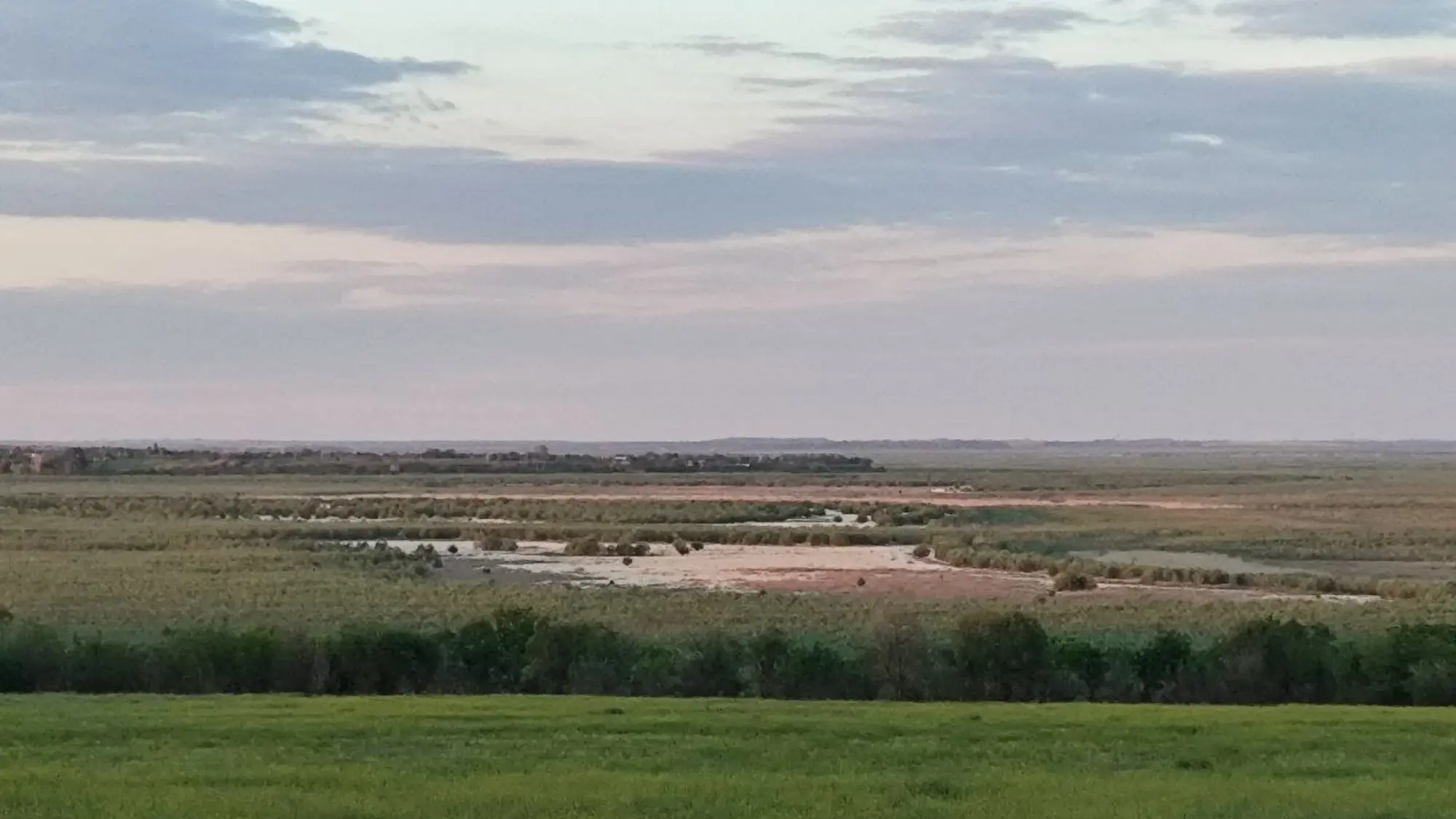
More than 60 experts gathered in The Hague to discuss holding russia accountable for the destruction of Ukraine’s environment. Here is how Ukraine’s experience is shaping new international approaches to accountability for ecocide.
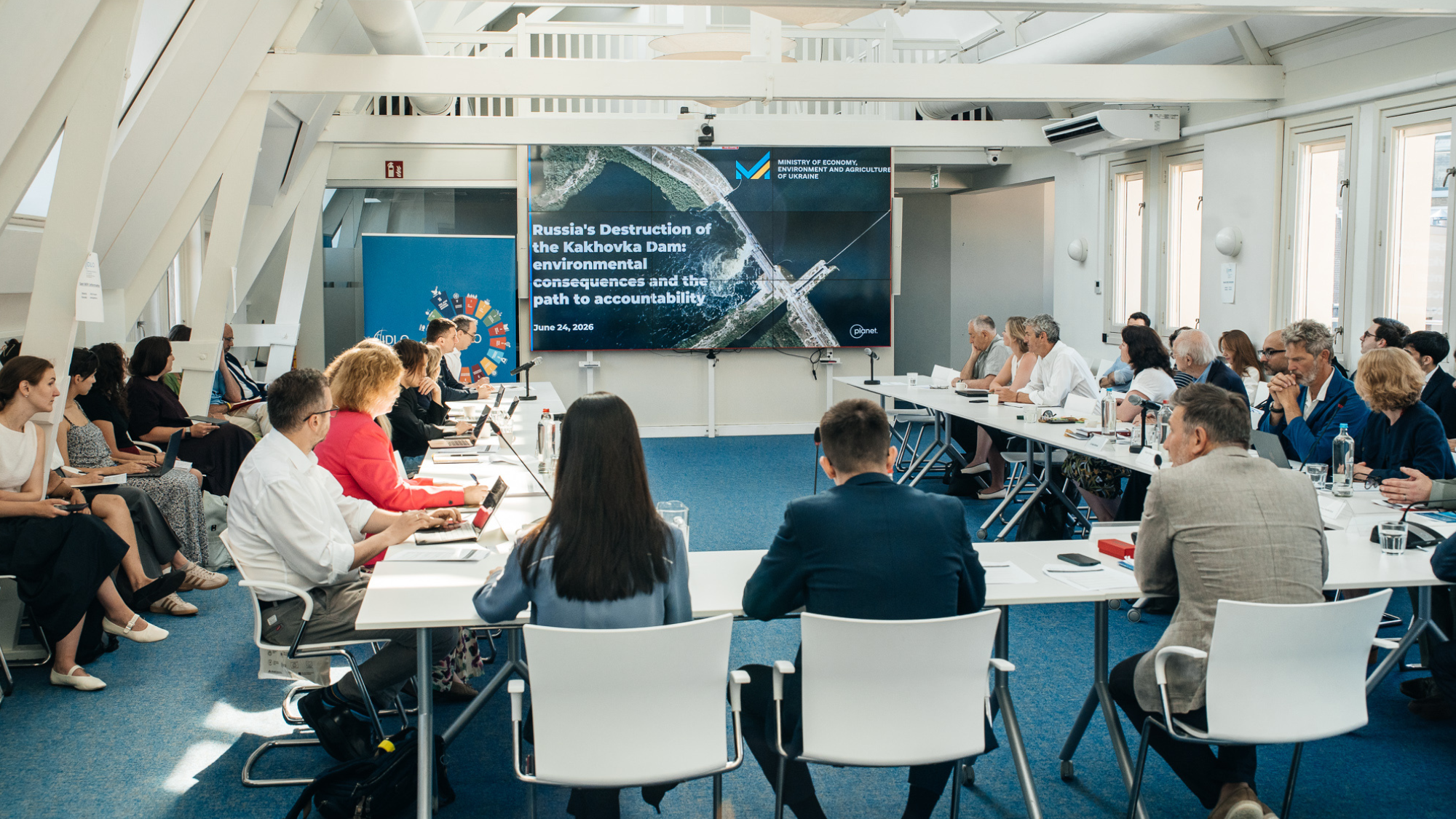
Holding russia accountable for environmental destruction is one of the greatest challenges that modern international law is facing. Until recently, environmental damage during armed conflicts has often remained outside the focus of international tribunals.
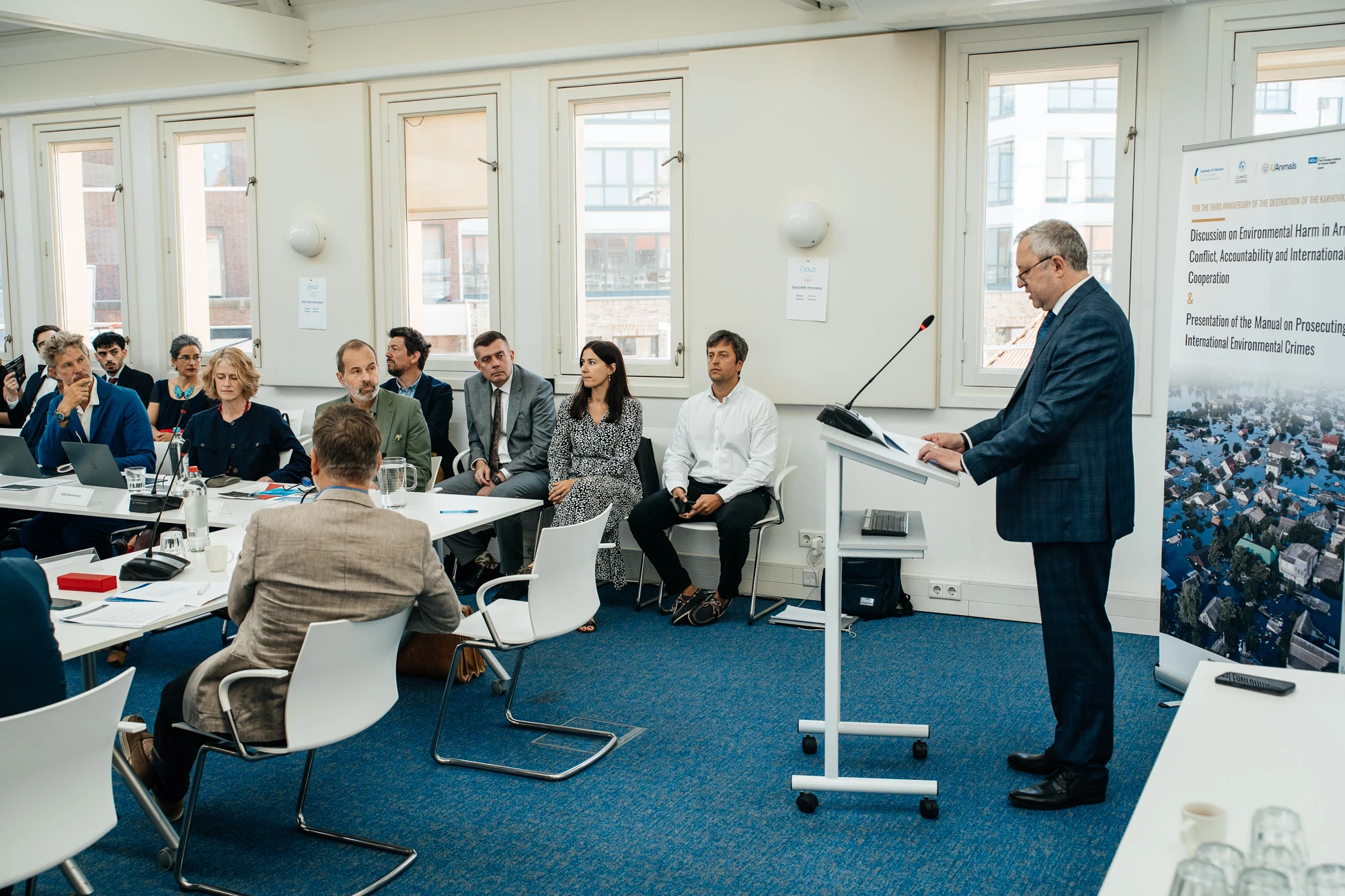
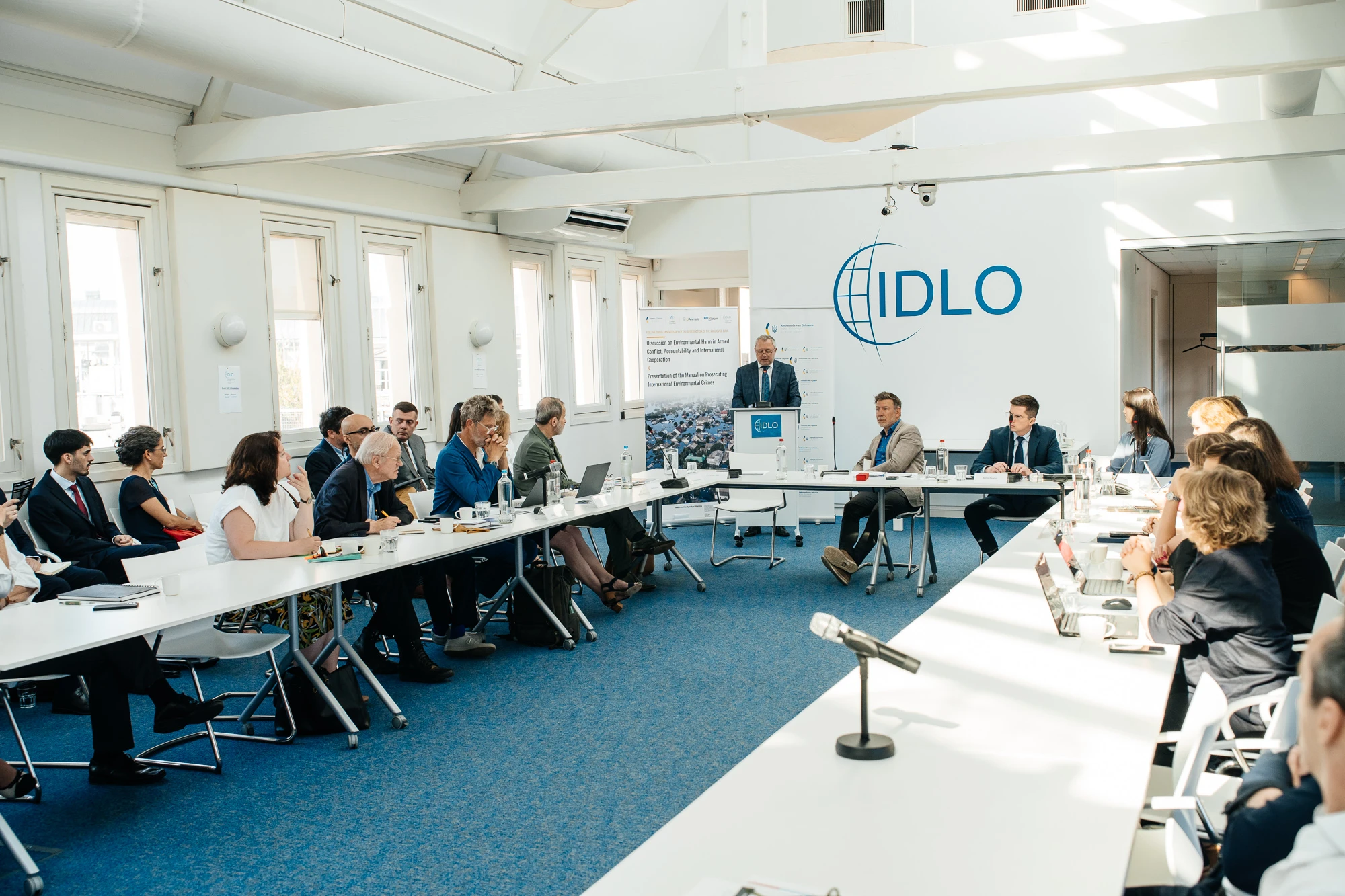
To help change this practice, an international discussion “Environmental Harm During Armed Conflict: Accountability, Investigations and International Cooperation” took place in The Hague. The event was organized by the Embassy of Ukraine in the Kingdom of the Netherlands in partnership with UAnimals, Climate Counsel, IDLO, and The Promise Institute (Europe). More than 40 representatives of international institutions, government bodies, prosecution offices and civil society organizations attended in person, and over 20 participants joined online.
During the event, participants discussed ways to hold russia accountable for the large-scale environmental destruction caused by the war and presented the Manual on Prosecuting International Environmental Crimes.
Below are the key approaches and challenges highlighted by legal experts during the discussion.
Prosecutors, international lawyers, and experts emphasized that russia’s aggression has caused environmental damage at an unprecedented scale. The destruction of the Kakhovka Hydroelectric Power Plant (HPP), attacks on critical infrastructure, contamination of soil and water bodies, and the destruction of natural ecosystems require not only thorough documentation but also effective mechanisms to ensure accountability.
According to Ambassador Extraordinary and Plenipotentiary of Ukraine to the Kingdom of the Netherlands Andriy Kostin, citing data from the Office of the Prosecutor General, Ukraine is currently investigating 271 criminal cases related to environmental damage caused by russian aggression. Law enforcement authorities have documented more than 450 incidents, and ten proceedings have already classified the crimes as ecocide. The total amount of documented damage has exceeded UAH 6.7 trillion, although the full scale of destruction cannot yet be assessed due to the occupation of part of Ukraine’s territory.
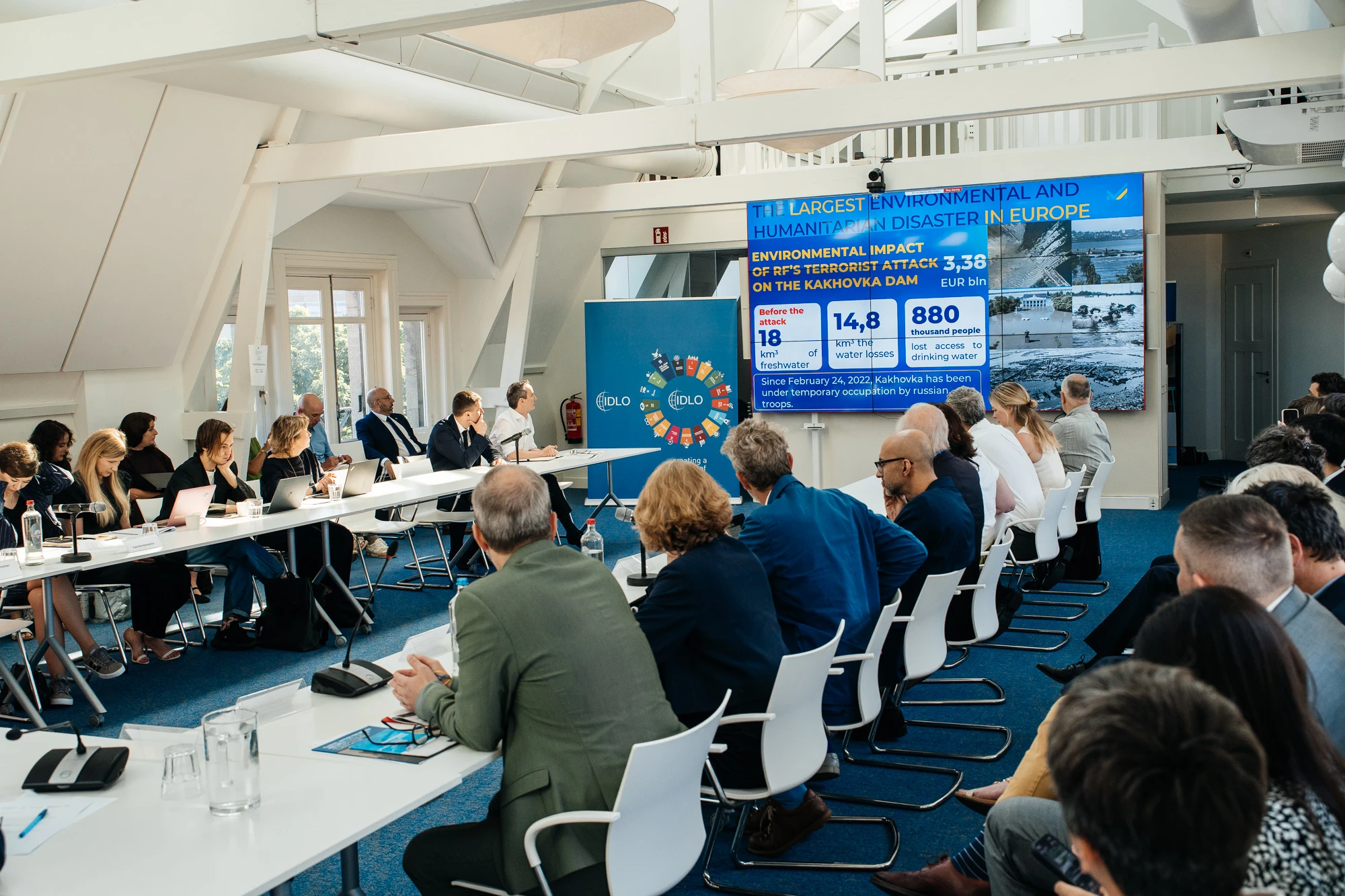
Special attention was paid to the destruction of the Kakhovka Hydroelectric Power Plant. Investigators have already identified two russian generals — the commander of the “Dnipro” military grouping and his deputy — who are suspected of involvement in blowing up the dam.
As Andriy Kostin noted, an important piece of legal evidence indicating premeditation is the russian government’s Resolution No. 873, which allowed authorities not to investigate accidents at hazardous facilities in occupied territories. Preliminary estimates place environmental losses from this disaster alone at €2.5 billion.
International experts stressed that Ukraine’s experience is already influencing the development of international criminal law by prompting the search for new legal strategies.
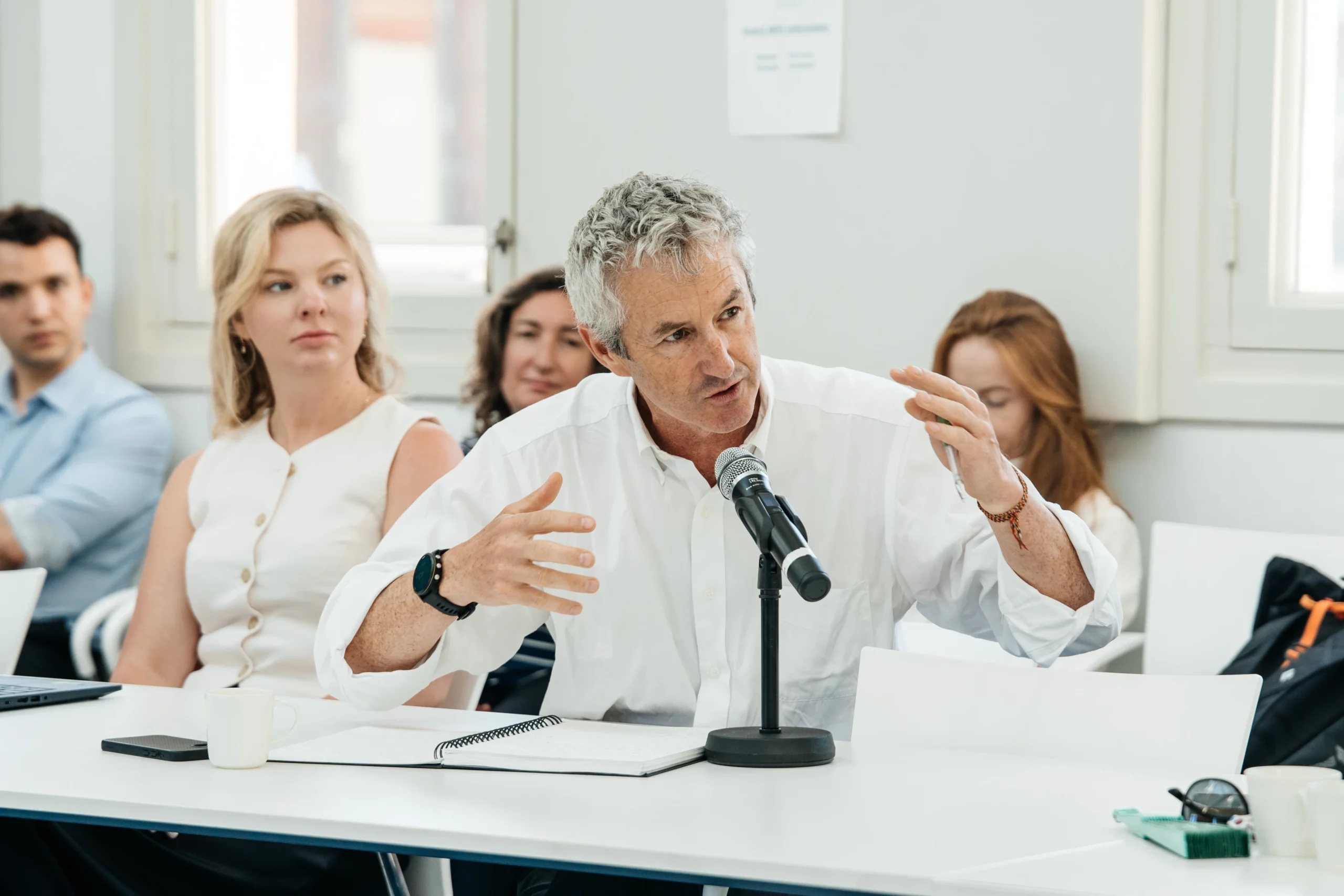
Fabricio Guariglia, an international expert in criminal law and justice and Director of the Hague Office of the International Development Law Organization (IDLO), explained that proving traditional “ecocide” under existing legal frameworks is difficult because of the very high threshold required to demonstrate “long-term damage”. As a result, prosecutors are proposing a new approach: trying russia not only for destroying the dam itself but also for using water as a weapon that devastated civilian infrastructure and biodiversity. According to NASA Harvest and Microsoft, the attack instantly deprived more than 225,000 hectares of land in southern Ukraine of irrigation systems.
Reinhold Gallmetzer, Appeals Counsel and Focal Point for Environmental Crimes in the Office of the Prosecutor of the International Criminal Court, noted that the Court’s new environmental policy takes Ukrainian experience into account. One of the key changes is the intention to hold not only military personnel accountable but also economic actors — including corporations, financiers, and insurers — that help finance aggression or profit from natural resources in occupied territories.



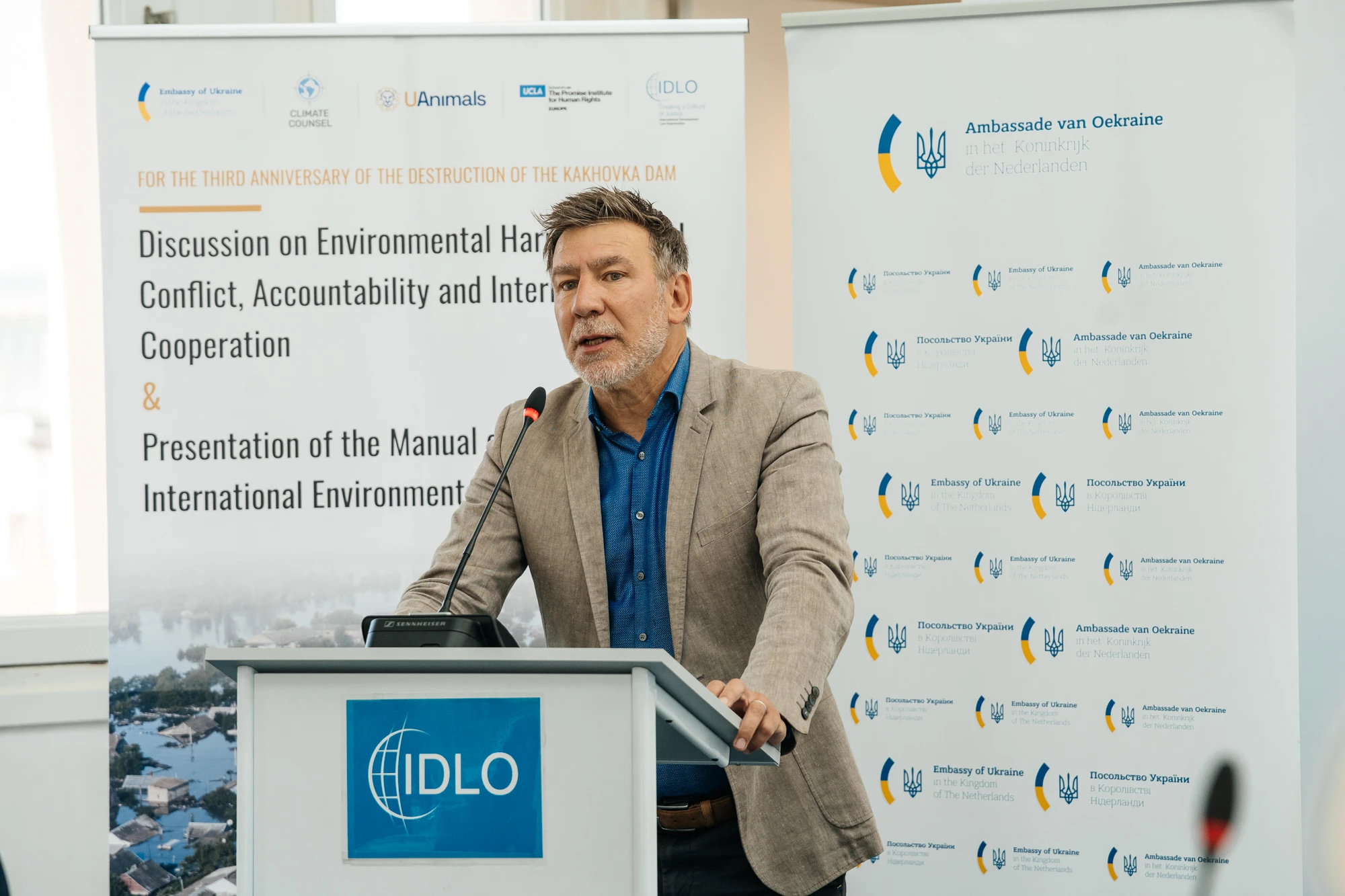
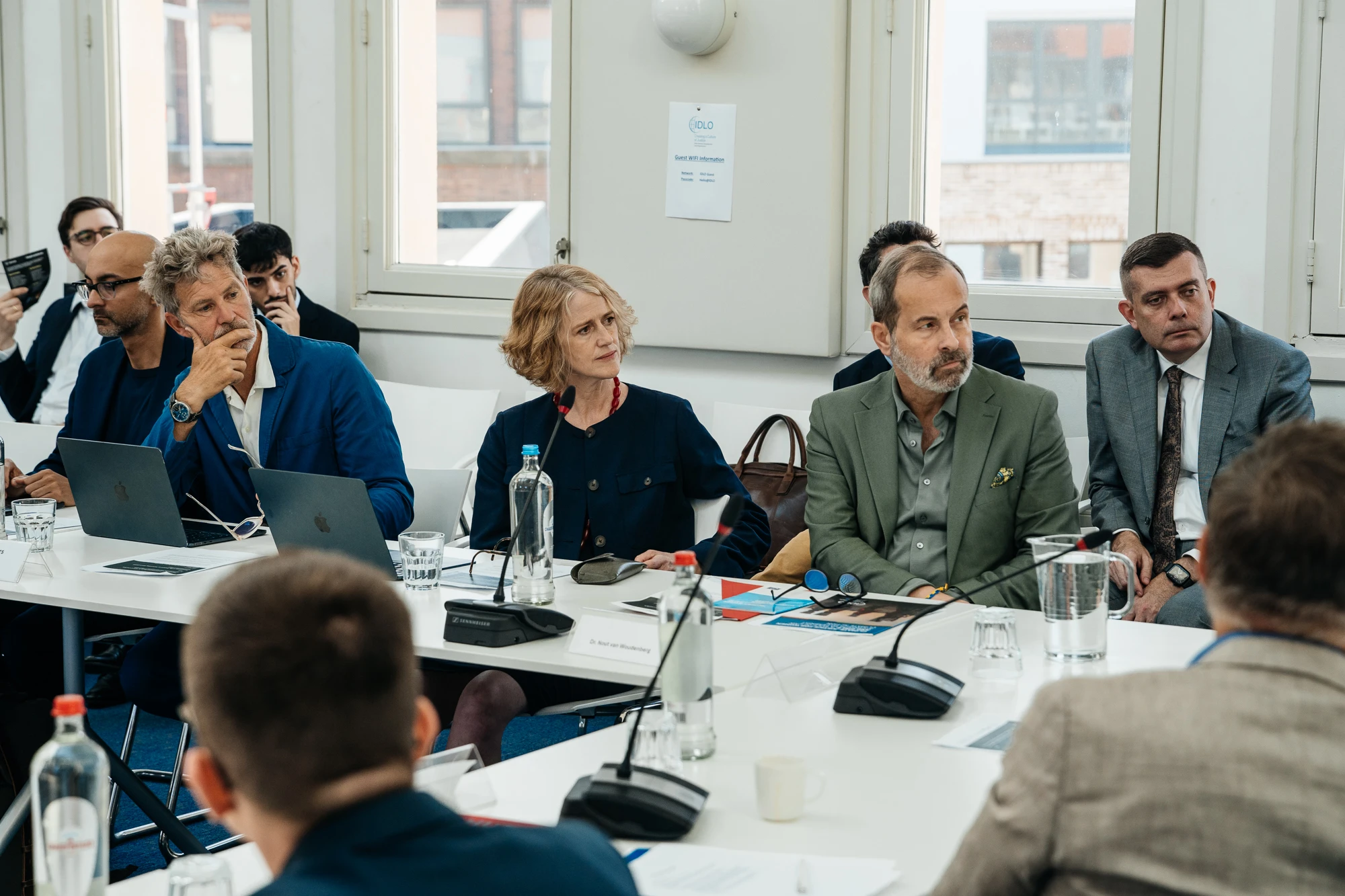

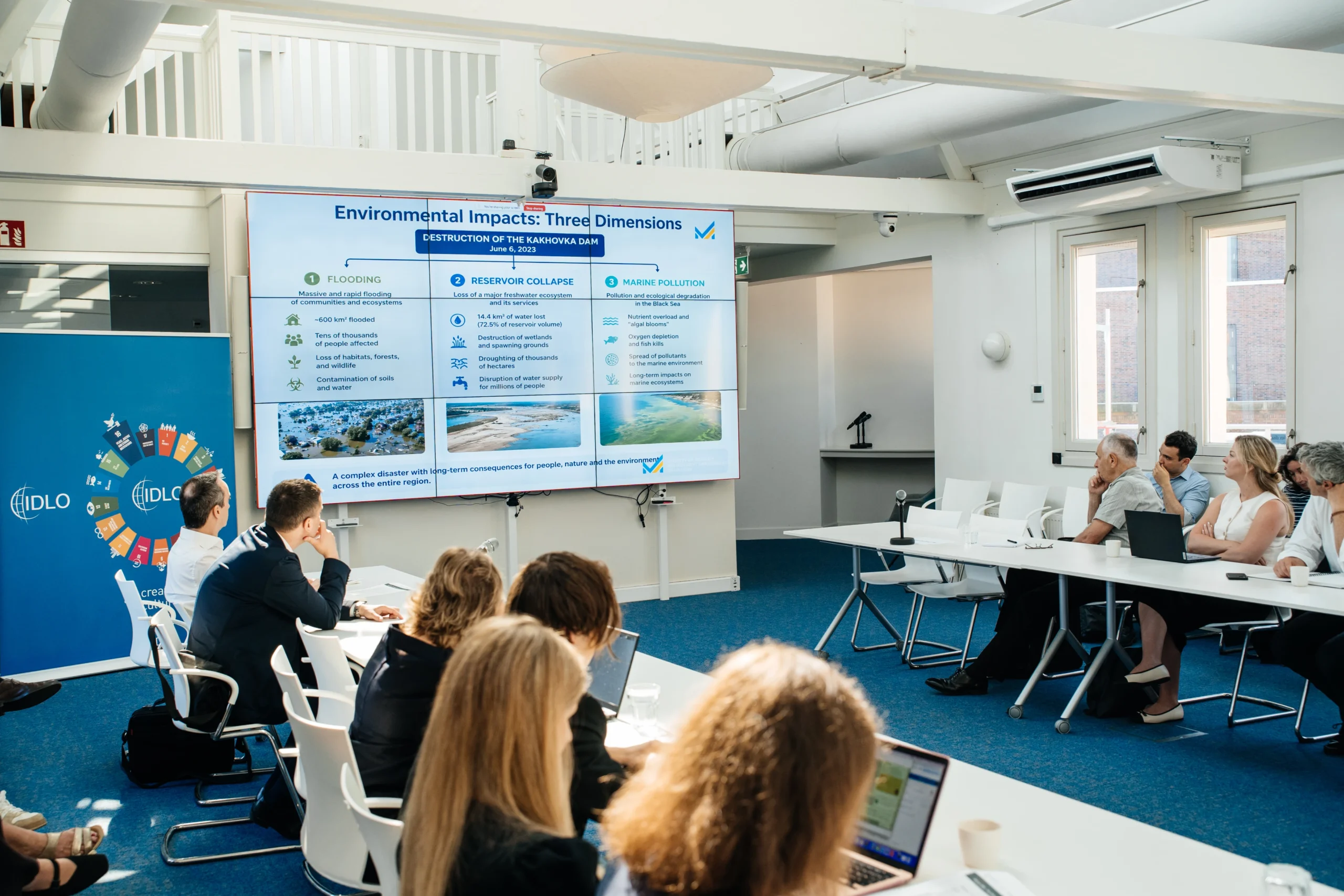
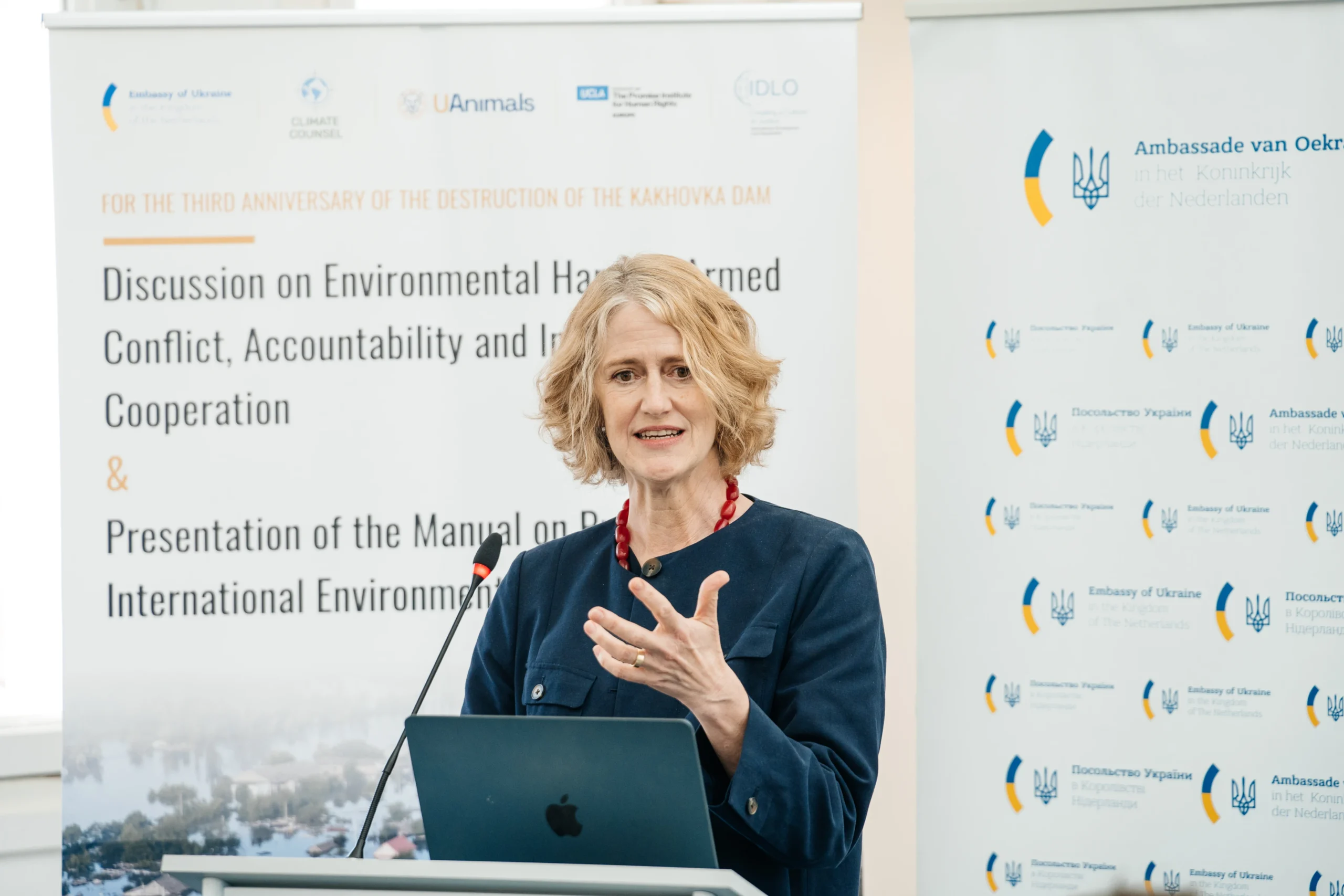

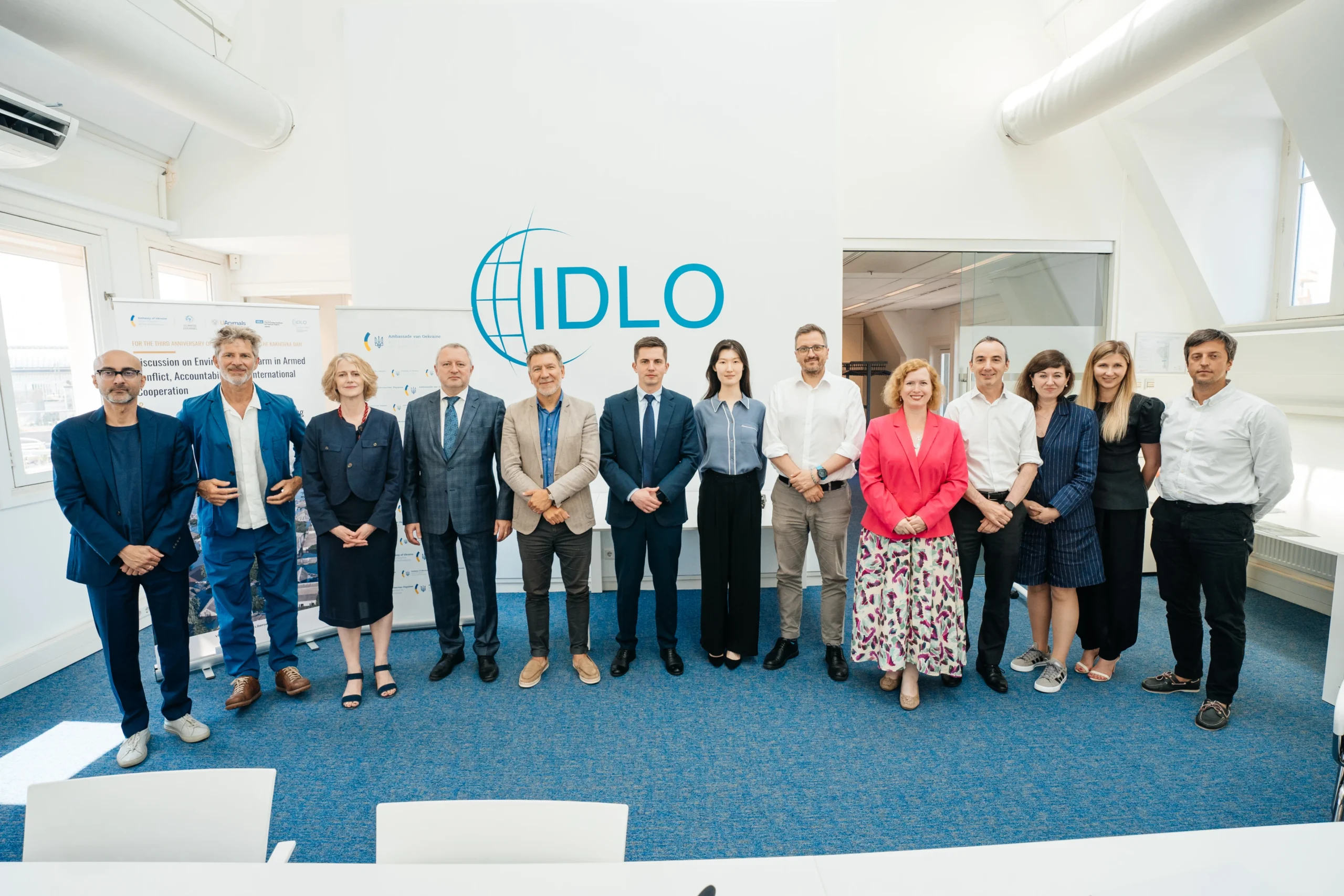

One of the key moments of the event was the presentation of the Manual on Prosecuting International Environmental Crimes. The document was developed by international and Ukrainian experts based on practical experience gained while documenting russia’s crimes in Ukraine.
The Manual explains how to collect and analyse evidence of environmental harm, use satellite data, scientific research, and testimonies from affected communities to build criminal cases. The authors hope that the document will become a practical tool not only for Ukraine but also for other countries facing large-scale environmental destruction.
Participants also discussed compensation mechanisms. More than 165,000 claims have already been submitted through the Diia application to the Register of Damage Caused by the Aggression of the russian federation against Ukraine. A significant share of these claims relates to the consequences of the destruction of the Kakhovka Hydroelectric Power Plant.
Experts emphasized that close cooperation is essential to ensure accountability and move toward actual reparations. Alongside court proceedings, work should continue on establishing a Claims Commission modelled on the UN compensation mechanism created after Iraq’s invasion of Kuwait.
Participants also called for continued international efforts to recognize ecocide as a separate crime under the Rome Statute of the International Criminal Court and to strengthen global mechanisms for protecting the environment during armed conflicts.
russia’s war against Ukraine has demonstrated that environmental destruction is not merely a “collateral consequence” of military action. It is one of the instruments of war itself. This is why accountability for crimes against nature must become inevitable.
Main photo by Valeriia Manzovitova
SHARE
about UAnimals on social networks
SUBSCRIBE
to UAnimals news